Travel Guide Travel Guide to the countries of the world

This post is also available in:
 繁體中文
繁體中文  Čeština
  Deutsch
  日本語
日本語  polski
Italy is a country full of historical attractions, with a rich heritage of works of art and monuments. Land kissed by millennia of civilization, it has seen the birth of civilizations such as Etruscan and Roman, but also the civilization of municipalities, humanism and the Renaissance.
Italy is a treasure chest of art, an open-air museum widespread in every city and town on the peninsula. In Italy every inhabited center, even the most insignificant, can contain a masterpiece of ancient art, inside a church or a palace, or outside, in a square, along a road.
DIFFUSED ART IN EVERY CORNER OF THE COUNTRY
The valuable side of those who visit it, and the particularity of Italy, is precisely this possibility of discovering outside the beautiful and acclaimed main tourist centers that art is widespread in every corner of the country. In confirmation of what has been said, the fact that Italy is the country in the world with the largest number of sites included by UNESCO in the restricted list of world heritage sites.
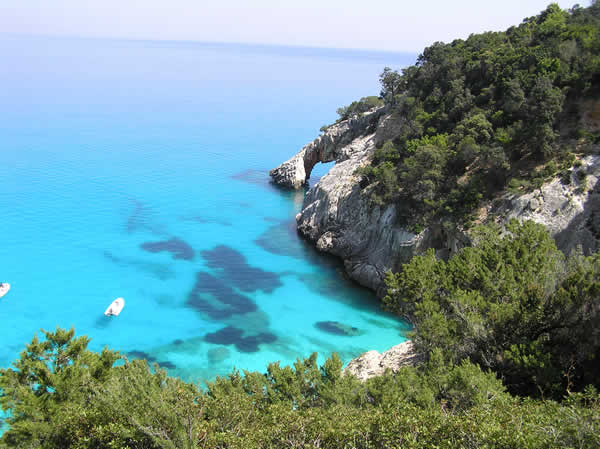
Cala Goloritzè, Sardinia, Italy. Author Marco Ramerini
Among the best known attractions in Italy are famous cities of art and which alone are worth a trip like Rome, Florence and Venice, which are the three main destinations of Italian art tourism.
There are cities that in Italy are partially obscured by the three most important destinations, but which in every other nation in the world would be stars of the first magnitude. Among these we can mention Pisa, Siena, Ravenna, Naples, Verona, Padua, Vicenza, Lucca, Ferrara, Perugia, Palermo, Bergamo, Bologna, Pavia etc. The great diffusion of smaller but extremely beautiful towns such as San Gimignano, Assisi, Urbino, Gubbio, Orvieto, Noto, Cefalù, Spoleto, Matera, Cortona, Cividale del Friuli, Volterra, Pienza, Todi, Spello, Loreto etc.
ARCHAEOLOGICAL CENTERS OF WORLD RENOMANCE
The archaeological sites are many and many are of global importance. Prehistory is represented in every Italian region, but the most interesting areas are the areas of Val Camonica, Lake Garda and Monte Bego, where thousands of prehistoric rock carvings are visible. Even Sardinia with the remains of the Nuragic civilization is a very interesting destination.

Duomo, Florence, Italy. Author Marco Ramerini
As far as ancient history is concerned, the south of the country has important archaeological centers dating back to the time of Greek colonization, the most important of which are in Sicily (Agrigento, Selininte, Segesta, Syracuse), and in Campania (Paestum). In Tuscany, Lazio and Umbria the centers of the Etruscan civilization are to be visited, where tombs, necropolises and Vie Cave (excavated roads) are visible.
The period of the Roman Empire left an enormous patrimony present in every Italian region. Obviously the city of Rome, capital of the empire is the centerpiece of all this. But near Rome, the impressive Roman remains of ancient Ostia (Ostia Antica), the Villa Adriana in Tivoli, are worth visiting. In the rest of the country there are wonderful archaeological sites in Campania (Pompeii, Herculaneum, Oplontis), in Sicily (Piazza Armerina, Tindari), in Friuli Venezia Giulia (Aquileia), in Veneto (Verona), in Valle d’Aosta (Aosta) , just to mention the most famous.
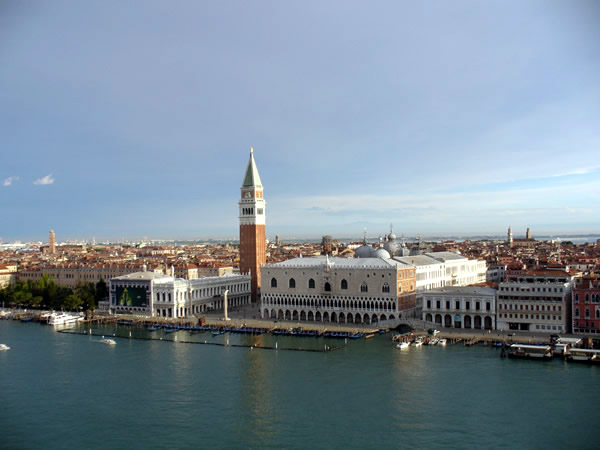
Venice, Italy. Author Roberto Ramerini.
A RICH NATURE UNDER EVERY ASPECT
The Italian territory is a very varied territory rich in every landscape and natural aspect. The Italian nature has been profoundly transformed by the work of man over the centuries, but this combination of man and nature has translated into landscape wonders such as the Chianti hills and the Val d’Orcia in Tuscany, the Langhe, the Roero and Monferrato in Piedmont, Cinqueterre in Liguria.
ATTRACTIONS OF ITALY: MOUNTAINS AND VOLCANOES
But the Italian peninsula also has a multitude of natural aspects that have remained intact. The majesty of the Alpine chain with mountains over 4,000 meters high, protected by numerous national parks. One of the attractions of Italy are the bizarre and fascinating Dolomites that UNESCO has included among the world heritage of humanity. But also the long chain of the Apennines, which runs through the country from north to south, reserves sweeter but at the same time fascinating mountains. Italy is also a land of volcanoes, there is the most impressive volcano in Europe, Etna, and also the most destructive, Vesuvius.
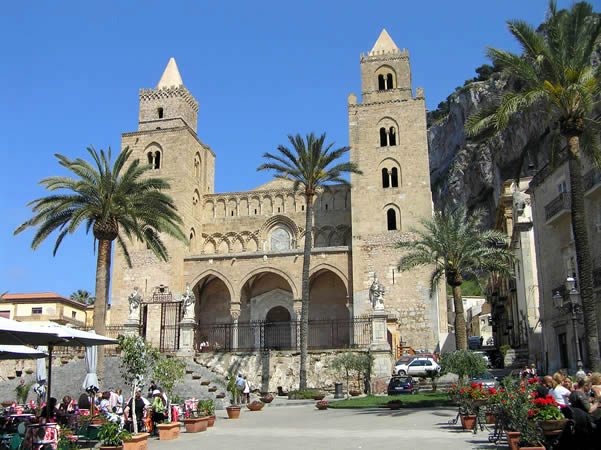
Cefalu, Sicily, Italy. Author Marco Ramerini
ATTRACTIONS OF ITALY: HILLS, LAKES AND CAVES
The natural attractions of Italy are not limited to the mountains, but every geographical feature is represented. Famous for their enchanting landscape are the great lakes of northern Italy such as Lake Como, Lake Garda, Lake Iseo and Lake Maggiore. Italy has hilly and countryside areas of great landscape charm such as the hilly areas of Tuscany, Piedmont, Veneto, Umbria and Marche. There are natural caves that contain underground wonders made of stalactites and stalagmites. Among the best known are the caves of Castellana in Puglia, the Grotta del Vento (Cave of the Wind) in Tuscany, the caves of Toirano in Liguria and the caves of Frasassi in the Marche.
ATTRACTIONS OF ITALY: A UNIQUE SEA
The thousands of kilometers of coasts are among the destinations and attractions most frequented by tourists visiting Italy. There are famous seaside resorts such as those located along the Riviera Romagnola (Rimini, Riccione) and Versilia (Forte dei Marmi, Viareggio). Sea worthy of the mythical southern seas such as the one found along the coasts of Sardinia. Or rocky and wild coasts (Cilento, Gargano, Cinqueterre, Amalfi Coast). Long golden sandy beaches, islands and worldly seaside resorts (Portofino, Capri, Ischia, Amalfi, Taormina, Portovenere, Positano). Archipelagos such as those of the Aeolian, Egadi or the islands of the Tuscan Archipelago.
A UNIQUE FOOD AND WINE HERITAGE
During a trip to Italy, the aspects of local traditions, both cultural, artisan, linguistic and folkloristic, should not be underestimated. Both in terms of cooking and wine. Italy has an eno-gastronomic heritage that fears no comparison with any country in the world. Each Italian region has its typical dishes and its way of cooking food, its wine, its oil, its cured meat and typical products.
-

- Duomo, Florence, Italy. Author Marco Ramerini
-

- Cala Goloritzè, Sardinia, Italy. Author Marco Ramerini
-

- St. Peter’s Basilica, Rome, Italy. Author Marco Ramerini
-

- Venice, Italy. Author Roberto Ramerini.
-

- Cefalu, Sicily, Italy. Author and Copyright Marco Ramerini
-

- Barberino Val d’Elsa, Chianti, Tuscany, Italy. Author Marco Ramerini
ACCOMMODATIONS, APARTMENTS, B&B AND HOTELS
Booking.comThis post is also available in:
繁體中文 Čeština Deutsch 日本語 polski