
Categories
Dutch Colonialism India Portuguese Colonialism

St Thomas Fort, Tangasseri or Thangassery, Kerala, India

Written by Marco Ramerini. Photos by Prof. Rahul Basu.

Tangasseri or Thangassery / Kollam is a city located along the coast of the ancient Malabar, in the Indian state of Kerala in southern India. The Portuguese were the first Europeans to arrive in this port of Malabar, they landed there in 1502. In the following years Tangasseri or Thangassery / Kollam that the Portuguese called Quilon / Coulão / Coullam became an important center for the trade of pepper. The Portuguese built a feitoria in 1505.  A few years later, around 1518 – to better protect their trades – the Portuguese built the Forte de São Tomé. The fort was conquered by the Dutch on 29 December 1658, but it was recaptured by the Portuguese on 14 April 1659. The fort was under Portuguese control until 1661, when on 24 December 1661 the Dutch conquered it. In the following years the fort was renovated by the Dutch. In the late eighteenth century, the fort was ceded by the Dutch to the British.

Of the current situation of the remains of Tangasseri or Thangassery Dutch/Portuguese settlement we receive the following photos and evidence by Prof. Rahul Basu:

“Please find attached some pictures of my recent trip to Kollam, Kerala and visit to Thangacherry which has an old Portuguese fort taken over by the Dutch later. It appears to be under restoration, though no one was there on the job. Some squatters have built huts and some multistorey apartments have come up near the fort, closer than the 200 m stipulated by the signboard on the entrance.”

St Thomas Fort, Tangasseri or Thangassery, Kerala, India. Author and Copyright Prof Rahul Basu,

“On enquiring from the lighthouse keeper nearby I was shown how to go to the cemetery nearby. Most of the tombs have been desecrated and only some tombstones are visible. Areas which apparently were graveyard have been cleared and one appears to be ready for some building work. There is a multistory apartment complex on one of the adjacent plots. What is visible is hidden at the back of some hutments.”

Tangasseri or Thangassery, Kerala, India. Author and Copyright Prof Rahul Basu
“One of the large tombstones was readable as that of a Dutch doctor ( Dr Jacob Van— ), who expired 1810, ( the engravings have become very faint due to weathering and use as a washing stone by the residents) so obviously was a resident at the locality beyond the ceding of the fort to the English in late 1700’s.”

“I am sure the Dutch, Portuguese and English Governments would be interested in preserving these relics. Some of the plaques appear to have been removed recently as the mortar facings behind the original name plaques appear to be un weathered.”

Categories
India Portuguese Colonialism

The Catholic mission in Bengal prior to the nineteenth century
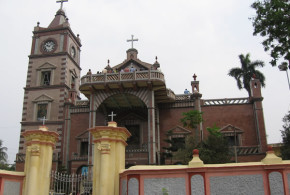
Written by Prof. Stefan Halikowski Smith, Dept. of History, Swansea University.

The Bengal mission was one of the most Christian successful mission-fields in the Orient in early modern times, despite relatively small numbers of active missionaries. However, the mission, despite its successes in ‘harvesting souls’, encountered bitter political vituperation between the two orders active here, the Augustinians and Jesuits, who fought it out amongst each other for the rights to this mission. While the Jesuits liked to call the otherwise controversial Guy Tachard ‘l’apôtre de Bengale’, the most successful churchman was perhaps António da Rozario, an Augustinian who pioneered bilingual catechistic dialogues such as Argument and Dispute Upon the Law between a Roman Catholic and a Braman, composed some time before 1680 in simultaneous Bengali-Portuguese translation, and which quickly became the norm for missionary endeavour elsewhere in Asia, such as Burma. He was also quick to promote usage of canticles, especially those dealing with ‘the Mysteries of the Rosary’. Rozario was the converted son of the King of Busna, a raja in Eastern Bengal, who was ordained in 1682 as an Augustinian, became known simply as Dom António and went on to bring between 27 and 30.000 people into the church. This number is corroborated from sources outside the Church: the French jeweller, Tavernier, reported that ‘in Ogouli [Hughli] alone there were no less than 8 or 9000 souls of Christians’, whilst in the rest of the kingdome ‘there were about 25 thousands’ (Travels in India, vol. II, p. 140).

While the Portuguese had frequented ports like Satgaon (known as ‘porto pequeno de Bengala’) from the 1580s, the Augustinians were the first religious order to make headway in Bengal, specifically in the ‘Kingdom of Chittagong’ where they came to administer three parishes.760 bighas of land were granted by firman by Shahjahan to the Augustinians in 1633, a year after the Hughli community’s notorious expulsion and summons to the Mughal court at Agra, of which there exists an early nineteenth-century Portuguese copy. Augustinian affairs are related in the Brevilogio de notícias das cousas e dos Sujeitos da Congregação da Índia Oriental dos Eremitas Agostinhos (Biblioteca da Ajuda, Lisbon, Cod. 49-I-51) and in Fr. Jorge da Presentação’s História dos Missões dos Padres Augustinianos na India dos princípios do 18 sécolo (see Arnulf Hartmann’s presentation of this text in Analecta Augustiniana, vol. LVII, 1994, pp. 193-341). The Augustinians had acquired a bad reputation in other missions, such as Siam, where they were described by the visiting Portuguese embassy of 1684 as ‘odd and somewhat deranged men’, and other churchmen there had written to the Viceroy that they be excommunicated and sent to a penal colony such as Solor or Timor (Halikowski Smith, Creolization and Diaspora, 2011, pp. 165-66). In Bengal, trouble erupted even within the order, with missionaries like Fray Pedro de Silveira ‘driven out of Bengal by his Superiors because of the scandals he had perpetrated’ (letter of Guy Tachard, ed. Cornelius Buckley, p. 35). Visiting missionaries with their sights set on the mission-grail of China, like Matteo Ripa, were shocked by the ignorant state of the priesthood, their ignorance of Latin and the ‘norms of the Catholic Reform’, and the persistence of heathen practices like the sun-worshipping ceremonies he described which took place in the Ganges (Memoirs of Father Ripa during Thirteen Years Residence, London: 1834, 27). But the Jesuits seem to have been no better. Guy Tachard S.J. relates at the turn of the eighteenth century how in the French stronghold (place), meaning Chandernagore, ‘there are French Jesuits, who similarly contradict the Augustinian fathers, laying claim to joint jurisdiction over the parish, and having buried a dead man, the Augustinian priests went with very many Portuguese to exhume him and take him to their residence, a matter of very great scandal to be sure, but that all things said reveals the very great liberty that is to be enjoyed there’ (Relation de Voyage aux Indes, 1690-99, p. 104). Outside observers, like John Burnell, who visited in 1712, was mugged by ‘rascally Portugueze soldiers’, who stole his sword, and was ‘credibly inform’d’ the Jesuit Superior himself had ordered so (Bombay in the Days of Queen Anne, p. 147). Unpleasant stories of such ‘insolence’ abound in the relics of Portuguese Asia.

Church structures, however, were left behind which have lasted up until the present day, although often times restored, and their scolours schemes changed. The Church of the Holy Rosary was built in 1677 around twelve ‘magnificent columns painted in a watered-down green. It was slightly grander than the church of St. Nicholas Tolentino, built in 1695 at Nagori, 35 km north-east of Dhaka, a straightforward rectangular shape with no side chapels, only one floor, a simple wooden beamed roof and a niched altar in the far wall. The nave’s floor was probably covered with Indian or Persian carpets, while niches around the main altar would have contained images of that most important and communicative icon of Christianity in the missions, the Blessed Virgin, or Virgin with Child.

These missions lasted right through until the nineteenth century as the diary of a visiting Archbishop of Goa in 1865-6, D. João Crisóstomo de Amorim Pessoa, testifies to (BGUC, Reservados, no. 1635), although with new evangelical movements in neighbouring Calcutta, many Portuguese forsook Catholicism for the Baptist church. The most substantial mission was at Bandel outside Hughli, where the fifth Bishop of Mylapore Father Francisco Laynes S.J. was buried in 1715, though Father H. Hosten, S.J. claims that the Jesuit house was never more than a small ‘collegium’ or residence, with two or three fathers and occasionally a lay brother (Bengal Past and Present, vol. VI, p. 218; vol. X, pp. 64-70; vol. XXVI, pt. I, p. 77). Other visitors of this period like the Abbate Matteo Ripa, later to found the Collegio dei Cinesi at Naples University, in 1709 also described the church as ‘very pretty’(‘Burnell’s Adventures in Bengal’ in Bombay in the days of Queen Anne, Hakluyt Society, no. LXXII, 1933, p. 145, note 3). It is reproduced here for readers, along with other churches constructed by the Augustinians in the province.

The Church of St. Nicholas Tolentino, Nagori, 1695.

The Church of St. Nicholas Tolentino, Nagori. Copyright Stefan Halikowski Smith

The Church of the Holy Rosary, Tejgaon, Dacca, completed for the Augustinians in 1677. A restoration project of 1940 did no harm to the façade, but unhappily took away the mouldings of alternating arcs and triangles over the aisle windows, which had given character to the sides. In 2000 the church was restored once again under the sponsorship of the Gulbenkian Foundation.

The Church of the Holy Rosary, Tejgaon, Dacca. Copyright Stefan Halikowski Smith

The Basilica of the Holy Rosary, Bandel, Hughli, first built in 1599 to serve diocesan functions, burned down in 1632, but was re-completed in 1660.

The Basilica of the Holy Rosary, Bandel, Hughli. Copyright Stefan Halikowski Smith

While many of the platforms which sustained Roman Catholic religiosity in the East were silenced, perhaps most significantly the suppression of the Jesuit Order in 1773 and the recall of its priests back to Europe, some settlements, which revolved around the spiritual and educational activities of the religious orders, pretty much disappeared; they were gradually incorporated into the administrative machinery of British India, as was the case with Loricul in East Bengal (The Journals of Major James Rennell first Surveyor-General of India : written for the information of the Governors of Bengal during his surveys of the Ganges and Brahmaputra rivers, T.H.D. La Touche (ed.), Calcutta: Asiatic Society 1910, vol. III, 1910, n.3, n.39), or Bandel, to the north of Calcutta (G. Toynbee, Sketch of the Administration of the Hooghly District from 1795 to 1845, with some account of the early English, Portuguese, Dutch, French and Danish settlements. Calcutta, 1888, p.6). And yet, as travel guides report, the pious still made their way for the annual festival of the Novena, celebrated in November, which attracted ‘great numbers of Roman Catholics’ in 1882 (Newman and Co.’s Handbook to Calcutta: historical and descriptive with a plan of the city. 1882, Calcutta: W. Newman, 1882, 6). Today, the numbers of Christians in the area is no less significant.

Bibliography.

Alonso, Carlos. ‘Stato delle missioni agostiniane nelle Indie orientali secondo una relazione inedita del 1640’, sep. Analecta Augustiniana, Louvain, vol. 25 (1962), pp. 291-325.

‘Burnell’s Adventures in Bengal’ in Bombay in the days of Queen Anne, Hakluyt Society, no. LXXII, 1933.

Campos, Joachim Joseph. A history of the Portuguese in Bengal, London: Buttersworth& Co., 1919.

Celso Constantini, L’arte Cristiana nelle missioni (Roma: Tipografiapoliglotta Vaticana, 1940).

Hawkesworth, John. Asiaticus in two parts; Ecclesiastical, Chronological, And, Historical Sketches Respecting Bengal (1803).

Hosten, Henry. ‘The Marsden Manuscripts and Indian Mission Bibliography’, in The Bulletin of the School of Oriental Studies, vol. 3, no. 1, 1923, pp. 129-50. See also his contributions to Bengal Past and Present, vol. VI, p. 218; vol. X, pp. 64-70; vol. XXVI, pt. I, p. 77.

The Tejgaon church restoration work is detailed in Maria João Avillez, Portugal: As sete partidas para o Mundo, Lisboa: Temas e Debates, 2000, ch. 6.

‘Privilegios que o Imperador Mogol concedeo á caza do Bandel de Ugoly dos Padres Augustinianos da Congregação da India Oriental’, in O Chronista de Tissuary, no. 32, August 1868, pp. 60-2.

Rozario, António da. Argument and Dispute Upon the Law between a Roman Catholic and a Braman, c. 1680, published by the University of Calcutta, 1937.

Categories
East Timor India Macau Portuguese Colonialism Portuguese language

The Role of the Portuguese Language in Lusophone Asia
Written by Dietrich Köster

Portuguese India/Estado da Índia Portuguesa – Goa, Daman/Damão and Diu

Until the invasion of Nehru’s troops in December 1961 Portuguese was the official language, while after the annexation English received this status. The local languages Konkani in Goa and Gujarati in Damão and Diu only play a minor role in public life. Even during the Portuguese time there were more secondary schools with English as teaching medium in Goa than those with Portuguese as language of instruction. Since the annexation the Portuguese language is only offered as a second or third language subject in some schools.

The last Portuguese-language newspaper completely switched to English at the beginning of 1984. Thus “O Heraldo” changed its title to “Herald”. The newspaper “A Vida” ceased to appear altogether. Today there are only papers in English and in Indian languages. The sole reading material in Portuguese I could acquire in a bookshop was a series of five volumes of textbooks for learning Portuguese “UM PASSO NOVO”. Additionally the opportunity to study Portuguese is offered at the University of Goa. The lecturer appointed by the Instituto Camões Dr Lume told me that he is in charge of more than 60 students.

The official Portuguese presence in Goa is nowadays limited to a Consulate-General and a newly opened branch of the Portuguese cultural institution Fundação do Oriente. Today the knowledge of the Portuguese language is mainly limited to the Christian part of the local elder generation.

Macau

The Chinese are by 97% the overwhelming part of the population, followed by 2% Portuguese. The latter are often sent from Portugal for a fixed period to serve in the public administration or in educational institutions. Until 1991 Portuguese was the only official language. Since this year Chinese has the same status. In everyday life you can make yourself understood everywhere in Chinese, whereas the chance to make use of Portuguese is possible only to a limited extent, the English language being as business language a strong competitor to the official language of European origin, simply due to the proximity of Hongkong. In the past the Portuguese administration of Macau practised a deplorable neglect in Portuguese language matters. Only in the few Portuguese or Luso-Chinese schools Portuguese is the teaching medium or a compulsary subject respectively. In the numerous Chinese schools Portuguese is just offered as an optional subject. Nevertheless all public notices and signposting – also regarding the shops – are always designed in both official languages.

Portuguese Timor – East Timor

Even the young generation, who has not witnessed the Indonesian invasion in 1975, is engaged in selfdetermination and independence of East Timor, although most young people have little or no knowledge of Portuguese. The Indonesian school system does not provide instruction in this language. Instead all pupils and students have to learn the language Bahasa Indonesia, which is based on the Malay language. The sole group of people, who wholeheartedly welcomed the integration of East Timor into the Indonesian state, are the migrants, who were sent by the Jacarta government to East Timor in the framework of the resettlement scheme “Transmigrasi”. In contrast to the Timorese of the elder and middle generation this group of people do not know a single word of Portuguese. Thus they are easy to spot as people from another country, having replaced the Chinese business community to a great extent, who had fled to Australia in 1975.

All inscriptions in the public sphere and every publication are exclusively carried out in Bahasa Indonesia. There are no publications in Portuguese accessible to the general public. Just the names of the streets were kept from the Portuguese time, while placing instead of “rua” or “avenida” the Indonesian word “jalan” in front. As only other lasting memory there are several monuments with Portuguese inscription. One of them is commemorating the fifth centenary of the death of Henry the Navigator in 1960.

As an outstanding personality I met Father Eduardo Brito of the Catholic parish of Balide in Díli. He had come from Margão/Goa to Portuguese Timor in a group of 40 priests in 1947. Only three priests are still alive and remain active in their adopted country. For his many years of great merits Father Brito was honoured by governor Abílio José Osório Soares in 1995 by installing a monument with his bust already during his lifetime. His final resting this priest will find in a crypt in front of this monument.

Situation as of mid-1997

Categories
Dutch Colonialism India

India. List of Dutch colonial forts and possessions

Written by Marco Ramerini

Under Costruction…

INDIA:

GUJARAT

MAHARASHTRA

Vengurla, Wingurla:

Netherlands: trading office and fort 1638 – ?

Source: Disney, A. “Twilight of the pepper empire” 

KARNATAKA

Mangalore, Mangalor:

KERALA

Cochin: (Cochim, Cochin, Kochin, Couchyn, Couchin, Coutchin)

Netherlands: 7/8 Jan. 1663 – 20 Oct. 1795

to the English

Vypin: (Vypin, Baipin, Waipin, Vaipin)

Ajengo: 

Netherlands: factory

[divider]

[divider]

TAMIL NADU

Negapatam: (Nagappattinam, Nagapatnam, Negapatnam)

Netherlands: ? – 11 Nov 1781 ?

to the English

Nagercoil: (Cotatte, Cottatte, Kottar)

The place Cottate gains an occasional mention in the land muster-rolls of the VOC. The place is referred to as a VOC outpost staffed by only one or two officials. According to contemporary sources, it currently forms part of the city of Nagercoil, in the southern tip of India. Van Reede tot Drakenstein and Van Goens clashed several times on the subject of Kottar and environs. Van Goens felt the area should fall under the administration of Ceylon, while Van Reede wanted it to fall under the aegis of Malabar.

Landmonsterrollen, 1691-1790 “Atlas of Mutual Heritage” http://www.atlasofmutualheritage.nl/

Punneikayal: (Ponnecaijl, Ponnecail, Ponneceijl, Ponnekail, Ponnekayl)

The Company decided to set up a trading base in Ponnekayl, a source of superb pearls. Although the pearl divers were not employed by the Company, they were required to sell their pearls to the VOC.

Landmonsterrollen, 1691-1790 “Atlas of Mutual Heritage” http://www.atlasofmutualheritage.nl/

Vembar: (Bempaar)

Bempaar was one of the VOC outposts north of Tutucorin.

Landmonsterrollen, 1691-1790 “Atlas of Mutual Heritage” http://www.atlasofmutualheritage.nl/

Alandale: (Alandelle, Allandale, Allandalle)

The VOC settlement on the island of Alandale was of little importance, for throughout the 18th century it was never manned by more than two VOC officials. The small island was located on the Madurese Coast in southern India, a region that within the Company structure fell under the auspices of Ceylon.

Landmonsterrollen, 1691-1790 “Atlas of Mutual Heritage” http://www.atlasofmutualheritage.nl/

Alvatier: (Allwatiernegary)

Alvatier is mentioned in the VOC’s land muster-rolls of 1705. Alvatier is named alongside the settlements on the Madurese Coast in southern India. The ‘Alvatier native station’ was habitually staffed by two VOC officials. Later, in 1715, mention is made of an 18-strong staff at the station. In his history of the VOC (1701) Pieter van Dam names the settlement as Allwatiennegary, situated inland from Tutucorin.

Landmonsterrollen, 1691-1790 “Atlas of Mutual Heritage” http://www.atlasofmutualheritage.nl/

ANDHRA PRADESH

Masulipatam:

Netherlands: 1606 factory – Jun. 1619 abandoned

Netherlands: Jul. 1619 – ?

Source: Jan company in Coromandel 1605-1690 p.16

Pulicat: Casteel Geldria, Fort Geldria (1613)

Netherlands: factory Apr./May 1610 – 12 Jun. 1612

sacked by the Portuguese 12 Jun. 1612 abandoned

Netherlands: Nov. 1612, 1613 fort – ?

Source: Subrahmanyam “Improvising Empire – Portuguese trade and settlements in the Bay of Bengal 1500 – 1700” or “”Comercio e conflito – A presença Portuguesa no Golfo de Bengala 1500 – 1700”

The neighbouring village of Averipaque was granted to the Company. Source: Jan company in Coromandel 1605-1690 p. 21

ORISSA

WEST BENGAL

UTTAR PRADESH

Agra:

Netherlands: factory 1618/19 – ?

Netherlands: trading post 1621-1720

Source: “Landmonsterrollen, 1691-1790” “Atlas of Mutual Heritage” http://www.atlasofmutualheritage.nl/

Chettuvayi: Fort William

Netherlands: 1661 ? – ?

Chinsura: Fort Gustavus

Source: Campos, J. J. A. “History of the Portuguese in Bengal” p 125

Cassimbazar:

Dutch silk factory

Source: Campos, J. J. A. “History of the Portuguese in Bengal” p 125

Baranagar (N. of Calcutta):

Netherlands: factory for salting pork

Source: Campos, J. J. A. “History of the Portuguese in Bengal” p 125

Near Chandernagore:

Netherlands: garden

Source: Campos, J. J. A. “History of the Portuguese in Bengal” p 125

Fulta:

Netherlands: a dutch station for merchant vessels

Source: Campos, J. J. A. “History of the Portuguese in Bengal” p 125

Surat:

Netherlands: factory 1618 – ?

Cambay:

Netherlands: factory 1618/19 – ?

Broach:

Netherlands: factory 1618/19 – ?

Nizamapatao: delta of the river Krishna

Netherlands: factory

Source: Subrahmanyam “Improvising Empire – Portuguese trade and settlements in the Bay of Bengal 1500 – 1700” or “”Comercio e conflito – A presença Portuguesa no Golfo de Bengala 1500 – 1700”

Porto Novo: 

Netherlands: factory 1643 – 1670s.

Netherlands: 1680 -1825

Source: Subrahmanyam “Improvising Empire – Portuguese trade and settlements in the Bay of Bengal 1500 – 1700” or “”Comercio e conflito – A presença Portuguesa no Golfo de Bengala 1500 – 1700”

Petapuli: 

Netherlands: 1606 factory – Jun. 1616 abandoned

Netherlands: Jul. 1616 ? – ?

Source: Jan company in Coromandel 1605-1690 p.16

Tirupapuliyur or Tierepopelier: (Thiruppapuliyur, Tirepoplier, Tirupapaliyur)

Netherlands: 1608 factory – ?

Source: Subrahmanyam “Improvising Empire – Portuguese trade and settlements in the Bay of Bengal 1500 – 1700” or “”Comercio e conflito – A presença Portuguesa no Golfo de Bengala 1500 – 1700” Jan company in Coromandel 1605-1690 p. 19

Devanampatinao: in the territory of the Nayak by Senji

Netherlands: Nov. 1608 factory?

Source: Subrahmanyam “Improvising Empire – Portuguese trade and settlements in the Bay of Bengal 1500 – 1700” or “”Comercio e conflito – A presença Portuguesa no Golfo de Bengala 1500 – 1700” Sadras: 1647 – 1795 

Others Dutch forts and settlemens in India:

Ahmadabad (Amed Abaad, Amedabaad, Amedabaath, Amadabatah, Amadabat) Alleppey [Alepe, Alepee, Aleppe, Alleppe, Allepe, Ambalapuzha] Anjengo [Anjengo, Ansinga, Angengo, Antsjenge] Baleshwar [Bellasoor, Bellazoor, Bellesoor, Balasore] Baliapal [Pipely] Barahanagar [Baranagar, Bernagore] Bharuch [Brochia, Broot Chia, Brootchia, Brootschia, Brotchia] Bimlipatam [Bimilipatnam] Calicut [Caliacatta, Calicatto, Calij Catta, Calecuth, Calechut, Calicata] Cannanore [Cananoor, Cananor, Cannanoor, Canonor] Cape Comorin [Caab Commerijn, Caab Commorijn, Caab Kommorijn, Caeb Commorijn] Chapra [Sioppa, Chapra] Chendamangalam [Cheremgalam, Cheremangalan, Cheremagalam, Chermagalam, Sjeremang Chowghat [Chettua, Chetua, Chittua, Chettuwa, Chettuvay, Chetwai] Chunchura [Tjutjura, Sjunsora, Tsunsiora, Sintsura] Cossimbazar [Cassembazaar, Cassembazar, Cassimabasaar, Cassimambasear, Cassimbas Cranganur [Cranganoor, Crangenoor, Cranganor, Crangenor] Cuddalore (Tengapatnam, Tegenapatnam, Tegenepatnam, Tengenapatnam, Cuddalore) Draksharam [Daatcheron, Datcheron, Draksharama] Golkonda [Golkonda] Hougly [Hougelij, Houglij, Hougly, Ouglij] Kakinada [Jaggernaijkpoeram, Jagannathapuram, Kakinada] Karaikal [Karikal, Carcal] Kayalpatnam [Cailpatnam, Kalipatnam] Kayankulam (Calicoilan, Calicolan, Calicoijlan, Calicoylan, Calicoijlang) Khambhat [Cambaya, Khambat] Kilakkarai [Kalkare, Kilkare] Kundapura [Barsaloor, Baarsaloor, Barseloor, Basrur] Machilipatnam [Mesulibata, Masulipatnam, Mazulipatnam] Maldah [Malda] Murshidabad [Moxudabadt, Moxudabat, Moxudabath] Narasapur [Narasapur, Narsapour] Nizampatnam [Petapoli, Nizampatnam] Palakollu [Palikol, Palicol, Katira] Pallippuram [Paliporto] Parangipettai [Porto Novo, Portonovo] Paru [Paroe, Paravur] Patna [Patna, Patena, Pattena] Pondicherry [Poedechery, Pondicherry, Poedecerij] Ponnani [Pananij, Panany, Pannanij, Ponnani] Pulicat [Paliacatta, Palliacatta, Palliacatte, Paliakatta, Pellacata] Purakkad [Porcka, Porca, Porka] Quilon [Coilan, Coijlan, Coylan, Coijlang, Quilon] Rajmahal [Ragiamahol, Ragiemahol, Ragimahol] Sadras [Sadraspatnam, Zadraspatnam, Sadrangapatnam] Sherpur [Sherpur, Ceerpour] Surat [Souratte, Souratta, Zuratta, Sourata, Suratte] Suvali [Soualy, Suvali, Sualy, Soualij Strant] Tuticorin [Tutecorin, Tutucorijn, Tuticorijn, Toute Koryn] Vishakapatnam [Vishakhapatnam, Vizagapatam]

[Abuga] [Aijcotta, Aijkotta, Aycotta, Aijcotte] [Aynamaka] [Baijpaar, Baipar, Vypar, Vambar, Baay Paar] [Callewette, Caluetty] [Cariemabaath, Cariemabath, Carriem Abaat] [Castella, Castelle, Castello] [Conjemere, Kunimedu] [Edatouritti] [Golepallem] [Gustavus, fort] [Kets Mandui] [Kokinaan, Kokienaan] [Madalagam, Madilagam, Madigalam, Madilagam Caro] [Malpa] [Manapaar, Manapaer, Manapar, Mannapaar] [Manicoorde, Manicorda, Manicorde, Manikorda] [Maparany] [Matricotta] [Mirzapur, Mirzapore] [Nagulvancha, Nagelwanse] [Nannoe] [Nieuw-Orangieën, fort] [Padricotta Parri] [Pagodinho, Pagodinha, Trikunnappuzha] [Paponette, Paponettij, Paponetty] [Poedoecoenatte] [Poetenbare] [Soetwaters Eijlant, Verswater Eijlant, Verswaaters Eijland, Verswatereyland, Zo [St. Andries] [St. Angelo] [Tengapatnam, Malabaar, Tengapattanam, Malabaar, Tegenepatnam, Malabaar, Tengepa [Victoria, fort Malabaar] [Vierendepatnam, Wierandepatnam, Warandepatnam] [Vijf Sinnen, fort, Naarden, fort] [Vreede, fort Malabaar] [Wilhelmus, fort Chowghat] [Zeeborg, fort] [Bellepatnam] [Madasera, fort] [Poelezeere] Madras [Madraspatnam] Nellore [Neleur]

Categories
India Portuguese Colonialism

India. List of Portuguese colonial forts and possessions

Written by Marco Ramerini. English text revision by Dietrich Köster.

INDIA:

Diu: (20°43’N – 71°00’E) Forte or Castelo do Mar, Castelo de Diu or Fortaleza de São Tomé

Portuguese: 21 Dec. 1535 fortress – 18/19 Dec. 1961

Leao “A Província do Norte do Estado da Índia”

Island of Diu: Fortaleza de Nagoa (1744), Fortaleza de Brancavara (1774), Forte de Simbor, Forte de Gogola.

Portuguese: 1554 – 18/19 Dec 1961

Leao “A Província do Norte do Estado da Índia”

Bulsar or Balsar (Valsad ?): (20°37’N – 72°55’E)

Portuguese: 1559 fort – 1560 abandoned

Danvers “The Portuguese in India” 

Parnel (Parnera ?): (20°33’N – 72°57’E) three leagues from Daman

Portuguese: 1559* the fort is conquered and then razed to the ground

Leao “A Província do Norte do Estado da Índia” * 1569 according to Danvers “The Portuguese in India” 

Damão Grande or Praça de Damão (Damão, Moti Daman or Daman): (20°25’N – 72°50’E) Castelo de Hieronymus

Portuguese: 1559 fort – 18/19 Dec.1961

Rossa “Indo-Portuguese cities” Leao “A Província do Norte do Estado da Índia” Danvers “The Portuguese in India”

Damão Pequeno (Nani Daman): (20°26’N – 72°50’E) Forte de São Jerónimo (1614/15)

Portuguese: 1614/5 fort – 18/19 Dec 1961

Rossa “Indo-Portuguese cities “Leao “A Província do Norte do Estado da Índia”

Dadrá: (20°19’N – 72°58’E)

Portuguese: 1779 – 24 July 1954

Rossa “Indo-Portuguese cities”

Nagar Haveli: 

Portuguese: 1779 – 2 Aug. 1954

Rossa “Indo-Portuguese cities”

São Gens or Samges:

Portuguese: round fortress with 6 bastions

Umbargão (Umargam): (20°12’N – 72°45’E)

Portuguese: fort – Nov. 1738

to Marathas

Leao “A Província do Norte do Estado da Índia” Danvers “The Portuguese in India” 

Danu (Dahanu): (19°58’N – 72°44’E) round fort with a bulwark

Portuguese: 1533 ? 1560c. fort – November 1738

to Marathas

Danvers “The Portuguese in India” Naravane “The maritime and coastal forts of India” 

Trapor or Tarapor (Tarapur): (19°53’N – 72°41’E) fort with round and square bastions

Portuguese: 15 ? – 1739

to the Marathas

Gerson de Cunha “Notes on the history of Chaul and Bassein” Danvers “The Portuguese in India”

Kari de Chikli or Tchikla (Chinchani ?): (19°53’N – 72°41’E) ?

Portuguese: square fort with 4 bastions

Gerson de Cunha “Notes on the history of Chaul and Bassein” Naravane “The maritime and coastal forts of India” 

Serra de Açarim, Azarim or Aserim: 

Portuguese: 1556 tranqueira, mountains fort – 13 Feb. 1739

to the Marathas

Gerson de Cunha “Notes on the history of Chaul and Bassein” Danvers “The Portuguese in India”

Manora’ or Manori: round fort

Portuguese: 1556 fort – ?

Danvers “The Portuguese in India”

Sirgão or Seridão (Shirgaum): (19°44’N – 72°44’E)

Portuguese: ? – 1739

to the Marathas

Danvers “The Portuguese in India” Naravane “The maritime and coastal forts of India”

Mahim: (19°39’N – 72°44’E) round fort

Portuguese: 1532 – 20 January 1739

to Marathas

Gerson de Cunha “Notes on the history of Chaul and Bassein” Danvers “The Portuguese in India” 

Kari de Mahim: small triangular fort with two bastions

Portuguese: ? – ?

Gerson de Cunha “Notes on the history of Chaul and Bassein” 

Quelme (Kelve): (19°35’N – 72°45’E)

Portuguese: ? – 1739

to the Marathas

Leao “A Província do Norte do Estado da Índia” Danvers “The Portuguese in India”Naravane “The maritime and coastal forts of India” 

Ilha das Vacas (Arnalla): (19°28’N – 72°44’E) circular tower

Portuguese: ? – 13 February 1739

to Marathas

Gerson de Cunha “Notes on the history of Chaul and Bassein” Naravane “The maritime and coastal forts of India” 

Asserim or Agaçaim (Agashi): (19°28’N – 72°47’E)

Portuguese: fort and custom house

Gerson de Cunha “Notes on the history of Chaul and Bassein” Naravane “The maritime and coastal forts of India” 

Sopera or Supara (Sopara): (19°25’N – 72°47’E)

Portuguese: four wooden stockades

Gerson de Cunha “Notes on the history of Chaul and Bassein” 

Saibana:

Portuguese: stockade

Gerson de Cunha “Notes on the history of Chaul and Bassein”

Bassein or Baçaim (Vasai): Cidadela de São Sebastiao (19°20’N – 72°49’E)

Portuguese: 1528 sacked, 1532 conquered and abandoned, 23 December 1534 ceded by a treaty

Portuguese: May 1536 fortress – 16 May 1739 surrender, 23 May 1739 the Portuguese leave the town

Leao “A Província do Norte do Estado da Índia” Danvers “The Portuguese in India” 

Galiana (Kalyana): (19°14’N – 73°10’E)

Portuguese: 1535 – lost a short time after

Gerson de Cunha “Notes on the history of Chaul and Bassein”

Salsette Island:

Portuguese: 1534 – 1737

to Marathas

Gerson de Cunha “The origin of Bombay”

Thana (Salsette Island): (19°11’N – 72°58’E) two towers (São Pedro and São Jeronimo) and one small square fort (Reis Magos) with two bastions.

Portuguese: 1534 – 1737

to Marathas

Gerson de Cunha “Notes on the history of Chaul and Bassein”

Portuguese: There were three bulwarks near Thana: Forte Santa Cruz (Salcete is.), Forte do Passo Seco or do Rio (in front of Thana), Baluarte do Mar (in the direction of Bombay)

Gerson de Cunha “Notes on the history of Chaul and Bassein”

Bandora:

Portuguese: Torre Agoada (1640s.) small watch tower

Gerson de Cunha “Notes on the history of Chaul and Bassein”

Dharavi Island: (19°16’N – 72°50’E) ?

Portuguese: fort

Gerson de Cunha “Notes on the history of Chaul and Bassein” Naravane “The maritime and coastal forts of India” 

Versova Island:

Portuguese: fort

Gerson de Cunha “Notes on the history of Chaul and Bassein”

Bombaim or Mobaim (Bombay): (18°55’N – 72°50’E) quadrangular fort

Portuguese: 1534 ceded by treaty – 18 February 1665

to the British by treaty

Belaflor, Sambayo or Sabayo (Belapur): (19°01’N – 73°02’E)

Portuguese: fortification

Gerson de Cunha “Notes on the history of Chaul and Bassein” Naravane “The maritime and coastal forts of India” 

Caranja or Juem: circa (18°54’N – 72°55’E) There were 2 forts, one, smaller, on the east side of the island, the other, bigger, on a hill, was a square fort, three angles, of which each had a bastion each.

Portuguese: – 28 March 1739

to Angria

Danvers “The Portuguese in India” Gerson de Cunha “Notes on the history of Chaul and Bassein”

Portuguese: From Bassein to Caranja there were 14 Portuguese forts or towers. Gerson de Cunha “Notes on the history of Chaul and Bassein”

In 1739 the Portuguese lost: 20 fortresses, 2 fortified hills, 8 towns. Danvers “The Portuguese in India”

Chaul (Revdanda): (18°33’N – 72°56’E) Fortaleza de Santa Maria do Castelo

Portuguese: 1503 feitoria ?, 1509 vassal, 1516 feitoria, 1521 fort, October 1531 fortress – 18 September 1740

transfer by treaty to the Marhattas

Rossa “Indo-Portuguese cities” Danvers “Portuguese in India” Naravane “The maritime and coastal forts of India” 

Morro de Chaul (Korlai): (18°32’N – 72°55’E) Fortaleza do Morro de Chaul

Portuguese: 1594 the fortress was conquered – 1739

Rossa “Indo-Portuguese cities” Naravane “The maritime and coastal forts of India”

Goa: At the beginning of 17th century the Portuguese ruled over a territory of about 275 square miles. Disney “Twilight of the pepper empire”

Portuguese: 4 March 1510 – 20 May 1510

Portuguese: 25 November 1510 – 18/19 Dec. 1961

to India

Rossa “Indo-Portuguese cities” Salcete or Salsete: 1543 – Rossa “Indo-Portuguese cities”

[divider]

[divider]

Bardez (Goa): 

Portuguese: 1543 – ?

Rossa “Indo-Portuguese cities”

Reis Magos or Magus (Bardez, Goa):

Portuguese: 1550s. – ?

Aguada or Agoada (Bardez, Goa): Forte Santa Caterina (1604)

Portuguese: 1604 – ?

Alorna (Goa): fort

Portuguese: 5 May 1746 – ?

Danvers “The Portuguese in India”

Nossa Senhora do Cabo (near Aguada fort, Goa): rectangular fort

Gaspar Dias, St. Ignes (Panjim, Goa): square fort (1598)

Portuguese: 1598 – ?

Mormugão (Goa): fort (1624)

Portuguese: 1624 – ?

Rachol (Salcete, Goa):

Portuguese: Fortress of Indian origin with Portuguese additions (1604)

Torre de Noroa (Goa):

See: “Os Portugueses no Malabar” p. 59 note 64

Neutim fort (Goa):

Portuguese: 1746 – ?

Rarim fort (Goa):

Portuguese: 1746 – ?

Cabo do Rama (Goa): 

Portuguese: Fort

Chapora (Goa): fort (1617)

Portuguese: 1617 – 1684

Portuguese: ? – 1739

Portuguese: ? – 1961

Tiracol (Tarekhol, Goa): fort (1746)

Portuguese: 1746 – 15 Aug. 1954 for a few hours is occupied by the Indians, a few hours after it is taken up by the Portuguese

Cintacola or Cintacora (Sadashivgad, Goa): (14°51’N – 74°07’E) Forte de Pito or Piro

Portuguese: 30 Jan. 1791 – 16 Mar. 1793

to Tipu Sultan

Naravane “The maritime and coastal forts of India” Danvers “The Portuguese in India” 

Angediva (Anjediv): (14°49’N – 74°03’E) Forte Nossa Senhora das Brotas (1682)

Portuguese: 14 Sep. 1505 fort – 1506/7 abandoned

Portuguese: 5 May 1682 fort – 20 Dec.1961

to India

Danvers “The Portuguese in India”

Onor (Honawar): (14°17’N – 74°26’E) Fortaleza de Santa Catarina (1568/9)

Portuguese: 1568/9 fort – 1654

Disney “Twilight of the pepper empire” 

Gersoppa (30 miles upstream of Onor): (14°15’N – 74°39’E)

Portuguese: Casa do Peso

Disney “Twilight of the pepper empire”

Bhatkal: (13°59’N – 74°32’E)

Portuguese: 1514 the harbour is dismantling, 1542 conquered and after two days abandoned and burnt, 1548 tributary

Danvers “The Portuguese in India” 

Barcelor or Braçalor (Basrur): (13°38’N – 74°44’E) square shaped fortress.

Portuguese: 1568/9 fort – 1652

to Ikerri

Disney “Twilight of the pepper empire”

Cambolin (Coondapoor, near Barcelor): (13°38’N – 74°41’E) square shaped fortress.

Portuguese: 1629 fort – 15 Jan 1653

to Ikerri

Disney “Twilight of the pepper empire” Danvers “The Portuguese in India”

Mangalore (Mangalor): (12°54’N – 74°50’E) Forte São Sebastiao (1567/68/69) square shaped fortress with a bastion at every corner.

Portuguese: 1568/9* fort – 165?

Portuguese: feitoria (there was in 1750)

Danvers “The Portuguese in India” Disney “Twilight of the pepper empire” * 1567 Danvers “The Portuguese in India”

Mount Delly (Ettikulam): (12°05’N – 75°11’E)

Portuguese: fort ?

Naravane “The maritime and coastal forts of India” 

Cannanore or Cananor: (11°51’N – 75°22’E) Fortaleza de Santão Gil or Santo Angelo (1505)

Portuguese: 1501 ally of Portugal and feitoria, Oct. 1505 fort – 15* Feb. 1663 (*13 Feb. 1663 according to Danvers “The Portuguese in India”)

to The Netherlands

Correia “Os Portugueses no Malabar 1498-1580” Koshy “Dutch power in Kerala”

Calecut or Calicut (Kozikode): (11°15’N – 75°47’E)

Portuguese: 1514/15 fort – 1525* (*1522-1525 according to Disney “Twilight of the pepper empire”)

Portuguese: feitoria (there was one in 1750)

Danvers “The Portuguese in India” Correia “Os Portugueses no Malabar 1498-1580”

Chalé or Chale (Chalyam or Beypore): (11°09’N – 75°49’E) rectangulare shaped fort

Portuguese: 1531 fort – 1571

Disney “Twilight of the pepper empire” Correia “Os Portugueses no Malabar 1498-1580” 

Ponanni or Panane: (10°46’N – 75°55’E)

Portuguese: 1535 attempt to build a fort, never finished.

Disney “Twilight of the pepper empire”

Cranganore or Cranganor (Kodungallor): (10°13’N – 76°13’E) Castelo de São Tomé (1536) square-shaped fort

Portuguese: 1536 fort – 15 Jan. 1662

to The Netherlands

Correia “Os Portugueses no Malabar 1498-1580” Koshy “Dutch power in Kerala” Danvers “The Portuguese in India” 

Cochin de Cima (Pallipuram): (10°10’N – 76°11’E) Castelo de Cima (1502 ?)

Portuguese: 1502 ? fort – 16 Feb. 1661

to The Netherlands

Correia “Os Portugueses no Malabar 1498-1580” Danvers “The Portuguese in India”

Cochin, Cochin de Baixo or Santa Cruz: (09°57’N – 76°15’E) Fortaleza Manuel (1503)

Portuguese: 1501 ally of Portugal, 26/27 Sep. 1503 timber fortress, 1505/6 stone fortress – 7/8 Jan. 1663

to The Netherlands

Correia “Os Portugueses no Malabar 1498-1580” Koshy “Dutch power in Kerala” Danvers “The Portuguese in India” 

Rossa “Indo-Portuguese cities” (27 Sep. 1503 timber fortress, 3 May 1506 stone fortress) 

[divider]

[divider]

Coulão or Coullam (Quilon): (08°53’N – 76°35’E) Forte São Tomé or Tangesseri (1518)

Portuguese: 1505 feitoria, 1518 fortress – 29 Dec. 1658

to The Netherlands (29 Dec. 1658 – 14 Apr. 1659)

Portuguese: 14 Apr. 1659 – 24 Dec. 1661

to The Netherlands

Correia “Os Portugueses no Malabar 1498-1580” Koshy “Dutch power in Kerala” Danvers “The Portuguese in India” 

Punicale (Punnaikayal): Punicale was the chief Portuguese settlement of the Fishery Coast between 1532 and the 1580s; from about the 1580s their chief settlement was Tuticorin.

Portuguese: settlement 1532c. fort – 1552

Portuguese: 1553 – ?

Caldwell “A history of Tinnevelly”

Tuticorin or Tutucorim: (08°48’N – 78°09’E) Punicale was the chief Portuguese settlement of the Fishery Coast between 1532 and 1580s; from about 1580s their chief settlement was Tuticorin.

Portuguese: settlement 1532c., Portuguese governor 1542c. – Feb. 1658

to The Netherlands

Danvers “The Portuguese in India” Caldwell “A history of Tinnevelly”

Nagapatão or Negapatão (Negapatam or Nagapattinam): (10°47’N – 79°50’E)

Portuguese: 1520/30s. settlement, 1642/43 fort and custom house – 23 July 1658

to The Netherlands

Subrahmanyam “The South Coromandel Portuguese in the late 17th…” in Studia n° 49 Danvers “The Portuguese in India”

Porto Novo (Parangi-Pettai): (11°29’N – 79°46’E)

Portuguese: 1590s. settlement – 18th. ?

Diffie-Winius “Foundation of the Portuguese empire 1415-1580” Subrahmanyam “The South Coromandel Portuguese in the late 17th…” in Studia n° 49 Subrahmanyam “Improvising Empire – Portuguese trade and settlements in the Bay of Bengal 1500 – 1700” or “”Comércio e conflito – A presença portuguesa no Golfo de Bengala 1500 – 1700”

Tegenapatam: (11°44’N – 79°47’E)

Portuguese: fort ?

Raychaudhuri “Jan Company in Coromandel 1605-1690” p. 19

São Tomé de Meliapor: (13°00’N – 80°15’E)

Portuguese: 1522/3 settlement, 1614 fort – 1662

to Qutbshahi (Golconda) (1662 – 1672)

to the French (1672 – 6 September 1674)

to The Netherlands (6 September 1674 – 10 October 1674)

to the Qutbshahi (Golconda) (10 October 1674 – 1687)

Portuguese attempt to reestablish a Portuguese settlement: 1687 – 21 Oct. 1749

to the British (21 October 1749 – ?)

Lotika Varadarajan “San Thomé: early European activities and aspirations” Diffie-Winius “Foundation of the Portuguese empire 1415-1580” Subrahmanyam “The South Coromandel Portuguese in the late 17th…” in Studia n° 49 Subrahmanyam “Improvising Empire – Portuguese trade and settlements in the Bay of Bengal 1500 – 1700” or “”Comércio e conflito – A presença portuguesa no Golfo de Bengala 1500 – 1700” 

Paliacate or Paleacate (Pulicat): (13°24’N – 80°19’E)

Portuguese: 1518 settlement – 1600s.

Dutch factory: (Apr. 1610 – 12 Jun. 1612)

Portuguese: 12 Jun 1612 conquered and destroyed by the Portuguese and abandoned

Subrahmanyam “Improvising Empire – Portuguese trade and settlements in the Bay of Bengal 1500 – 1700” or “”Comércio e conflito – A presença portuguesa no Golfo de Bengala 1500 – 1700” Diffie-Winius “Foundation of the Portuguese empire 1415-1580” Subrahmanyam “The South Coromandel Portuguese in the late 17th…” in Studia n° 49

Masulipatam or Masulipatão: (16°11’N – 81°08’E)

Portuguese: settlement

Diffie-Winius “Foundation of the Portuguese empire 1415-1580”

Portuguese: A Portuguese captain was appointed in Masulipatam between 1598 and 1605/1610 according to Subrahmanyam “Improvising Empire – Portuguese trade and settlements in the Bay of Bengal 1500 – 1700” or “”Comércio e conflito – A presença portuguesa no Golfo de Bengala 1500 – 1700”

Balasore or Balasor: (21°29’N – 86°57’E)

Portuguese: settlement

Campos “History of the Portuguese in Bengal”

Pipli: circa (21°37’N – 87°20’E)

Portuguese: 1514 settlement – ?

Campos “History of the Portuguese in Bengal”

Bandel: (22°56’N – 88°24’E)

Portuguese: 1599 friary – ?

Diffie-Winius “Foundation of the Portuguese empire 1415-1580” 

Porto Pequeno de Bengala, Sategão, Satigão, Sateguam or Satigam (Satgaon): (22°57’N – 88°24’E)

Portuguese: 1536/7 customs house, feitoria – ?

Portuguese: 1590s. – ?

Campos “History of the Portuguese in Bengal” Diffie-Winius “Foundation of the Portuguese empire 1415-1580”

Ugolim, Golim or Dogolim (Hugli or Hooghly): (22°54’N – 88°24’E)

Portuguese: 1579/80 – 25 September 1632

to the Mughals

Portuguese: July 1633 new Portuguese settlement – 18th century ?

Campos “History of the Portuguese in Bengal” Diffie-Winius “Foundation of the Portuguese empire 1415-1580”

Tambolim (Tamluk or Tumlook): (22°18’N – 87°55’E)

Portuguese: settlement

Campos “History of the Portuguese in Bengal”

Angelim (Hidgelee or Hijili): circa (22°14’N – 88°03’E)

Portuguese: 1520s settlement – 1636

Campos “History of the Portuguese in Bengal” 

MALDIVES:

Ilhas de Maldiva, Male: (04°10’N – 73°30’E)

Portuguese: 1517/18 feitoria, 1519 wooden fort – 1519 (1521 ?)

Portuguese: 1558 fort – 1573

Bell, H.C.P. “Excerpta Maldiviana” from the Ceylon Royal Archaeological Society Journal, 1931 VOL. XXXII 

BANGLADESH:

Sundiva (Sandwip island): circa (22°30’N – 91°28’E)

Portuguese: 1590s. tributary of Portugal, 1602 conquered by Portugal – 1605?

Portuguese: 1607 – 1616

Campos “History of the Portuguese in Bengal” Guedes “Interferencia e integração dos Portugueses na Birmania 1580-1630”

Porto Grande de Bengala or Chatigam (Chittagong): (22°20’N – 91°50’E)

Portuguese: 1536/7 customs house and feitoria

Portuguese: In 1590 the fort is conquered by the Portuguese – in the 1590s the Portuguese are expelled.

Campos “History of the Portuguese in Bengal”

Dianga: circa (22°15’N – 91°50’E)

Portuguese: ? settlement – 1607

Portuguese: after 1615 new Portuguese settlement

Campos “History of the Portuguese in Bengal”

Dacca: (23°42’N – 90°24’E)

Portuguese: 1580 settlement – ?

Campos “History of the Portuguese in Bengal” 

Categories
Dutch Bibliographies Dutch Colonialism India

India. Bibliography of Dutch Colonial History 17th-18th century

Written by Marco Ramerini. English text revision by Dietrich Köster.

DUTCH EMPIRE: INDIA

INDIA, GENERAL:

– Gupta, Ashin Das, “Merchants of maritime India, 1500-1800”, 326 pp., illustrations, Aldershot, Variorum, 1994, Brookfield, Vermont, USA. Contents: Preface: Indian merchants and the trade in the Indian Ocean, ca. 1500-1750; India and the Indian Ocean, 1500-1800: the story; The maritime merchant [of medieval India], ca. 1500-1800; The changing face of the Indian maritime merchant; Indian merchants and the Western Indian Ocean: the early 17th century; Trade and politics in the 18th century-India; India and the Indian Ocean in the 18th century; Malabar in 1740; The crisis at Surat, 1730-1732; The merchants of Surat, ca. 1700-1750; Gujarati merchants and the Red Sea trade, 1700-1725; A note on the shipowning merchants of Surat, ca. 1700; The broker at Mughal Surat, ca. 1740; Indian merchants in the age of partnership, 1500-1800; Some problems of reconstructing the history of India’s West Coast from European sources; The maritime city; Index.

– Floor, William, “The Dutch East India Company (VOC) and Diewel-Sind (Pakistan) in the 17th & 18th century”, vi, 97 pp., series No.16, University of Karachi, Institute of Central & West Asian Studies, 1993, Karachi/Islamabad, Pakistan. The Dutch Trade in Sind in Historical Perspective; The Dutch East Indian Company (VOC) & Diewel-Sind (Pakistan) in the 17th & 18th century; The Report on Trade in Sind, 1757.

– Kail, O. C., “The Dutch in India”, 225 pp., maps and illustrations, MacMillian India Limited, 1991, Delhi, India.

– Prakash, Om, “The Dutch factories in India 1617-1623. A collection of Dutch East India Company documents pertaining to India”, XXIV, 332 pp., Munshiram Monoharlal Publishers, 1984, New Delhi, India.

– van Santen , H. W., “VOC sites in India: monuments to decay and neglect”, Article in the Internet.

– Winius, G. D. and Vink, M., “The merchant-warrior pacified, the VOC and its changing political economy in India”, 201 pp., illustrations, Oxford University Press, 1991, Delhi, India.

WEST INDIA, MALABAR COAST:

– Various Authors, “List of European & C. tombs in the Malabar district”, 44 pp., Malabar Collectorate press 1894 Calicut

– Alexander, P.C., “The Dutch in Malabar”, 217 pp., Annamalai University 1946, Annamalainagar, India

– Baldaeus, Philip, “A Description of East India Coasts of Malabar and Coromandel and also of the Isle of Ceylon”, 360 pp., maps, Reprint of the 1703 edition, Asian Educational Services, 1996, New Delhi-Madras, India. Translated from High Dutch in 1672; this book gives a description of the East Indian Coasts of Malabar, the Coromandel and the Island of Ceylon together with details of all the adjacent Kingdoms, Principalities, Provinces, Cities, Chief harbours, Structures, Pagan Temples, products, and living creatures. It also details the manners, habits, economies and ceremonies of the inhabitants as well as the warlike exploits, sieges, sea and field engagements between the Portuguese and Dutch.

– Cunes, Fredrik, “Memoir of Commander Frederik Cunes delivered to his successor Caspar de Jong on the 31st December 1756”, 36 pp., selection from the Records of the Madras Government. Dutch Records, No. 3, Government Press, 1908, Madras, India.

– Galletti A. & Stein van Gollenesse J.V., “The Dutch in Malabar: being a translation of Selections ns 1 and 2”, 269 pp., Selections from the Records of the Madras Government, Dutch records, no. 13, printed by the Superintendent, Government Press, 1911, Madras, India

– Iyer, S. Krishna, “Travancore-Dutch relations 1729-1741”, 101 pp., maps, CBH Publications, 1995, Trivandrum, India. The history of Travancore during its formative period, focussing upon its emergence as a powerful independent State in the 18th century and the decline of the Dutch as power in Malabar.

– Jacob, Hugo K., “De Nederlanders in Kerala, 1663-1701: de memories en instructies betreffende het commandement Malabar van de Verenigde Oost-Indische Compagnie”, xcii, 437 pp., illustrations, Proefschrift Leiden ; Rijks geschiedkundige publicatien, Kleine serie, 4, 1976.

– Jacob, Hugo K., “Rajas of Cochin, 1663-1720: Kings, Chiefs and the Dutch East India Company”, 156 pp., maps, illustrations, Munshiram Monoharlal Publishers, 2000, New Delhi, India.

– Koshy, M.O., “The Dutch power in Kerala 1729-1758”, 334 pp. 2 maps, Mittal Publications, 1989, New Delhi, India. Index: The rise of the Dutch power in Kerala 1604-1663, the early history of the Dutch settlements in Kerala 1663-1728, the Dutch involvement in the regional power politics of Kerala, the confrontation at Colachel, the treaty of Mavelikara, the Dutch and the Zamorins of Calicut, the Dutch and the Kingdom of Kolattiri, the Dutch and the other European powers, the Dutch trade in Kerala, the administrative system of the Dutch East India Company and its policy in Kerala, the Dutch impact on Kerala.

– Lannoy M. E. J. de “De Nederlanders te Malabar en de expansie van Travancore: over de rol die de Nederlanders speelden bij de totstandkoming van een ‘moderne’ staat als Travancore in de tweede helft van de 18e eeuw”, 60 pp., Rijksuniversiteit, 1989, Leiden, The Netherlands.

– Lannoy, Mark de, “The Kulasekhar Perumals of Travancore. History and State Formation in Travancore from 1671 to 1758”, vii + 247 pp., Leiden, Research School CNWS, School of Asian, African and Amerindian Studies, 1997, Leiden, The Netherlands.

– Meyer, Raphael, “The Jews of Cochin”, Internet article American Asian Kashrus Services, 1995

– Panikkar K., “Malabar and the Dutch: being the history of the fall of the Nayar power in Malabar”, XXII, 187 pp., D.B. Taraporevala Sons & Co, 1931, Bombay, India.

– Panikkar, K. M., “A History of Kerala 1498-1801”, 467 pp., The Annamalai University, 1960, Annamalaingar, India.

– Poonen, T.I., “Dutch hegemony in Malabar and its collapse 1663 – 1795”, 238 pp., Department of Publications, University of Kerala, 1978, Trivandrum, India.

– Poonen, T.I., “A survey of the rise of the Dutch power in Malabar 1603-1678”, xxiii + 303 pp., illustrations, St. Joseph’s Industrial School Press, 1948, Trichinopoly, India.

– Poonen, T. I., “Dutch beginnings in India proper 1580-1615”, 70 pp., University of Madras, 1933, Madras, India.

– Radwan, A. Bos, “The Dutch in western India 1601 – 1632: a study of mutual accomodation”, x + 159 pp., Firma KLM, 1978, Calcutta, India.

– Rajendran, N., “Establishment of British Power In Malabar, 1664 to 1799”, Chugh Publications, 1979, Allahabad, India.

– Ramachandran, Vaidyanadhan, “Communication History of the Dutch in India”, 46 pp., Artline Printers, 1997, Madras, India.

– Reede tot Drakenstein, Henrik A. Heniger J., “Hendrik Adriaan van Reede tot Drakenstein (1636-1691) and Hortus Malabaricus. A contribution to the history of Dutch colonial botany”, xvi, 295 pp. 85, figures, 1986, Rotterdam & Boston.

– Roelofsz, M.A.P., “De vestiging der Nederlanders ter kuste Malabar”, iv, 396 pp., 3 maps and 13 illustrations. Verhandelingen van het Koninklijk Instituut voor Taal-, Land- en Volkenkunde, n° 4, Martinus Nijhoff, 1943, ‘s-Gravenhage, The Netherlands.

– Segal, J. B. “A History of the Jews of Cochin” 134 pp. International Specialized Book Services, 1993

– Stein van Gollenesse J.V. “Memoir on the Malabar coast, composed in the year 1743 AD” 38 pp. Selections from the records of the Madras Government. Dutch records ; no. 1 Government Press 1908 Madras, India.

– van Angelbeek, J.G., “Memoir of Johan Gerard van Angelbeek, delivered to his successor in the administration of Malabar, Jan Lambertus van Spall in the year 1793”, 18 pp., Selections from the records of the Madras Government. Dutch records, no. 4, Government Press, 1908, Madras

– van Santen, H.W., “De Verenigde Oostindische Compagnie in Gujarat en Hindustan, 1620-1660”, 1982, Mappel.

EAST INDIA, COROMANDEL COAST AND BAY OF BENGAL:

– Various Authors, “Commerce and Culture in the Bay of Bengal, 1500-1800”, 416 pp., plates, edited by Om Prakash and Denys Lombard, 1999. Index: 1. Rivalry and competition in the Bay of Bengal in the eleventh century and its bearing on Indian Ocean Studies, by Hermann Kulke. 2. Trade between South India and China, 1368-1644, by Haraprasad Ray. 3. ‘Persianization’ and ‘Mercantilism’: two themes in Bay of Bengal History, 1400-1700, by Sanjay Subrahmanyam. 4. Religious and scholarly exchanges between the Singhalese Sangha and the Arakanese and Burmese Theravadin Communities: historical documentation and physical evidence, by Catherine Raymond. 5. Portuguese control over the Arabian sea and the Bay of Bengal: a comparative study, by Luís Filipe F.R. Thomaz. 6. Banten and the Bay of Bengal during the sixteenth and seventeenth centuries, by Claude Guillot. 7. The Indian world as seen from Acheh in the seventeenth century, by Denys Lombard. 8. The French establishment in Bengal: challenges and responses, 1674-1719, by Aniruddha Ray. 9. Indian entrepreneurs and maritime trade in the Bay of Bengal during the eighteenth century with special reference to Ananda Ranga Pillai, by K.S. Mathew. 10. From hostility to collaboration: European corporate enterprise and private trade in the Bay of Bengal, 1500-1800, by Om Prakash. 11. British capital for the VOC in Bengal, by Femme S. Gaastra. 12. The Chulia Merchants of southern coromandel in the eighteenth century: a case for continuity, by Bhaswati Bhattacharya. 13. Coromandel’s Bay of Bengal trade, 1740-1800: a study of continuities and changes, by S. Arasaratnam. 14. Markets, bullion and Bengal’s commercial economy: an eighteenth century perspective by Rajat Datta. 15. Syncretic symbolism and textiles: Indo-Thai expressions, by Lotika Varadarajan. 16. Bengal as reflected in two South-East Asian Travelogues from the early nineteenth century, by Claudine Salmon.

– Arasaratnam, S., “The Dutch East India Company and its Coromandel trade, 1700-1740”, in: “An Expanding World”, Vol. n° 10. Prakash, Om, “European commercial expansion in early modern Asia”, pp. 129-150. Also in: “Bijdragen tot de Taal-, Land- en Volkenkunde” CXXIII, n° 3, Leiden, 1967, pp. 325-346.

– Arasaratnam, Sinnappah, “The Coromandel-Southeast Asia Trade 1650-1740”, in: “Journal of Asian History, Vol. 18, 1984; pp. 113-135.

– Arasaratnam, S. “Merchants, Companies and Commerce on the Coromandel Coast, 1650-1740, 1986, Delhi, India.

– Arasaratnam, S. and Aniruddha, R., “Masulipatnam and Cambay: a history of two port towns, 1500-1800”, xiii, 314pp., maps Munshiram Manoharlal, 1994, New Delhi, India.

– Caldwell, R. Bishop “Tuticorin under the Dutch”, in: Caldwell, R. Bishop “A history of Tinnevelly” pp. 78-84 Asian Educational Services, Reprint 1982, India. (wanting)

– Lohuizen, J. van “The Dutch East India Company and Mysore1762-1790” viii+205 pp. Verhandelingen van het Koninklijk Instituut voor Taal- Land- en Volkenkunde, Deel XXXI, Martinus Nijhoff, 1961, s-Gravenhage, The Netherlands. Contents: The Dutch & Haidar Ali, 1762 – 1766; From One Embassy to Another,1766-1775; Years of Growing Estrangement & Hostilities, 1775-1781; War with the British, 1781 – 1783; The Dutch & Tipu Sultan 1784-1790; Conclusion; Appendices: The Origin of the Nair Rebellion of 1766; The Conquest of Coorg & Calicut in 1773-1774; The Mysorean-Dutch Agreement of 1781. – Poonen, T. I., “Early history of the Dutch factories of Masulipatam and Petapoli 1605-1636”, 1937, India.

– Prakash, Om, “The Dutch East India Company and the economy of Bengal 1630 – 1720”, XII, 291 pp., illustrations, Princeton University Press, 1985, Princeton, New Jersey, USA

– Raychaudhuri, T., “Jan Company in Coromandel 1605-1690. A study in the interrelation of European commerce and traditional economies”, xi,230 pp., 2 maps [Verhandelingen van het Koninklijk Instituut voor Taal-, Land- en Volkenkunde 38] Nijhoff, 1962, The Netherlands. Index: The first phase 1605-1629, a period of expansion 1630-1658, from prosperity to decay 1659-1690, trade with other regions, rivals’ trade, the export trade: problems and trends, the items of export, the import trade, administration and social life, a resumé, Directors and Governors of the Dutch factories in Coromandel, profit & loss account of the Dutch factories under the Coromandel government 1626-1690, a note on some varieties of Coromandel cloth, currency and weights.

– Rea, Alexander “Monumental remains of the Dutch East India Company in the Presidency of Madras” ?, x, 80 pp., 63 Plates, Archaeological survey of India – New Imperial series, vol. XXV, 1998, (Reprint Madras 1897 edition).

– Terpstra, H., “De vestiging van de Nederlanders aan de kust van Koromandel”, 1911, Groningen, The Netherlands.

– van Goor, Jurrien, “Dutch ‘Calvinists’ on the Coromandel Coast and in Sri Lanka”, in: “Asia and Europe: commerce, colonialism and cultures: essays in honour of Sinnappah Arasaratnam”, 133-142 pp., editors M.N. Pearson and I.B. Watson, Armidale, Australia: South Asia Studies Association, 1996.

Categories
India Portuguese Bibliographies Portuguese Colonialism

India. Bibliography of Portuguese Colonial History 16th-18th century

Written by Marco Ramerini. English text revision by Dietrich Köster.

PORTUGUESE EMPIRE: INDIA

PAKISTAN:

– Badalkhan, Sabir “Portuguese encounters with coastal Makran Baloch during the sixteenth century. Some references from a Balochi heroic epic” in: “Journal of the Royal Asiatic Society” Series 3, 10, 2 (2000) pp. 153-169

– Deus Ramos, Joao de “Merchants and missionaries: Portuguese settlements at the mouth of the Indus in the 16th and 17th centuries” In: Mare Liberum, Revista de História dos Mares N° 9, ” VII Seminário internacional de História Indo-Portuguesa, Goa 1994″, pp. 243-245, 1995, Lisbon, Portugal.

– Subrahmanyam, Sanjay “The Portuguese, Thatta and the External Trade of Sind, 1515-1635”, in: The special issue of “Revista de Cultura” 1991, Macau.

INDIA GENERAL:

– Various Authors “Civiltà indiana ed impatto europeo nei secoli XVI-XVIII, l’ apporto dei viaggiatori e missionari italiani” 234 pp., 1 map, Edizioni Universitarie Jaca 1988 Milan, Italy Wicki, G. “Influenze della civiltà europea su quella indiana nel ‘500 e ‘600; Wicki, G. “I cinque concili di Goa (1567-1606) e l’attitudine portoghese verso i costumi dell’India (l’influenza del concilio di Trento); Wicki, G. “La formazione della gioventù indo-europea a Goa; D’Arienzo, V. “Presenze italiane nell’Asia portoghese tra il XVI ed il XVII secolo”; Sorge, G. “La cristianità malabarica”; Truzzi, A. “P. Roberto Nobili e la sua apologia”; de Ghantuz Cubbe, M. “La fondazione della missione dei Carmelitani scalzi a Goa (1619)”; Sorge, G. “L’azione svolta dai Carmelitani scalzi, principalmente italiani, nella cristianità malabarica durante il secolo XVII”; Cimino, R. M. “Un missionario italiano alla corte dei< >: il padre Francesco Corsi. Una sua lettera inedita”; Cimino, R. M., “Eustachio Delfini”.

– Afzal Ahmad “Indo-Portuguese Trade on the West Coast of India (1600-1663)” ?, xx, 226 pp. illus. 1991 This work based on original documents that covers history, politics, commerce and brings out the interesting transformation of traders and commercial agents into empire builders.

– Bouchon, G. “A imagem da Índia na Europa renascentista” In: “Oceanos” n°32, Oct/Dec. 1997 pp. 11-30

– Correia da Silva, A. G. “Os Franceses na colonização portuguesa da Índia”, in: STUDIA N° 4, pp. 7- 105, 1959, Lisbon, Portugal.

– Das Gupta, Ashin “Merchants of maritime India, 1500-1800” ?, 315 pp., illustrastions. Aldershot Variorum, 1994, Brookfield, Verm.

– Disney, A. R. “An early imperial crisis: the Portuguese Empire in India in the early seventeenth century and its responses to the Anglo-Dutch challenge” ?, Ph.D. Thesis, Harvard University, 1971

– Elampassery, Peter Celestine “Early Capuchin Mission in India 1632-1834” ?, Unpublished Ph. D. Thesis, Pontificia Universitas Gregoriana, 1983.

– Feldbauer, Peter “Die Portugiesen in Asien 1498-1620”, 254 pp. Magnus Verlag, Essen, 2005, ISBN 3-88400-435-2

– Gaspar Rodrigues, Vitor Luís, “As companhias de ordenança no Estado Português da Índia, 1510-1580”, in: “Oceanos” n°19-20, September/December 1994 pp. 212-218

– Kyne, David A. “Casados, Fidalgos, Mestiços and Soldados. Indo-Portuguese Society in India in the 16th and 17th Century” ??? Unpublished M.A. Thesis, Concordia University, 1997, Montréal, Québec, Canada.

– Lima Cruz, Maria Augusta “As vozes da Índia nas décadas da Ásia de Diogo do Couto”, in: “Oceanos” n°19-20, September/December 1994 pp. 182-188

– Lobato, A. “Relação Luso-Maratas 1658-1738” ?, 188 pp., Centro de Estudos Históricos Ultramarinos, 1965, Lisbon, Portugal.

– Madan, K. D. “Life and Travels of Vasco da Gama” ?, xxix, 140 pp., maps, 1998, Contents: Preface. Introduction. 1. Earlier Portuguese expeditions in quest of a route to India. 2. Columbus strays west. 3. A brief hiatus, and then the mantle falls on Vasco. 4. The first voyage of Vasco da Gama 1497-1499. 5. A follow-up voyage by another Captain-Major – Cabral. 6. To Malabar encore with a vengeance 1502-03. 7. Sidelined but not dispirited. 8. Onto his acme – and end. Epilogue : requiem to a ‘Rogue’. Bibliography and source material. Index

– Marjay, Frederic P. “Portuguese India, a Historic Study” ?, 52 pp. + heliogravures and photos, 80 pp. plates. Livraria Bertrand, 1959, Lisbon, Portugal.

– Mathew, K. S. “Portuguese trade with India in the sixteenth century” Manohar Publications, 1983, Delhi, India.

– Naravane M. S. “The Maritime and Coastal Forts of India” 191, xix p. maps, Aph Publishing Corporation 1998 New Delhi, India In this book are described 151 maritime and coastal forts of India, built by the Portuguese, the French, the Dutch, the English and the Indians. Very interesting.

– Pearson, M. N. “The Portuguese in India” ?, XVIII, 178 pp. Cambridge University Press, 1994, Cambridge.

– Pearson M. N “Coastal western India studies from the Portuguese records” ?, Concept, 1981, New Delhi, India.

– Pescatello, Ann M. “The African Presence in Portuguese India” ? In: “Journal of Asian History” Vol. 11, 1977; pp. 26-48.

– Shirodkar, P. P. “Dutch-Portuguese relations in the East (1580-1663): vis à vis on the Indian Peninsula”, in: STUDIA N° 48, pp. 123-144, 1989, Lisbon, Portugal.

– Shirodkar, P. P. “Researches in Indo-Portuguese History” ?, 2 Vols., Publication Scheme, 1998, Jaipur, India. This volume is a collection of research papers of very vital importance for the study of Indo-Portuguese History.

– Schurhammer, Georg “The India-letters of 1533”, in: “O Centro de Estudos Históricos Ultramarinos e as Comemorações” 217-256 pp. 1961, Lisbon, Portugal.

– Subrahmanyam, S. “O gentio indiano visto pelos portugueses no século XVI”, in: “Oceanos” n°19-20, September/December 1994 pp. 190-196

– Subrahmanyam, S. “Merchants, Markets and the State in Early Modern India” ?, 284 pp. Oxford University Press,1990, India. Sanjay Subrahmanyam: The Portuguese, the port of Basrur and the rice trade, 1600-1650; Stewart Gordon: Burhanpur: Entrepôt and Hinterland, 1650-1750; Joseph J. Brennig: Textile producers and production in late seventeenth-century northern Coromandel; Madhavi Bajekal: The state and the rural grain market in eighteenth-century eastern Rajasthan; Om Prakash: Opium monopoly in India and Indonesia in the 18th century; Rajat Datta: Merchants and peasants: A study of the structure of the local trade in grain in late 18th century Bengal; KumKum Banerjee: Grain traders and the East India Company: Patna and its hinterland in the late 18th and early 19th centuries; S. Arasaratnam: Weavers, merchants and the company: The handloom industry in southeastern India, 1750-1790; David Ludden: Agrarian commercialism in eighteenth-century South India: Evidence from the 1823 Tirunelveli census; Sanjay Subrahmanyam, & C.A. Bayly: Portfolio capitalists and the political economy of early modern India.

– Whiteway, R.S. “The rise of the Portuguese power in India, 1497 – 1550” ?, 356 pp. 1899 The author has attempted to give a History of the rise of the Portuguese power in India derived from the best available sources and to give, not merely a record of Military Expeditions and of the change of Governors, but also the details which throw light on the social life and on the idiosyncrasies of the chief men of the time.

WEST INDIA: DIU, DAMÃO, BASSEIN, BOMBAY, CHAUL, GOA

– Albuquerque, Teresa, “Epigraphy of Bassein”, in: Mare Liberum, Revista de História dos Mares N° 9, ” VII Seminário internacional de História Indo-Portuguesa, Goa 1994″, pp. 311-320, 1995, Lisbon, Portugal.

– Arasaratnam, S. and Aniruddha, R., “Masulipatnam and Cambay: a history of two port towns, 1500-1800” ?, xiii, 314pp. maps Munshiram Manoharlal, 1994, New Delhi, India.

– Baptista, Elsie W. “The East Indians – Catholic community of Bombay, Salsete and Bassein” ?, 255 pp. Publications of the Anthropos Institute N° 3, The Bombay East Indian Association, 1967, Bandra, Bombay.

– Barros, Joseph de “A presença Portuguesa em Baçaim: sua génese geo-histórica”, in: Mare Liberum, Revista de História dos Mares N° 9, ” VII Seminário internacional de História Indo-Portuguesa, Goa 1994″, pp. 41-47, 1995, Lisbon, Portugal.

– Borges, Charles J. and Feldmann, Helmut “Goa and Portugal – their cultural links” ?, 320 pp. maps, Concept Publication Co., 1997, New Delhi, India. A collection of 21 papers on the theme: “Intercultural Relations: Portugal and Goa”. Covers aspects like 16th century life in Goa, contacts with Japan and Mozambique, and aspects of art, music and literature. I. Goa and Portugal and their various cultural relations: 1. Socio-cultural life in Goa during the 16th century/P.P. Shirodkar. 2. The impact of Portuguese culture on Goa: a myth or a reality?/Fatima da Silva Gracias. 3. A lasting cultural legacy: the role of the Society of Jesus in reforming Goan society/Charles J. Borges. 4. Conversion as a means to cultural adaptation: the catechumens of Betim in the 18th century/M. de Jesus dos Mártires Lopes. 5. Present day administration in Goa/Oscar Pereira. II. Goa in its Contacts with Japan and Mozambique: 6. The image of India in the history of the church in Japan by João Rodrigues, S.J./Helmut Feldmann. 7. Relations between Japan and Goa in the 16th and 17th centuries/Takashi Gonoi. 8. Intercultural links between Goa and Mozambique in their colonial and contemporary history: literary Mozambican traces/Manfred F. Prinz. III. Art, Architecture, Music and Numismatics: 9. Connecting histories: Portuguese Music in renaissance Goa/Victor A. Coelho. 10. Goan and Christian architecture of the 16th century/ António N. Pereira. 11. Old Goa in the context of Indian heritage/Percival Noronha. 12. Evolution of Bazarucos of Portuguese India: their classifications and an unpublished value of 1748/Fenelon Rebello. IV. Goa-Portugal Ties as Reflected in Literature: 13. The Portuguese in the Goan folklore/—– Teotónio R. de Souza 14. Desassossego in Luso-Indian Goan poetry/George V. Coelho. 15. Influence of Portuguese language and culture of Damão /Athos Fernandes. 16. 16 March 1554: reflections of a mid-sixteenth century scene in Goa/Engelbert Jorissen. 17. From peregrination to pilgrimage: Tabucchi’s Notturno Indiano/Thomas Sträter. 18. Goa in the novel “O Signo da Ira by Orlando da Costa”/Helmut Siepmann. 19. Antam de Proençã’s Tamil-Portuguese Dictionary, printed in India 1679/Thomas Malten. 20. Dravidian borrowings from Portuguese (Kannada and Telugu)/Dieter B. Kapp. 21. An afterword: the churches of Goa – a world heritage programme of UNESCO/Michael Jansen. Bibliography. Index.

– Borges, Charles J. “Jesuit economic interests in the Portuguese province of the North till the mid-18th century”, in: Mare Liberum, Revista de História dos Mares N° 9, ” VII Seminário internacional de História Indo-Portuguesa, Goa 1994″, pp. 49-56, 1995, Lisbon, Portugal.

– Bras, A. Fernandes “Armas e inscrições do forte de Baçaim” 282 pp. maps, ill. Academia Portuguesa da História 1957 Lisbon, Portugal. The complete list and also the descriptions of the inscriptions present in Baçaim fort.

– Canaveira, M. F. “Goa dourada”, in: “Oceanos” n°19-20, Sep/Dec. 1994 pp. 204-210

– Chandeigne, Michel “Goa 1510-1685 : l’Inde portugaise, apostolique et commerciale” ?, 225 pp. illustrations. Autrement, 1996, Paris, France.

– Correia, A. G. da Silva “Luso-descendentes da Índia: estudo antroposociológico; histórico-demográfico e aclimatológico” ? 303pp. edição do Autor, 1940

– Cottineau de Kloguen, D. L. “A historical sketch of Goa”, 120 pp. Asian Educational Service, 1988 (1831), New Delhi & Madras, India.

– Couto, Dejanirah, “Em torno da concessão e da fortaleza de Baçaim 1529-1546″, in: Mare Liberum, Revista de História dos Mares N° 9, ” VII Seminário internacional de História Indo-Portuguesa, Goa 1994″, pp. 117-126, 1995, Lisbon, Portugal.

– Couto, Dejanirah, “A fortaleza de Baçaim”, in: “Oceanos” n° 28, October/December 1996, pp. 105-118

– Couto, Dejanirah “Baçaim, a capital do norte”, in: “Oceanos” n°19-20, September/December, 1994 pp. 258-266

– Cunha, J. Gerson da, “The origin of Bombay” 368 pp Asian Educational Services, 1993 (1900), New Delhi, India. The Hindu period, the Mahomedan period, the Portuguese period, the early British period, the later British period.

– Cunha, G. da, “Notes on the history and antiquities of Chaul and Bassein”, 278 pp. Map & illustrations, 1993 (1876), Bombay, India. The geographical position of Chaul, origin of its name, origin of the name Revadanda, designation of Chaul by Greek writers, its description by the medieval Arabs, Puranic period, the Hindu period, the Mahomedan period, the Portuguese period, the Maratha period, the English period, antiquities, fortification of Chaul, the geographical position of Bassein, origin of its name, designation of Bassein by Greek writers, Puranic period, the Hindu period, the Mahomedan period, the Portuguese period, the Maratha period, the English period, antiquities, Tana, Salcete, Caranja, fortification of Bassein.

– Delgado Henriques, Cristina, “Velha Goa”, in: “Oceanos” n°19-20, September/December 1994 pp. 199-202

– Fernandes, José Manuel, “Chaul um percurso urbano e fotográfico”, in: “Oceanos” n°19-20, Sep/Dec. 1994 pp. 268-271

– Ferracuti, Giovanni “Goa: memoria e immagine. Architettura e città dell’India portoghese” ?, 128 pp., 110 illustrations. Lybra, 1991, Milano, Italy, Photos of Goa and Damão.

– Fonseca, José Nicolau da, “A historical and archaeological sketch of the city of Goa” ?, 348 pp., 1878 A short statistical account of the Territory of Goa together with historical and archaeological details of the City of Goa. A most comprehensive history of Goa in a format associated with gazetteers. Also carries important statistical information including charts about population, marriages, births and deaths in the year 1877.

– Gaspar Rodrigues, Vitor Luís “A organização militar da Província do Norte durante o século XVI e princípios do século XVII”, in: Mare Liberum, Revista de História dos Mares N° 9, ” VII Seminário internacional de História Indo-Portuguesa, Goa 1994″, pp. 247-265, 1995, Lisbon, Portugal.

– Goertz, R. O. W., “Attack and defense techniques in the siege of Chaul, 1570-1571”, in: Various Authors “II Seminário Internacional de História Indo–Portuguesa” 265-287 pp. IICT & CEHCA 1985, Lisbon, Portugal.

– Guigaz, M. & Amiot, J. P., “Goa, capital d’empire”, in: Critique N° XLIV, pp. 628-639. Éditions de Minuit /Centre National des Lettres, 1988, Paris, France

– Hull, Ernest R. “Bombay mission-history, with a special study of the padroado question (1534-1858)” ?, vii+493 pp., 7 color maps, Bombay Examiner Press, 1927.

– Jackson, K. D. “Ruinas de império: a cidade-fortaleza de Chaul”, in: “6° Congresso da Associação Internacional de Lusitanistas” 8-13 Aug. 1999, Rio de Janeiro, Brazil.

– Jena, D., “Portuguese Gujarat trade”, in: Mare Liberum, Revista de História dos Mares N° 9, ” VII Seminário internacional de História Indo-Portuguesa, Goa 1994″, pp. 149-156, 1995, Lisbon, Portugal.

– Larsen, Karin “Faces of Goa : A Journey through the History and Cultural Evolution of Goa and other Communities influenced by the Portuguese” ?, 507 pp. map, 1998, India. Contents: Introduction. I. Culture: 1. Exploring the nature of culture and cultural dynamics. 2. History of the Konkan Territory known as Goa. 3. Evolution of social history and political economy of Goa. 4. Liberation: causes and consequences. 5. Communities in the old and new conquests. II. Migration: 6. Migration: processes and products. 7. Migrants in Bombay. 8. Goan migration to the south: a new Mangalorean Identity and Southern Migration of the Konkanies: GSB’s and Kunbis in Bangalore. III. Portuguese Influence: 9. Fort Cochin. 10. Damão. 11. Bassein fort area. 12. Conclusions. Bibliography. Index.

– Leão , M. C. “A Província do Norte do Estado da Índia” 223 pp. several maps and illustrations, Instituto Cultural de Macau, 1996, Macau. This book deals with the old Portuguese province of Baçaim, today Vasai (North of Bombay/Mumbai). Bassein, Diu, Damão, Bombay, Chaul.

– Leão, Mario “Reflexo de Portugal na cultura Goesa”, in: “Boletim do Centro de Estudos Marítimos de Macau” 73 – 84 pp. N° 2 Jan. 1989, Macau.

– Mártires Lopes, Maria de Jesus dos, “Aspectos da política religiosa na província do Norte, em setecentos”, in: Mare Liberum, Revista de História dos Mares N° 9, ” VII Seminário internacional de História Indo-Portuguesa, Goa 1994″, pp. 175-179, 1995, Lisbon, Portugal.

– Mathew, K. S. “Portuguese and the Sultanate of Gujarat, 1500-1573” ?, viii + 263 pp., Maps, Mittal Publications, 1986, Delhi, India.

– Mathew, K. S. “The Portuguese naval establishments” in: Mare Liberum, Revista de História dos Mares N° 9, ” VII Seminário internacional de História Indo-Portuguesa, Goa 1994″, pp. 181-184, 1995, Lisbon, Portugal.

– Mathew, K. S. “Maritime trade of Gujarat and the Portuguese in the sixteenth century”, in: Mare Liberum, Revista de História dos Mares N° 9, ” VII Seminário internacional de História Indo-Portuguesa, Goa 1994″, pp. 187-194, 1995, Lisbon, Portugal.

– Meersman, A. “The Franciscans in Bombay. History of the Franciscans in the territory comprised within the boundaries of the present archdiocese of Bombay” ?, xvii+279 pp., 1957, Bangalore, India.

– Melo Furtado, Edith, “Reacting to a transition. The case of Goa”, in: “Lusotopie 2000” pp. 477-486

– Michaelsen, Stephan “The Ottoman expedition to Diu in 1538″, in: Mare Liberum, Revista de História dos Mares N° 9, ” VII Seminário internacional de História Indo-Portuguesa, Goa 1994″, pp. 209-215, 1995, Lisbon, Portugal.

– Mitterwallner, G. von, “Chaul: eine unerforschte Stadt an der Westküste Indiens (Wehr-, Sakral- und Profanarchitektur)”, 238 pp. ills and 2 maps 1964 Berlin, Germany.

– Oliveira e Costa, João Paulo “Simão de Andrade fidalgo da Índia e capitão de Chaul”, in: Mare Liberum, Revista de História dos Mares N° 9, ” VII Seminário internacional de História Indo-Portuguesa, Goa 1994″, pp. 99-111, 1995, Lisbon, Portugal.

– Pereira, A. B. de Bragança, “Os Portugueses em Diu” ?, Tip. Rangel, 1938, Bastora, Índia Portuguesa.

– Pereira, A. B. de Bragança, “Os portugueses em Baçaim” ?, 220 pp., Separata de: “O Oriente Português”, Tip. Rangel 1935 Bastorá, in: Oriente Português N° 7/8/9, pp. 97-313

– Pinto, Janette “The decline of slavery in Portuguese India with special reference to the North”, in: Mare Liberum, Revista de História dos Mares N° 9, VII Seminário internacional de História Indo-Portuguesa, Goa 1994″, pp. 235-240, 1995, Lisbon, Portugal.

– Ribeiro, Luciano “O primeiro cerco de Diu”, in: “STUDIA” N° 1, pp. 201-271, 1958, Lisbon, Portugal.

– Ribeiro Lume, José Miguel, “A cultura literária em Goa como referência da herança cultural portuguesa na Índia ” Internet article.

– Rossa, W. “Indo-Portuguese cities”, 117 pp., illustrations Comissão Nacional para as Comemorações dos Descobrimentos Portugueses 1997 Lisbon Very interesting descriptions of the Portuguese town of Goa, Chaul, Baçaim, Damão, Diu, Cochin.

– Santos, Isau “A cedência de Bombaim aos Ingleses”, in: Mare Liberum, Revista de História dos Mares N° 9, ” VII Seminário internacional de História Indo-Portuguesa, Goa 1994″, pp. 267-290, 1995, Lisbon, Portugal.

– Severy, Merle “Três homens em Goa”, in: “Oceanos”, n°19-20, September/December 1994, pp. 220-230

– Shastry, B.S. “Goa-Kanara Portuguese Relations – 1498-1763” ???, Maps, (Ed. by Charles J. Borges) XCHR Studies Series n° 8, Concept Publishing Company, 2000, New Delhi, India. This work deals with the Portuguese arrival in India and later at Kanara, their attempts to take over Bhatkal, their fortresses on the Kanara Coast and their relationship with the Nayakas of Ikkeri from 1499-1763. Contents: 1. Introduction : The Portuguese Arrival in India; 2. The Portuguese Arrival at Kanara; 3. Gersoppa’s Hand in the Portuguese Capture of Goa; 4. The Portuguese Attempts to take over Bhatkal; 5. The Portuguese Fortresses on the Kanara Coast; 6. The Portuguese and the Nayakas of Ikkeri – I (1499-1629); 7. The Portuguese and the Nayakas of Ikkeri – II (1629 -1645); 8. The Portuguese and the Nayakas of Ikkeri – III (1645-1660); 9. The Portuguese and the Nayakas of Ikkeri – IV (1660-1763); 10. The Portuguese and Christianity in Kanara; 11. The Portuguese Trade and Commerce in Kanara

– Shirodkar, P. P. “Bombay and the Portuguese impact and influences with special reference to etymology”, in: Mare Liberum, Revista de História dos Mares N° 9, ” VII Seminário internacional de História Indo-Portuguesa, Goa 1994″, pp. 291-301, 1995, Lisbon, Portugal.

– Soeiro de Brito, Raquel “Goa e as praças do Norte”, 196 pp. Junta de Investigações do Ultramar, 1966 (CNCDP 1998), Lisbon, Portugal.

– Soeiro de Brito, Raquel “Goa: ontem e hoje”, in: “Oceanos” n°19-20, —– September/December 1994 pp. 174-180

– Souza, Teotónio R. de, “North-South in the Estado da Índia”, in: Mare Liberum, Revista de História dos Mares N° 9, ” VII Seminário internacional de História Indo-Portuguesa, Goa 1994″, pp. 453-458, 1995, Lisbon, Portugal.

– Souza, Teotónio R. de, “The Portuguese in the Goan folklore”, in: ed. Borges, Charles J. & Feldmann, Helmut “Goa and Portugal: Their Cultural Links” 183-197 pp. Concept Publ. Co., 1997, New Delhi, India.

– Souza, Teotónio R. de, “Is there one Goan identity, several or none ?”, in: “Lusotopie 2000” pp. 487-495

– Souza, Teotónio R. de, “Lusofonia e Lusotópia no Oriente: o caso do folklore goês”, in: “Humani Nihil Alienum” (Revista de Humanidades e Tecnologias, Universidade Lusófona), nº. 1, 2º Semestre, pp. 109-110. 1999, Lisbon, Portugal.

– Souza, Teotónio R. de, “The rural economy and society in Portuguese India: colonial reality v/s stereotypes”, in: Various Authors “Vasco da Gama e a India” Vol. II; 101-109 pp. Fundação Calouste Gulbenkian, 1999, Lisbon, Portugal.

– Varela Gomes, Paulo and Rossa, Walter, “O primeiro território. Bombaim e os Portugueses” ???, in: “Oceanos” n° 41, 2000.

– Velinkar, Joseph, “Early Jesuit presence in Bassein”, in: Mare Liberum, Revista de História dos Mares N° 9, ” VII Seminário internacional de História Indo-Portuguesa, Goa 1994″, pp. 305-310, 1995, Lisbon, Portugal.

– Xavier, Carlos, “A cidade e o porto de Damão nos séculos XVIII e XIX”, in: STUDIA N° 46, pp. 287-301, 1987, Lisbon, Portugal.

WEST INDIA: MALABAR COAST

– Chathaparampil, Joseph, “Kerala Catholics: a brief history”, Internet article The Kerala Organization, 1995, Louisville, KY, USA.

– Correia, J. M., “Os Portugueses no Malabar (1498 – 1580)”, 450 pp. 1 map, Imprensa Nacional – Casa da Moeda 1997 Lisbon, Portugal. Wars, fortresses, mission, art, architecture of the first 80 years of the Portuguese presence in Malabar.

– Cunha, J. Gerson da, “The Portuguese in South Kanara” ???, in: Journal of the Bombay Branch of the Royal Asiatic Society, 1895-1897, vol. XIX, pp. 249-262.

– Disney, A. “Twilight of the pepper Empire”, VII, 220 pp. Harvard Historica studies 95, Harvard University press, 1978, Cambridge, MA, USA.

– Ferroli, D. “The Jesuits in Malabar” ?, vol. I, 520 pp., Bangalore Press, 1939, Bangalore, India., vol. II, xxiii + iv + 622 pp., 1951, Bangalore, India.

– Goertz, R. O. W. “The Portuguese in Cochin in the mid-sixteenth century”, in: STUDIA N° 49, pp. 5-38, 1989, Lisbon, Portugal.

– John, P. K., “Jews of Kerala”, Internet article 1998, Toronto, Ontario, Canada.

– Kieniewicz, Jan, “The Portuguese factory and trade in Pepper in Malabar during the 16th century”, in: “An Expanding World” Vol. n° 11; Pearson, M. N. “Spice in the Indian Ocean world” Ashgate, Variorum, vol. n° 11, 1996; pp. 185-208, also in: “The Indian Economic and Social History Review”, Vol. VI New Delhi, 1969, pp. 61-84

– Mathew, K. S. “The Portuguese and the Malabar society during the sixteenth century. A study of mutual interaction” in: STUDIA N° 49, pp. 39-68, 1989, Lisbon, Portugal.

– Mathew, K.S. and Ahmad, Afzal, “Emergence of Cochin in the Pre-Industrial Era : A Study of Portuguese Cochin” ???, xliii + 153 pp. plates, illustrations, Maps Pondicherry University, Dept. of History, 1990, Pondicherry, India. Consists of a 33 page introduction + 132pp. documents ca.1527 – 1616.

– Meyer, Raphael “The Jews of Cochin”, Internet article American Asian Kashrus Services, 1995

– Mulakara, Gervasis, “Portuguese missionaries in Cochin till 1558”, in: STUDIA N° 49, pp. 69-94, 1989, Lisbon, Portugal.

– Mundadan, A. M. “The town of Cochin and the Portuguese” In: Various Authors “II Seminario Internacional de Historia Indo – Portuguesa” 251-263 pp. IICT & CEHCA 1985 Lisboa, Portugal.

– Panikkar, K.M. “Malabar and the Portuguese” x, 224 pp. Voice of India, 1997 (1929), New Delhi, India. A succinct history of the violent Portuguese intervention in Malabar written by a consummate Indian historian.

– Panikkar, K. M. “A History of Kerala 1498-1801” ?, 467 pp. The Annamalai University, 1960, Annamalaingar, India.

– Rodrigues, J., “Terra nossa na costa do Malabar” ?, 274 pp. Africa Editora, 1961, Lourenço Marques, Mozambique.

– Segal, J. B. “A History of the Jews of Cochin” ?, 134 pp. International Specialized Book Services, 1993

– Shokoohy, Mehrdad “The town of Cochin and its Muslim heritage on the Malabar coast, South India”, in: Journal of the Royal Asiatic Society, series 3, 8, part 3, 1998, pp. 351-361(394)

– Vellian, Jacobs “The beginnings of latinization of the Malabar Liturgy 1599-1606” ? 183 pp. Unpublished PhD. Thesis University of Notre Dame, 1973

– Zain al Din or Zinadim “História dos Portugueses no Malabar” ?, ciii 94, 134 pp., 4 maps, Imprensa Nacional, 1998, Lisbon, Portugal. The other side of the Portuguese presence in Asia.

EAST INDIA: COROMANDEL COAST, BENGAL

– Various Authors “Commerce and Culture in the Bay of Bengal, 1500-1800” ? 416 p. plates, edited by Om Prakash and Denys Lombard, 1999, 1. Rivalry and competition in the Bay of Bengal in the eleventh century and its bearing on Indian Ocean Studies/Hermann Kulke. 2. Trade between South India and China, 1368-1644/Haraprasad Ray. 3. ‘Persianization’ and ‘Mercantilism’: two themes in Bay of Bengal History, 1400-1700/Sanjay Subrahmanyam. 4. Religious and scholarly exchanges between the Singhalese Sangha and the Arakanese and Burmese Theravadin Communities: historical documentation and physical evidence/Catherine Raymond. 5. Portuguese control over the Arabian sea and the Bay of Bengal: a comparative study/ Luís Filipe F.R. Thomaz. 6. Banten and the Bay of Bengal during the sixteenth and seventeenth century /Claude Guillot. 7. The Indian world as seen from Aceh in the seventeenth century/Denys Lombard. 8. The French establishment in Bengal: challenges and responses, 1674-1719/Aniruddha Ray. 9. Indian entrepreneurs and maritime trade in the Bay of Bengal during the eighteenth century with special reference to Ananda Ranga Pillai/K.S. Mathew. 10. From hostility to collaboration: European corporate enterprise and private trade in the Bay of Bengal, 1500-1800/Om Prakash. 11. British capital for the VOC in Bengal/Femme S. Gaastra. 12. The Chulia Merchants of southern Coromandel in the eighteenth century: a case for continuity/Bhaswati Bhattacharya. 13. Coromandel’s Bay of Bengal trade, 1740-1800: a study of continuities and changes/S. Arasaratnam. 14. Markets, bullion and Bengal’s commercial economy: an eighteenth century perspective/Rajat Datta. 15. Syncretic symbolism and textiles: Indo-Thai expressions/Lotika Varadarajan. 16. Bengal as reflected in two South-East Asian Travelogues from the early nineteenth century/Claudine Salmon.

– Arasaratnam, S. and Aniruddha, R. “Masulipatnam and Cambay: a history of two port towns, 1500-1800” ? xiii, 314pp. maps Munshiram Manoharlal, 1994, New Delhi, India.

– Banerji, Chitrita “How Bengal Discovered Chhana” Portuguese influences in Bengala food.

– Caldwell, R. Bishop “The Portuguese on the coast of Tinnevelly, the pearl fishery, Tuticorin under the Portuguese”, in: – Caldwell, R. Bishop “A history of Tinnevelly” ? pp.67-78, Asian Educational Services, Reprint 1982 (1881, Madras), India. – Campos, J. J. A. “History of the Portuguese in Bengal”, 283 pp. 3 maps Butterworth & Co. 1919 Calcutta, India. An old, but very interesting, book about the Portuguese history in Bengal, history unknown to many people. I. The rise of the Portuguese in Bengal: 1. Portuguese epic period. 2. Bengal : the paradise of India. 3. Early expeditions to Bengal. 4. Portuguese settlements in the Hooghly district. 5. The growth of the settlement of Hooghly. 6. Portuguese settlements in Eastern Bengal. 7 The rise of Sebastião Gonçalves Tibau. 8. Minor settlements of the Portuguese. 9. Portuguese missionaries. 10. Portuguese trade in Bengal. II. The decline and fall of the Portuguese in Bengal: 11. The period of decadence. 12. The fall of Hooghly. 13. The return of the Portuguese to Hooghly. 14. Eastern Bengal. III. Relics of the Portuguese in Bengal: 15. The relics. 16. Portuguese descendants (Luso-Indians). 17. Portuguese language. 18. Portuguese churches.

– Cortesão, Armando ” A cidade de Bengala do século XVI e os Portugueses” ?, 35 pp., Tip. da Sociedade Astória, 1944, Lisboa – Deliege, R., “Cristianismo e intocabilidade numa aldeia Paraiyar (Sul da Índia)”, in: “Oceanos” n° 34; Apr/Jun. 1998; pp. 164-172

– Fernando, Venantius “The impact of the Portuguese Padroado on the Indian Pearl Fishery Coast: guidelines for renewal and practical indigenisation of the Church” ?, Unpublished Dissertation, Urban University, 1977, Rome, Italy.

– Ferroli, D. “The jesuits and Mysore” ? 238 pp., Xavier Press, 1955, Kozhikode, India. – Jeyaseela, Stephen S. “Portuguese in the Tamil Coast : Historical Explorations in Commerce and Culture, 1507-1749” xix + 437 pp. Illus., Maps, Navajothi Publishing House, 1998, Pondicherry, India. I. BEFORE THE ADVENT OF THE PORTUGUESE 1. Medieval ports on the Tamil Coast, A.D. 1280-1500: Nagapattinão, Devipattinão, Virapandyanpattinão, Kayal, Kilakkarai, Periyapattinão, Devanampattinão, Saduranga Pattinão, Nagore, Thirumalairayanpattinão, Thirumullai vasal, Krishnapattinão, Pulicat. 2. Overseas trade from the Tamil Coast: Trade with China 3. Hinterland trade: Markets and commodities, Taxes and duties, Merchants and merchant guilds, Medieval Shipbuilding and Navigation. II. COMMERCIAL ACTIVITIES OF THE PORTUGUESE IN THE PEARL FISHERY COAST 1. Portuguese in Kayal, 1508-1536 2. Portuguese contacts with Kilakkarai, 1508-1531 3. Portuguese settlement of Vedalai, 1520-1573 4. Punnaikayal pearl fishery, 1544-1579 5. Portuguese revenues from pearl fishery 6. Pearl fishing at Tuticorin, 1570-1658 7. Trade in chanks and pearls III. PORTUGUESE TRADE IN STRATEGIC COMMODITIES 1. Portuguese trade in horses 2. Saltpetre from the Coromandel Coast 3. Elephants for the nayak of Gingee 4. Saltpetre from the Madurai nayakdom 5. Horses and elephants for the nayak of Thanjavur IV. EXPORT TRADE OF THE PORTUGUESE IN BULK GOODS 1. Export of rice to Malabar, Sri Lanka and South East Asia 2. Export of textiles from Pulicat and São Thomé 3. Weaving centres and types of cloth 4. Textile exports from Kunimedu and Nagore 5. Export of textiles from Nagapattinão, Porto Novo and Devanampattinão 6. Export of diverse bulk goods from the Coromandel Coast: Iron and cannon balls 7. Coir 8. Butter, salt, oil and meat 9. Slaves 10. Leather V. SURVIVAL OF PORTUGUESE PRIVATE SHIPPING AND TRADE 1. Luso-Dutch rivalry and the misdeeds of Captains in Mylapore 2. Violence, disorder and anarchy in the Portuguese settlements 3. Commercial activities of the Portuguese private traders with the Dutch and the English 4. Portuguese diamond merchants and the English East India Company in Madras 5. Portuguese textile merchants 6. Portuguese shipowners in Porto Novo 7. Portuguese shipowners in Madras and their trade with Manila VI. IMPORT TRADE OF THE PORTUGUESE 1. Cloves from the Moluccas, Amboina and Makassar 2. Pepper from Aceh 3. Nutmegs from Banten 4. Cinnamon and arecanuts from Sri Lanka 5. Silk and porcelain from China 6. Precious stones from Burma and Sri Lanka 7. Gold import from Melaka 8. Import of silver 9. Import of copper and other metals 10. Import of miscellaneous goods VII. URBANISATION OF PORT SETTLEMENTS 1. Devanampattinão 2. Nagapattinão 3. São Thome of Mylapore: population 4. The municipality 5. Fortifications 6. Fort 7. Roads 8. Market 9. Vicissitudes of São Thomé 1662-1749 10. Revival of trade in Santhome, 1712-1746 11. Establishment of a mint VIII. EVANGELISATION BY THE PADROADO MISSIONARIES 1. The advent of the Roman Catholic Church on the Tamil Coast : The Franciscan missionaries 2. The Jesuits and the spread of Christianity on the Tamil Coast: Diocese of Kochi and the missionaries on the Tamil Coast 3. Mylapore Diocese: Royal grants and donations to churches and religious orders 4. Missionaries in the Pearl Fishery Coast 1584 -1662 5. Conversions in the hinterland, 1600-1662 : Capuchins in Madras and Pondicherry, 1642-1739 6. Missionary work on the Tamil Coast and its hinterland, 1700-1749 7. The origin and growth of Christian Insitutions in the Tamil region : The Church of St.Thomas in São Thomé of Mylapore 8. Chapels in the fort of São Thomé 9. Chapels outside the fort of São Thomé 10. Churches in the environs of São Thomé 11. Churches at various stations in the Tamil Country 12. Devanampattinão 13. Manapad 14. Tuticorin 15. Madurai 16. Porto Novo 17. Tranquebar 18. Nagapattinão 19. Pondicherry 20. Madras 21. Seminaries 22. Schools and colleges 23. Sodalities 24. Orphanages 25. Holy Houses of Mercy 26. Hospitals 27. Tombs IX. CONTRIBUTION TO TAMIL LANGUAGE, LITERATURE AND CULTURE 1. First Tamil book printed in Portugal 2. First printing press in India to print books in Tamil 3. Thambiran Vanakkam, 1578 4. Style and structure of Tamil printed books 5. Methods of learning Tamil by Fr. Henrique Henriques and Fr. Antão Proença 6. Tamil grammar and lexicography 7. Development of Tamil prose 8. Krisittiyani Vanakkam,1579 9. Confessionário, 1580 10. Flos Sanctorum,1586 11. Tamil-Portuguese Dictionary, 1679 12. Portuguese usages in Tamil 13. Adoption of Tamil calendar in the publications 14. Tamil works of Henrique Henriques 15. Tamil writings of Roberto Nobili 16. Translations of Fr. Baltazar da Costa from Tamil into Portuguese 17. Tamil works of Fr. Jean Venant Bouchet 18. Tamil writings of Fr. Giuseppe Constantino Beschi 19. Portuguese impact on Tamil Culture.

– Jeyaseela Stephen S. “Coromandel Coast And Its Hinterland: Economy, Society and Political System, 1500-1600” ? 269 pp. Manohar Publishers & Distributors, 1997, Delhi, India. Introduction. 1. Historical geography and political economy of the Coromandel Coast. 2. Agrarian relations and agricultural production. 3. Craft economy of the Hinterland and the coast. 4. Rural and urban linkages of internal trade. 5. External trade of Coromandel. 6. Social environment. Conclusion. Appendices. Glossary. Select bibliography. Index. This book examines the fascinating interaction between the Vijayanagara rulers and the Portuguese on the Coromandel Coast and its Hinterland during the sixteenth century.

– Mc Pherson, K. “Uma história de duas conversões: deus, a cobiça e o desenvolvimento de novas comunidades na região do Oceano Índico”, in: “Oceanos” n° 34; Apr/Jun. 1998; pp. 74-85

– Meersman, A. “The Franciscans in Tamilnad” ? Neue Zeitschrift für Missionswissenschaft, Supplement XII, Schöneck-Beckenried, 1962, Suisse.

– Miranada, Benny, “History of the Holy Cross Church, Manapad”, Internet article.

– Mordechai, Arbell “The Portuguese Jewish community of Madras, India, in the Seventeenth century”, in: “Los Muestros. The Sephardic Voice”, n° 41, Dec. 2000

– Roche, Patrick Anthony “The Paravas of the Coromandel: a history of a sea-faring Caste” ?, 334 pp., PhD. Thesis University of Minnesota, 1977

– Roche, Patrick Anthony “Fishermen of the Coromandel. A social study of the Paravas of the Coromandel” ?, Manohar Publishers & Distributors, 1984, New Delhi, India.

– Subrahmanyam, Sanjay, “Comércio e conflito: a presença portuguesa no Golfo de Bengala” Original Title: “Improvising empire, Portuguese trade and settlement in the Bay of Bengal 1500-1700”, 293 pp., Edições 70, 1994, Lisbon A collection of very interesting Subrahmanyam’s articles: “Piero Strozzi: um Florentino em Terras Portuguesas da Ásia 1510-1522”, “O Comércio entre Coromandel e Malacca no Século XVI”, “O proveito aos Pés do Apóstolo: a Povoação Portuguesa de Meliapor no século XVI”, “O comércio e a Bandeira: os Portugueses em Negapatão 1530-1658”, “Notas acerca do comércio de Bengala no século XVI”, “A resposta portuguesa a ascensão de Masulipatao 1570-1600”, “A cauda abana o cão: o subimperialismo e o Estado da Índia 1570-1600”, “Duas perspectivas da Malaca Portuguesa da década de 1620”, “A empresa de Paleacate: o conflito Luso-Holandês no Sueste da Índia 1610-1640”, “A permanência: os Portugueses no sul do Coromandel em fins do século XVII”.

– Subrahmanyam, Sanjay “The South Coromandel Portuguese in the late 17th century: a study of the Porto Novo. Nagapattinam complex”, in: STUDIA N° 49, pp. 341-363, 1989, Lisbon, Portugal.

– Varadarajan, L. “São Thomé: early European activities and aspirations”, in: Various Authors, “II Seminário Internacional de História Indo–Portuguesa” 429-441 pp. IICT & CEHCA 1985 Lisbon, Portugal.

– Velgean, Fernando “Portuguese influence in the Christian community (Manapad)”, Internet article.

– Vink, Markus “The Temporal and Spiritual Conquest of the Fishery Coast: The Portuguese-Dutch Struggle for the Control of the Parava Community of Southeastern India, 1645-1691.” ???, Paper presented at the conference: “The Evolution of Portuguese Asia, Quincentenary Reflections 1498-1998”, Charleston, South Carolina, Columbia University 1999.

Categories
Danish Colonialism India

Tranquebar: a Danish fort in India

Written by Marco Ramerini.

Tranquebar (Tharangambadi) is a small village in Tamil Nadu in India located on the Coromandel coast about 30 km north of Nagapattinam. Tranquebar has the distinction of have been a Danish colony between 1620 and 1845. The Danes in 1620 founded the Fort Dansborg and made ​​it their main trading settlement along the Indian coast.

Tranquebar (Dansborg castle):

  • Danish: 1620-May 1801
  • English: (May 1801-Aug. 1802)
  • Danish: Aug. 1802-1808
  • English: (1808-20 Sep. 1815)
  • Danish: 20 Sep. 1815-7 Nov. 1845
  • English: (7 Nov. 1845- 1947)

[divider]

[divider]

BIBLIOGRAPHY:

– Barner Jensen, Uno “Danish East India trade coins and the coins of Tranquebar 1620-1845” 48 pp. Uno Barner Jensen 1997 Brovst, Denmark. A complete study on the Danish coins of Tranquebar.

– Brijraj Singh “The First Protestant Missionary to India Bartholomaeus Ziegenbalg (1683-1719)” 195 pp. 1999, Contents: 1. Introduction. 2. Ziegenbalg’s life. 3. Tranquebar. 4. Ziegenbalg and language. 5. Ziegenbalg, educator. 6. Ziegenbalg and Hinduism. 7. Ziegenbalg in inter-faith dialogue. 8. The missionary enterprise and colonialism; or, was Ziegenbalg a colonialist? Appendix: 1. Partial checklist of Ziegenbalg’s works: prepared from secondary sources. 2. Tamil: texts mentioned in the genealogy of the South-Indian Gods. Works cited. Index. By focusing upon aspects of the life and work of Bartholomaeus Ziegenbalg, the first protestant missionary to India, this book offers an insight into a little-known corner of South India’s cultural history. The author reflects on the nature of south Indian society when Ziegenbalg arrived there and the way and extent to which his work changed it.

– Feldbaek, O. “India trade under the Danish flag 1772-1808” 359 pp. Monograph Series n° 2 Scandinavian Institute of Asian Studies 1969

– Feldbaek, O. “The Danish Asia trade, 1620-1807: value and volume” In: “An Expanding World” Vol. n° 10; Prakash, Om “European commercial expansion in early modern Asia” pp. 293-317 Also in: “The Scandinavian Economic History review” Vol. 39, n° 1 Odense, 1991, pp. 3-27

– Fenger “History of Tranquebar Mission” 1863, London, UK. – Glamman, K. “The Danish East India Company” In: “Actes du 8ème Colloque Intern. d’Histoire Maritime” 1966, Beirut, Lebanon.

– Gray, J. C. F. “Tranquebar: A Guide to the Coins of Danish India, Circa 1620 to 1845” 83 pp. Quarterman Publications Incorporated, 1974

– Rasmussen, Peter Ravn “Tranquebar: the Danish East India Company 1616-1669” Internet article Peter Ravn Rasmussen, 1996, Denmark.

– Subrahmanyam, S. “The Coromandel Trade of the Danish East India Company, 1618-1649” Scandinavian Economic History Review, Vol. XXXVII, No. 1, 1989. pp. 41-56

Categories
India Portuguese Colonialism

Population of the Portuguese Settlements in India

Written by Marco Ramerini. English text revision by Dietrich Köster.

Diu: (20°43’N – 71°00’E)

Damão Grande or Praça de Damão (Damão, Moti Daman or Daman): (20°25’N – 72°50’E)

1634: 400 “almas entre portugueses e nativos cristãos”. Source: Leão “A Província do Norte do Estado da Índia”

1662: 100 “casais portugueses”. Source: Leão “A Província do Norte do Estado da Índia”

Bassein or Baçaim (Vasai): (19°20’N – 72°49’E)

1634: 400 “casados brancos”, 200 “pretos cristãos” and 1.800 slaves in the town, “fora dos muros” there were 250/300 “casados brancos” and 2.000 “nativos”. Source: Leão “A Província do Norte do Estado da Índia”

1662: 5.000 “homens de armas”. Source: Leão “A Província do Norte do Estado da Índia”

1720: the Province of Baçaim numbered 890 “europeus”, 58.131 “cristãos”. Source: Leão “A Província do Norte do Estado da Índia”

Tana:

1634: 80 “casas de brancos” and 100 “casas de pretos”. Source: Leão “A Província do Norte do Estado da Índia”

Bombaim:

1634: 12 “casados portugueses” and 50 “pretos”. Source: Leão “A Província do Norte do Estado da Índia”

Old Map of Bassein (Vasai)

Chaul:

1634: 200 “casados portugueses” and 50 “pretos cristãos”. Source: Leão “A Província do Norte do Estado da Índia”

1666: 21 “chefes de família portugueses”. Source: Boxer “O Império colonial português 1415-1825”

Goa:

1550: 2.000 “casados”. Source: Disney “Twilight of the pepper Empire”

1630: 800 “casados”. Source: Disney “Twilight of the pepper Empire”

16th – 17th centuries between 1.000/2.000 and 4.000/5.000 “soldados”. Source: Disney “Twilight of the pepper Empire”

1666: 320 “chefes de família portugueses”. Source: Boxer “O Império colonial português 1415-1825”

1866: 2.240 “descendentes” or “mestiços”. Source: Boxer “O Império colonial português 1415-1825”

1871: 2.500 “descendentes” or “mestiços”. Source: Boxer “Relaçoes raciais no Império colonial português”

1956: 1.100 “descendentes” or “mestiços”. Source: Boxer “Relações raciais no Império colonial português”

Onor (Honawar): (14°17’N – 74°26’E)

1634: 30 “casados”. Source: Disney “Twilight of the pepper Empire”

Barcelor or Braçalor (Basrur): (13°38’N – 74°44’E)

1634: 30 “casados” and 35 “soldados casados”. Source: Disney “Twilight of the pepper Empire”

Mangalore (Mangalor): (12°54’N – 74°50’E)

1634: 35 “casados”. Source: Disney “Twilight of the pepper Empire”

Cannanore: (11°51’N – 75°22’E)

1630s: 40 “casados”. Source: Disney “Twilight of the pepper Empire”

Cranganore (Kodungallor): (10°13’N – 76°13’E)

1630s: 40 “casados” and 100 “soldados”. Source: Disney “Twilight of the pepper Empire”

[divider]

[divider]

Cochim. From Livro das Plantas de Todas as Fortalezas (1635). Author Bocarro. No Copyright
Cochim. From Livro das Plantas de Todas as Fortalezas (1635). Author Bocarro

Cochin, Cochin de Baixo or Santa Cruz: (09°57’N – 76°15’E)

1630s: 500 “casados” (of whom 300 Portuguese and 200 Indian Christians). Source: Disney “Twilight of the pepper Empire”

Coulão (Quilon): (08°53’N – 76°35’E)

1630s: 60 “casados”. Source: Disney “Twilight of the pepper Empire”

Tuticorin or Tutucorim: (08°48’N – 78°09’E)

1640: pequena povoação de “casados”. Source: Subrahmanyam “Improvising Empire – Portuguese trade and settlements in the Bay of Bengal 1500 – 1700” or “Comércio e conflito – A presença portuguesa no Golfo de Bengala 1500 – 1700”

Nagapatao or Negapatao (Negapatam or Nagapattinam): (10°47’N – 79°50’E)

1533: 30 “fogos”, 1540: 100 “fogos”, 1630: 500 “fogos”.Source: Subrahmanyam “Improvising Empire – Portuguese trade and settlements in the Bay of Bengal 1500 – 1700” or “Comércio e conflito – A presença portuguesa no Golfo de Bengala 1500 – 1700”

1577: 60 “casados”, 200 “eurasiáticos”, 3000 Indian Christians. Source: Diffie-Winius “Foundation of the Portuguese Empire 1415-1580”

Porto Novo (Parangi-Pettai): (11°29’N – 79°46’E)

São Tomé de Meliapor: (13°00’N – 80°15’E)

1530: 40 “casados”, 1545: 100 “famílias”. Source: Subrahmanyam “Improvising Empire – Portuguese trade and settlements in the Bay of Bengal 1500 – 1700” or “Comércio e conflito – A presença portuguesa no Golfo de Bengala 1500 – 1700”

1600: 600 “casados”, from 1610s. in decline. Source: Subrahmanyam “Improvising Empire – Portuguese trade and settlements in the Bay of Bengal 1500 – 1700” or “Comércio e conflito – A presença portuguesa no Golfo de Bengala 1500 – 1700”

1537: 50 “casados”. Source: Diffie-Winius “Foundation of the Portuguese Empire 1415-1580”

Sé de Santa Catarina, Goa, India. Author Ondrej Zvacek. Licensed under the Creative Commons Attribution-Share Alike
Sé de Santa Catarina, Goa, India. Author Ondrej Zvacek

Paliacate or Paleacate (Pulicat): (13°24’N – 80°19’E)

1520: 200 – 300 “habitantes”, 1545: 600-700 “familias”, from 1565 in decline. Source: Subrahmanyam “Improvising Empire – Portuguese trade and settlements in the Bay of Bengal 1500 – 1700” or “Comércio e conflito – A presença portuguesa no Golfo de Bengala 1500 – 1700”

Masulipatam or Masulipatao: (16°11’N – 81°08’E)

Balasore or Balasor: (21°29’N – 86°57’E)

Pipli: circa (21°37’N – 87°20’E)

Tambolim (Tamluk or Tumlook): (22°18’N – 87°55’E)

Angelim (Hidgelee or Hijili): circa (22°14’N – 88°03’E)

Porto Pequeno, Sategão, Satigão, Sateguam or Satigam (Satgaon): (22°57’N – 88°24’E)

Ugolim, Golim or Dogolim (Hugli or Hooghly): (22°54’N – 88°24’E) 1603: 5.000 “portugues”. Source: Diffie-Winius “Foundation of the Portuguese Empire 1415-1580”

Notes:

Fogos and Famílias: Families.

Casados: Portuguese soldiers retired after marriage.

Descendentes: Euro – Asiatic or Mestizo (Mestiços) also Luso – Indians.

Pretos: Blacks (in this case Indians or African slaves brought to India and liberated after serving in the military forces with valour).

At that time every family was composed of about 5-6 persons. So the number of Casados, Familias, Fogos must be multiplied by 5 or 6. 

LUSO – INDIANS and EURASIANS STATISTICS in BENGAL:

Calcutta Census:

1837: 3.181 Luso – Indians, 4.746 Eurasians.

1876: 5 Portuguese, 707 Luso – Indians, 10.566 Eurasians.

1881: 19 Portuguese, 36 Goans, (261 speaking the Portuguese language), 9.410 Luso – Indians and Eurasians.

1911: 10 Portuguese, (254 speaking the Portuguese language), 644 Goans.

Cloister of the Franciscan Igreja de Santo António. Vasai, Bassein, Baçaim. Author and Copyright Sushant Raut

Hoogly Census:

1912: 94 Eurasians.

Geonkhali (Midnapore district):

1911: 129 Luso – Indians.

Chittagong:

1859: 1.025 Feringhis or Luso – Indians.

1860: 985 Feringhis or Luso – Indians.

1866: 865 Feringhis or Luso – Indians.

Noakhali:

1901: 490 Feringhis or Luso – Indians.

Bakarganj:

1876: 800 Feringhis or Luso – Indians.

1918: 841 Feringhs or Luso – Indians.

In 1919 in Eastern Bengal the number of Luso-Indians or Feringhis was about 10.000: Dacca District: 6.000, Chittagong: 1.000, Bakarganj District: 1.000, Noakhali: 800, Assam, Tippera: 1.20.

[divider]

[divider]

BIBLIOGRAPHY:

– Campos, J. J. A. “History of the Portuguese in Bengal” 283 pp. 3 maps Butterworth & Co. 1919 Calcutta, India. An old, but very interesting, book about the Portuguese history in Bengal, history unknown to many people.

– Boxer “Relações raciais no Império colonial português”

– Boxer “O Império colonial português 1415-1825”

– Disney “Twilight of the pepper Empire”

– Leao “A Província do Norte do Estado da Índia”

– Subrahmanyam, Sanjay “Comércio e conflito: a presença portuguesa no Golfo de Bengala” Orig. Tit. “Improvising empire – Portuguese trade and settlement in the Bay of Bengal 1500-1700” 293 pp Edições 70, 1994 Lisboa, A collection of very interesting Subrahmanyam’s articles.

– Subrahmanyam, Sanjay “The South Coromandel Portuguese in the late 17th century: a study of the Porto Novo: Nagapattinam complex”, in: STUDIA N° 49, pp. 341-363, 1989, Lisbon, Portugal.

– Diffie-Winius “Foundation of the Portuguese Empire 1415-1580”

Categories
India Portuguese Colonialism

Goa: the capital of Portuguese India

Written by Marco Ramerini. English text revision by Dietrich Köster.

Goa is situated on an island at the mouth of the Mandovi River. At the time of the arrival of the Portuguese in India, Goa was under the rule of the Sultan of Bijapur, for whom Goa was the second most important city. It was wealthy and possessed a grand natural harbour.

On 28 February 1510 Afonso de Albuquerque, the Governor of Portuguese India, arrived with a fleet of several ships and anchored off Goa harbour. The following morning some Portuguese boats were sent out as patrol. They landed and conquered the Fortress of Pangim. The next day a message from the inhabitants of Goa was received. They offered the surrender of the city and the vassalage to the King of Portugal. In the morning of 4 March 1510 Albuquerque with 1,000 Portuguese soldiers and 200 Malabarese entered Goa. Albuquerque’s first care was to repair Goa’s fortifications. He also established a mint, for the quick coinage of gold, silver and copper money.

Indo-Portuguese art (17th-18th century). Turin, private collection, photo courtesy of Walter and Mario Chiapetto

The Bijapurese organized a large army and marched towards Goa. The ruinous condition of Goa’s fortification forced Albuquerque after a fierce resistance to abandon the town to the Sultan of Bijapur. Adil Khan at the head of 50,000 soldiers entered Goa on 20 May 1510. The Portuguese fleet was now blockaded by the monsoon at the mouth of Mandovi River and the Portuguese ships were exposed to the Moors’ cannonade. Albuquerque’s tenacity let him resist till 16 August 1510, when the entire Portuguese fleet sailed away. Albuquerque waited for reinforcements from Lisbon and when these arrived, he soon prepared a fleet of 23 ships and 2,000 men to conquer Goa definitively. In the morning of 25 November 1510 Albuquerque’s men attacked the city and at midday Goa was again in Portuguese hands.

[divider]

[divider]

Soon after the conquest of Goa ambassadors from various Indian Kingdoms came to Goa in search for the conclusion of an alliance. For the next two years Goa was again and again under the attacks of the Sultan of Bijapur Adil Shah (Hidalcao), who was resolutely determined to reconquer the town. In 1512 a new attempt was made by the Adil Shah to drive away the Portuguese from Goa. In this year the Moors fortified Benasterim, which controlled the principal passage from the mainland to the island of Goa. Albuquerque, returning from Malacca, wasted no time and soon attacked the fortress, which was taken after several days of siege. Thereafter he ordered to reinforce the forts of Benasterim, Devarim and Pangim, which commanded the principal passes to the mainland. He also founded a hospital and built several churches in Goa (Igreja do Priorado do Rosário, Capela de Santa Catarina).

On 15/16 December 1515 Goa’s conqueror Afonso de Albuquerque died in the harbour of Goa. His mortal remains were temporarily buried in the chapel, he had built in Goa, and were later (1566) conveyed to Portugal. He was the builder of the Portuguese Empire in the East (Goa, Malacca, Hormuz). He was relentless with his enemies, but he also seems to have appreciated the character of the Asiatic peoples and he often left the civil administration of the places, he conquered, in the hands of the natives. He was the first to encourage the marriage of Portuguese soldiers with native women.

In 1530 the capital of Portuguese India was transferred from Cochin to Goa and in 1534 it became the centre of the Roman-Catholic Church for the entire Orient and finally in 1557 Goa became seat of an archbishopric. On this occasion a large cathedral was built (Sé Catedral de Santa Catarina 1562-1619). St. Francis Xavier arrived in Goa in 1542.

In 1543 the Goan territory was enlarged through the annexation of the provinces of Bardez and Salcete. In 1560 the inquisition (active 1560-1774 and 1779-1812) was introduced. In 1570 the Sultan of Bijapur made the last effort to dislodge the Portuguese from Goa, but after a siege of ten months he was forced to give up.

At the beginning of the 17th century Goa was the capital of an empire, which spread from Mozambique to Nagasaki controlling the Indian Ocean trade. This was the period of great brightness for Goa and the Portuguese power in the East. The city was called “Goa Dourada” and “Roma do Oriente”. It is said that Goa had 200,000 inhabitants in those days and was able to compete with the most important cities in the world. A lot of magnificent churches and buildings were built during these years. Several of them still exist today. A Portuguese proverb of the time said: “Quem viu Goa, dispensa de ver Lisboa”.

The decline of Goa began with the coming of the Dutch, who several times during the 17th century blockaded Goa from the sea and destroyed the Portuguese power in the East between 1600 and 1650. In spite of this Goa was never conquered and remained in Portuguese hands till December 1961 when it was occupied together with Damão and Diu by the Indian Army. In 1760 Velha Goa was abandoned and the seat of the government was transferred to Pangim, which in 1843 was officially declared the capital of Portuguese India. In 1763 the districts of Ponda, Quepem, Sanguem and Canacona were added to the Portuguese possessions. Finally, in 1788 the districts of Pernem, Satari and Bicholim were also added.

THE CHURCHES OF OLD GOA TODAY

Sé Catedral de Santa Catarina, the largest church of Goa. It was built between 1562 and 1619 and the altar was finished in 1652. The northern tower of this church collapsed in 1776. There is a golden bell in the southern tower.

Igreja e Convento de São Francisco de Assis: The church was built in 1661 on the site where used to be an old Franciscan chapel. This church has a beautiful portal in Manueline style. Today the Convent is a museum.

The Capela de Santa Catarina was built in 1552 on the site of the old chapel (1510), built by Afonso de Albuquerque.

The Igreja and the Convento de São Caetano were built by Italian friars of the Theatine Order in the years 1655-1661.

The Basílica do Bom Jesus, built during the years 1594-1605, is one of the richest churches in Goa and is principally known for the tomb of St. Francis Xavier. This basílica, where the mortal remains of St. Francis Xavier are kept, is the best specimen of baroque architecture in India and has a cross-shaped ground plan. This beautiful tomb of St. Francis Xavier was a gift from the Medici Cosimo III, the Grand Duke of Tuscany.

Ruins of the Igreja e Convento dos Agostinianos. They were built by Augustinian Friars in 1602. Of this church and convent today only remain the tower and the arches in a ruined state. The tower has four storeys with an arch on each of them left and is nearly 46 meters high.

Igreja do Priorado do Rosário, Capela Real de Santo António, Igreja and Convento de Santa Mônica (1606-1627), Igreja da Cruz dos Milagres (1671), Ruins of the Igreja e Colégio de São Paulo (1541-1543).

STATISTICS OF GOA: 1881

Population (1881): 445,449 (2,500 were “Mestiços” or “Descendentes”). Religion (1881): Christians: 55 % (there were 96 Catholic Churches); Hindus: 45 %. Languages (1881): Konkani: all the classes of the peoples, except Europeans and “Mestiços”, use the Konkani language with some admixture of Portuguese words. Portuguese: the official language, is principally spoken in the capital and in the chief towns.

STATISTICS OF GOA: 1981

Languages (1981): Konkani 600,004; Marathi 266,649; Gujarati 77,677; Kannada 33,512; Urdu 27,703; Hindi 21,158; Malayalam 7,634; English 6,407; Telugu 5,527; Tamil 3,884; Punjabi 1,314. Portuguese: it is now spoken only by a small segment of the upper class families and about 3 to 5% of the people still speak it (estimated at 30,000 to 50,000 people).

STATISTICS OF GOA: 1991

Population (1991): 1.169.793. Religion (1991): Hindus: 756.621 (64.68%); Christians: 349.225 (29.85%); Muslim: 61.455 (5.25%); Sikhs: 1.087 (0.09%); Jains: 487 (0.04%); Buddhist: 240 (0.02%); Others: 403 (0.03%).

[divider]

[divider]

BIBLIOGRAPHY:

– Various Authors “Commerce and Culture in the Bay of Bengal, 1500-1800” 416 p. plates, edited by Om Prakash and Denys Lombard, 1999,

– Arasaratnam, S. and Aniruddha, R. “Masulipatnam and Cambay: a history of two port towns, 1500-1800” xiii, 314pp. maps Munshiram Manoharlal, 1994, New Delhi, India.

– Banerji, Chitrita “How Bengal Discovered Chhana” Portuguese influences in Bengala food.

– Campos, J. J. A. “History of the Portuguese in Bengal” 283 pp. 3 maps Butterworth & Co. 1919 Calcutta, India. An old, but very interesting, book about the Portuguese history in Bengal, history unknown to many people.

– Cortesão, Armando “A cidade de Bengala do século XVI e os Portugueses” 35 pp. Tip. da Sociedade Astória, 1944, Lisboa

– Ferroli, D. “The jesuits and Mysore” 238 pp. Xavier Press, 1955, Kozhikode, India.

– Jeyaseela, Stephen S. “Portuguese on the Tamil Coast: Historical Explorations in Commerce and Culture, 1507-1749” xix + 437 pp. Illus., Maps, Navajothi Publishing House, 1998, Pondicherry, India.

– Jeyaseela Stephen S. “Coromandel Coast And Its Hinterland: Economy, Society And Political System, 1500-1600” 269 pp. Manohar Publishers & Distributors, 1997, Delhi, India.

– Mordechai, Arbell “The Portuguese Jewish community of Madras, India, in the Seventeenth century” In: “Los Muestros. The Sephardic Voice” n° 41, Dec. 2000

– Subrahmanyam, Sanjay “Comércio e conflito: a presença portuguesa no Golfo de Bengala” Orig. Tit. “Improvising empire Portuguese trade and settlement in the Bay of Bengal 1500-1700” 293 pp Edições 70 1994 Lisboa A collection of very interesting Subrahmanyam’s articles.

– Subrahmanyam, Sanjay “The South Coromandel Portuguese in the late 17th century: a study of the Porto Novo. Nagapattinam complex” In STUDIA N° 49, pp. 341-363, 1989, Lisbon, Portugal.

– Varadarajan, L. “São Tomé: early European activities and aspirations” In: Various Authors “II Seminário Internacional de História Indo – Portuguesa” 429-441 pp. IICT & CEHCA 1985 Lisbon, Portugal.

Categories
Dutch Colonialism India

The Dutch in Malabar (Kerala), India

Written by Marco Ramerini. English text revision by Dietrich Köster.

In 1650 the VOC possessed only the unfortified factories in Kayamkulam and Cannanore. But at the end of the hostilities with the Portuguese in 1663 the Dutch became the new rulers of the Malabar Coast. They possessed military outposts at 11 places: Alleppey, Ayacotta, Cheramangalam, Pappinivattam, Ponanni, Pallipuram, Cranganore, Chettuwaye, Cannanore, Cochin, and Quilon.

Cochin and Quilon were the most important of all.

– Cochin was the headquarters of the VOC in Malabar and the residence of the Commander. The Dutch reduced the area of the old Portuguese town and put down most of the public buildings built by the Portuguese. The Kingdom of Cochin was under the influence of the Dutch and the king was a puppet of the VOC.

– Quilon was a fortified city.

Cochin in 1761. Histoire générale des Voyages. No Copyright
Cochin in 1761. Histoire générale des Voyages

– Cranganore was a little city with a small fort, but the place was of major strategic importance; it was “the key” to Cochin.

– Cannanore was a city with a good harbour and a strong stone fort called Fort Sant’Angelo.

The Dutch ruled Malabar for more than 130 years and forced the rulers of Malabar to agree to monopolistic contracts with the VOC for pepper and cinnamon. Unlike the Portuguese in Malabar they did not try to convert indigenous peoples to the Dutch Reformed Doctrine. However, they helped the St. Thomas Christians of Malabar against the Roman Catholic Church.

The Dutch compiled and published a monumental work (12 volumes and nearly 800 illustrations) on the medicinal properties of Malabar plants: the “Hortus Indicus Malabaricus”, which remains unsurpassed even to this day.

In Cochin the Dutch established an Orphanage for the poor children. Only the children of the Europeans were admitted. Also a leper asylum was built on Vypeen island.

During the Dutch occupation of Cochin they made several changes in the city. In 1697 they reduced the Portuguese fort. They developed the harbour and built piers.

They enlarged the palace built by the Portuguese at Mattancheri for the King of Cochin, which from this time onwards became known as the “Dutch Palace”.

In 1744 an impressive building – the country house of the Dutch Governors – was erected on Bolghatti island. They also built many merchants’ houses and warehouses in Cochin.

[divider]

[divider]

THE DUTCH IN MALABAR

QUILON

29 Dec. 1658 – 14 Apr. 1659

24 Dec. 1661 – 

CRANGANORE

15 Jan. 1662 – 

COCHIN

7 Jan. 1663 – 1795

CANNANORE

15 Feb. 1663 –

[divider]

[divider]

BIBLIOGRAPHY:

– Baldaeus, Philip “A Description of East India Coasts of Malabar and Coromandel and also of the Isle of Ceylon” 360 pp. maps, Reprint of the 1703 edition, Asian Educational Services, 1996, New Delhi-Madras, India. Translated from High Dutch in 1672, this book gives a description of the East Indian Coasts of Malabar and Coromandel and the Island of Ceylon together with details of all the adjacent kingdoms, principalities, provinces, cities, chief harbours, structures, pagan temples, products and living creatures. It also details the manners, habits, economies and ceremonies of the inhabitants as well as the warlike exploits, sieges, sea and field engagements between the Portuguese and Dutch.

– Koshy, M.O. “The Dutch power in Kerala 1729-1758” 334 pp. 2 maps Mittal Publ. 1989, New Delhi, India. Index: The rise of the Dutch power in Kerala 1604-1663, the early history of the Dutch settlements in Kerala 1663-1728, the Dutch involvement in the regional power politics of Kerala, the confrontation at Colachel, the treaty of Mavelikara, the Dutch and the Zamorins of Calicut, the Dutch and the Kingdom of Kolattiri, the Dutch and the other European powers, the Dutch trade in Kerala, the administrative system of the Dutch East India Company and its policy in Kerala, the Dutch impact on Kerala.

– Meyer, Raphael “The Jews of Cochin” Internet article American Asian Kashrus Services, 1995

– Poonen, T.I. “Dutch hegemony in Malabar and its collapse 1663 – 1795” 238 pp. Department of Publications, University of Kerala, 1978, Trivandrum, India.

– Ramachandran, Vaidyanadhan “Communication History of the Dutch in India” 46 pp. Artline Printers, 1997, Madras, India.

Categories
India Portuguese Colonialism

The Portuguese in Cochin (Kochi), India

Written by Marco Ramerini. English text revision by Dietrich Köster.

The city of Cochin (today: Ernakulam) was from the 24 December 1500, when the first Portuguese fleet called on its port, a firm ally of the Portuguese. The admiral of this fleet was Pedro Alvares Cabral (the discoverer of Brasil). The Rajah (king) of Cochin allowed, a “feitoria” (factory) to be allocated to the Portuguese and upon Cabral’s departure he allowed 30 Portuguese and four Franciscan friars to stay in Cochin.

In 1502 a new expedition under the command of Vasco da Gama arrived at Cochin and the friendship with the Rajah of Cochin was renewed. After the departure of Vasco da Gama the Zamorin of Calicut, enemy of the Portuguese, attacked Cochin and destroyed the Portuguese “feitoria”.

The Rajah of Cochin and his Portuguese allies were forced to withdraw to the island of Vypin. Here they were reinforced by the crews of three ships under the leadership of Francisco de Albuquerque and some days later by Duarte Pacheco Pereira (the author of “Esmeraldo de situ orbis”) and the Calicut troops immediately abandoned the siege.

On 27 September of 1503 the foundations of a timber fortress were laid. This was the first fortress erected by the Portuguese in India.

On departure of the Portuguese fleet bound for Portugal Duarte Pacheco Pereira was left behind with three ships in Cochin for the assistance to the Rajah. Meanwhile the Zamorin of Calicut formed a force of 50,000 men and 280 ships to drive the Portuguese out of Cochin. Duarte Pacheco Pereira was in command of only 100 Portuguese, 300 Malabar troops and about 5,000 soldiers of the King of Cochin (of whom the majority deserted).

Pereira was a formidable commander. For five months he and his men were able to sustain and drive back all the assaults of Zamorin. He saved Portugal from being driven out of India. After this victory Pereira returned to Portugal and the King paid him the highest honours. However, subsequently he was to be imprisoned on charges, which afterwards proved to be false. Later he became Governor of the castle of São Jorge da Mina (1519-1522) on the Gold Coast. He concluded his days in obscure poverty.

[divider]

[divider]

In 1505 a stone fortress replaced the wooden fortress of Cochin. The first church of Cochin was São Bartolomeu, built in 1504. In 1506 the construction of Santa Cruz church (which gave its name to the Portuguese town) was initiated. The foundation of the parish church Madre de Deus was laid in 1510. In 1550 the Jesuits added a large three-storied college to the church.

For a better defence of the town a fort called “Castelo de Cima” was built on Vypeen island at Paliport. In 1510 Afonso de Albuquerque started a school (a Portuguese “casado” Afonso Alvares was the teacher), but after his death it closed down. However, the Franciscans started a new school in 1520. They built a friary (Santo António) (1518-1520), a seminary and the beautiful church dedicated to São Francisco de Assis (1516-1522). Vasco da Gama was originally buried in it on Christmas eve 1524. The floor of this church was paved with tombstones, which in 1887 were removed and fixed on its walls, where they are still today. This church is a living historical monument of today’s Cochin.

At the beginning of XVI century Cochin was the seat of the Portuguese in India, including the time of the capture of Goa in 1510. The transfer of the capital of Portuguese India to Goa finally took place in 1530. In 1557 the palace of the King at Mattancheri was built. After the VOC (Dutch East India Company) conquest of Cochin in 1663) this palace was enlarged by the Dutch and is known today as the “Dutch Palace”. In 1558 the diocese of Cochin was erected and the Basílica de Santa Cruz became the cathedral. The old city of Cochin was called “Cochim de Cima” (today Mattancherry) and is situated on an island of a canal. The Portuguese town was called “Cochim de Baixo” or “Santa Cruz”.

Portuguese forts and settlements in South India. Author Marco Ramerini

In the 1630s its population consisted of 500 “casados” (of these 300 were Portuguese or Eurasians, the rest being Christian Indians). The town had a city council (“câmara”), a cathedral, a customs house, a “Confraria da Misericórdia” (1527), a Jewish synagogue (1568), five parish churches and several convents. The town was partly encircled by walls with several ramparts. Right after Goa the city of Cochin, situated in the center of East Indies, was the best place Portugal had in India. From there the Portuguese exported large volumes of spices, particularly pepper.

Therefore the Dutch set their eyes on Cochin and after the occupation of Ceylon in 1658 they tried to conquer Malabar. They took Quilon on 29 December 1658, but the Portuguese reconquered it on 14 April 1659. However, in 1661, the Dutch began a new expedition against the Portuguese settlements in Malabar. On 16 February they captured the fort of Pallipuram (near Cochin).

Portuguese Cochin and environs. Author Marco Ramerini

Another Dutch expedition under Ryckloff van Goens conquered Quilon on 24 December 1661 and on 15 January 1662 Cranganore was also taken. Soon after, on 5 February 1662, the Dutch began their assault on Cochin, but encountering heroic Portuguese resistance, they abandoned the siege after one month.

They came back in November 1662 and surrounded Cochin on all sides. For three months the Portuguese resisted but, finally, on 7 January 1663 they surrendered the city. By the terms of the capitulation all unmarried Portuguese residents were returned to Europe and all married Portuguese and Mestiços were transferred to Goa. On the morning of 8 January 1663 the soldiers and citizens came out of the fort and laid down their arms and the Dutch took possession thereof. The last governor of Portuguese Cochin was Inácio Sarmento. It was said that 4,000 people were expelled.

[divider]

[divider]

THE PORTUGUESE IN MALABAR

COCHIN

24 Dec. 1500 – 7 Jan. 1663

CANNANORE

1502 – 15 Feb. 1663

CRANGANORE

1536 – 15 Jan. 1662

QUILON

1502 – 29 Dec.1658            

14 Apr. 1659 – 24 Dec. 1661

PONANNI

1585 ?(1535 ?) – ?

CHALYAM-CHALE’

1531 – 1571

CALICUT

1515 – 1525

[divider]

BIBLIOGRAPHY

– Correia, J. M., “Os Portugueses no Malabar (1498 – 1580)”, 450 pp. 1 map, Imprensa Nacional – Casa da Moeda 1997 Lisbon, Portugal. Wars, fortresses, mission, art, architecture of the first 80 years of the Portuguese presence in Malabar.

– Disney, A. “Twilight of the pepper Empire”, VII, 220 pp. Harvard Historica studies 95, Harvard University press, 1978, Cambridge, MA, USA.

– Goertz, R. O. W. “The Portuguese in Cochin in the mid-sixteenth century”, in: STUDIA N° 49, pp. 5-38, 1989, Lisbon, Portugal.

– Kieniewicz, Jan, “The Portuguese factory and trade in Pepper in Malabar during the 16th century”, in: “An Expanding World” Vol. n° 11; Pearson, M. N. “Spice in the Indian Ocean world” Ashgate, Variorum, vol. n° 11, 1996; pp. 185-208, also in: “The Indian Economic and Social History Review”, Vol. VI New Delhi, 1969, pp. 61-84

– Mathew, K. S. “The Portuguese and the Malabar society during the sixteenth century. A study of mutual interaction” in: STUDIA N° 49, pp. 39-68, 1989, Lisbon, Portugal.

– Mathew, K.S. and Ahmad, Afzal, “Emergence of Cochin in the Pre-Industrial Era : A Study of Portuguese Cochin” ???, xliii + 153 pp. plates, illustrations, Maps Pondicherry University, Dept. of History, 1990, Pondicherry, India. Consists of a 33 page introduction + 132pp. documents ca.1527 – 1616.

– Mulakara, Gervasis, “Portuguese missionaries in Cochin till 1558”, in: STUDIA N° 49, pp. 69-94, 1989, Lisbon, Portugal.

– Mundadan, A. M. “The town of Cochin and the Portuguese” In: Various Authors “II Seminario Internacional de Historia Indo – Portuguesa” 251-263 pp. IICT & CEHCA 1985 Lisboa, Portugal.

– Panikkar, K.M. “Malabar and the Portuguese” x, 224 pp. Voice of India, 1997 (1929), New Delhi, India. A succinct history of the violent Portuguese intervention in Malabar written by a consummate Indian historian.

Categories
India Portuguese Colonialism

Chaul a Portuguese town in India

Written by Marco Ramerini. English text revision by Dietrich Köster.

The Portuguese town of Chaul lies about 350 kilometers north of Goa and 60 kilometers south of Bombay (Mumbai) at the mouth of the Kundalika river near the village of Revdanda. Chaul was located on the low northern bank, opposed to a promontory on the south bank, which is called “Morro de Chaul.

Chaul was from 1521 under the Portuguese. In the same year they built the first fort. In October 1531 the Portuguese erected a massive square stone fortress at Chaul, which contained a church and dwelling-houses for 120 men. The fortress was named “Santa Maria do Castelo”. Around this castle the Portuguese town developed, but by a treaty of the year 1558 the town‘s fortification could no longer be upheld.

In November 1570 Chaul was attacked by Nizam Shah. The siege lasted for months. The town was exposed to great distress. But at the end, in July 1571, the siege was raised and a treaty was signed. After the siege the town was rebuilt and town walls with several bastions were built around it.

In April 1592 the Moors began a new siege of Chaul, but after a hard battle the Portuguese succeeded in repelling the assault. In 1594 the Portuguese conquered the adjoining fortress of the “Morro de Chaul”. Owing to the repeated attacks by the Moors against Chaul, new works of defense were carried out in 1613.

The Portuguese power declined and Chaul slowly lost its importance. In March 1739 Chaul and the fortress of “Morro de Chaul” were besieged by the Angria, but after some months, in October, the Angria raised the siege. On 18 September 1740 Chaul was finally ceded by treaty to the Mahrattas.

The ruins of Chaul are near the town of Revdanda south of Bombay (Mumbai). There are still visible of Portuguese Chaul today: the ruins of the town walls with its powerful ramparts, the ruins of the Igreja Matriz, the church and the convent of the Augustinians, the Franciscans’ church, the Misericórdia, the “Porta do Mar”. Of the adjoining fortress of the Morro de Chaul the remains of its walls are still to be seen. In Korlai, a few kilometers from Chaul, there is a community of people (900), who still speaks a Creole form of Portuguese down to the present day. They are monolingual.

[divider]

[divider]

BIBLIOGRAPHY:

– Cunha, G. da “Notes on the history and antiquities of Chaul and Bassein” 278 pp. Map & ills. 1993 (1876), Bombay, India.

– Fernandes, José Manuel “Chaul um percurso urbano e fotográfico ” In: “Oceanos” n°19-20, Sep/Dec. 1994 pp. 268-271

– Gaspar Rodrigues, Vitor Luis “A organização militar da Província do Norte durante o séc. XVI e princípios do séc. XVII” In: Mare Liberum, Revista de História dos Mares N° 9, ” VII Seminário internacional de História Indo-Portuguesa, Goa 1994″, pp. 247-265, 1995, Lisbon, Portugal.

– Goertz, R. O. W. “Attack and defense techniques in the siege of Chaul, 1570-1571” In: Various Authors “II Seminário Internacional de História Indo–Portuguesa” 265-287 pp. IICT & CEHCA 1985 Lisboa, Portugal.

– Jackson, K. D. “Ruínas de Império: a cidade-fortaleza de Chaul” In: “6° Congresso da Associaçao Internacional de Lusitanistas” 8-13 Aug. 1999, Rio de Janeiro, Brazil.

– Leão, M. C. “A Província do Norte do Estado da Índia” 223 pp. several maps and illustrations, Instituto Cultural de Macau, 1996, Macau.

– Mitterwallner, G. von “Chaul: Eine unerforschte Stadt an der Westküste Indiens (Wehr-, Sakral- und Profanarchitektur).” 238 pp. ills and 2 maps 1964 Berlin, Germany.

– Oliveira e Costa, João Paulo “Simão de Andrade, fidalgo da Índia e capitão de Chaul” In: Mare Liberum, Revista de História dos Mares N° 9, ” VII Seminário internacional de História Indo-Portuguesa, Goa 1994″, pp. 99-111, 1995, Lisbon, Portugal.

– Rossa, W. “Indo-Portuguese cities” 117 pp. illust. Comissão Nacional para as Comemorações dos Descobrimentos Portugueses 1997, Lisbon, Portugal. Very interesting descriptions of the Portuguese towns of Goa, Chaul, Baçaim, Damão, Diu and Cochin.

[divider]

[divider]

Categories
India Portuguese Colonialism

The Portuguese in Bassein (Baçaim, Vasai): the ruins of a Portuguese town in India
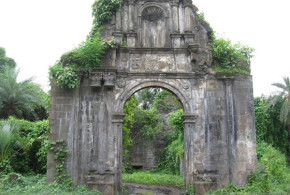
Written by Marco Ramerini. English text revision by Dietrich Köster.

Bassein-Vasai (Baçaim) is situated at about 70 kilometers north of Bombay on the Arabian Sea. It lies on an island at the mouth of a river and was thanks to this position easily defensible. The city, which belonged to the Kingdom of Cambay, was a very important one before the Portuguese conquest. The sources of wealth of Bassein (Baçaim) were: the horse trade, fishing, the salt, the timber, the stone quarry (basalt, granite) and the shipyards. In those days the city was situated in the center of a wealthy agricultural district, which yielded rice, betel, cotton, sugar-cane and more.

In 1528 Captain Heytor de Silveira captured and burnt the city of Bassein. After this the Lord of Thana submitted voluntarily as tributary to Portugal. In 1532 the Portuguese newly attacked Bassein and after a weak resistance they entered the fort and destroyed it. The towns of Thana, Bandora, Mahim and Bombaim were put under tribute. On 23 December 1534 the Sultan of Gujarat ceded by treaty Bassein with its dependencies (Salcete, Bombaim, Parel, Vadala, Siao, Vorli, Mazagao, Thana, Bandra, Mahim, Caranja) to Portugal.

Bassein (Vasai), church's ruins, watercolor by Roberto Ramerini
Bassein (Vasai), church’s ruins, watercolor by Roberto Ramerini

In 1535 a Feitoria (Agency) and the Igreja de Nossa Senhora da Vida were built. In the same year the Sultan of Gujarat assaulted the city; for this reason in 1536 a fortress was built, around which the Portuguese town flourished. In 1540 the “Confraria da Misericórdia was founded”. In 1547 the Franciscans founded the Convent and the Church of Santo António and the Igreja Matriz de São José.

In 1548 St. Francisco Xavier stayed in Bassein and a portion of the Indian population was converted to Christianity. In 1549 the Jesuits built the Igreja do Sagrado Coração de Jesus. Later in 1561 they began to build their large College. In 1556 the Portuguese occupied the mountain “Serra de Açarim” and the fort of Açarim/Asserim and that of Manora were occupied in the vicinity.

A small fort was built at Caranja. On Salcete (Salsette) island 9 churches were built: Nirmal (1557), Nossa Senhora dos Remédios (1557), Sandor (1566), Agashi (1568), Nandakal (1573), Papdy (1574), Pale (1595), Manickpur (1606), Nossa Senhora das Merces (1606). In 1559 Damão was occupied and in the same year the fort of Bulsar was put under Portuguese control, but was already abandoned in 1560.

Baçaim, the ruins of the cloister and the tower of the Franciscan Church of Santo António, watercolor by Roberto Ramerini

In 1564 the Church of São Gonçalo was built by the Dominicans. In the second half of the 16th century the construction of a new fort had started and the whole town was surrounded by town walls with 10 bastions. The design of the fortress and of the bastions was inspired by the Italian Renaissance fortifications. In 1581 the Jesuits built the Igreja de Nossa Senhora da Graça and finally the Augustinians built the Igreja de Nossa Senhora da Anunciada in 1596.

Baçaim was known during the Portuguese period for the refinement and wealth of its buildings and palaces and for the beauty of its churches. The Northern Province included a territory, which extended as long as 100 kilometers on the coast, between Damão and Bombaim and in some places extended 30-50 kilometers towards the interior. It was the most productive Indian area under Portuguese rule. In defence of the Province were built several forts. The most important ones were in Damão, Damão Pequeno, Sao Gens, Danu, Serra de Asserim, Trapor, Sirgao, Mahim, Agaçaim (Ilhas das Vacas), Manora, Baçaim, Thana (Santa Cruz, Passo Seco, Baluarte do Mar), Bombaim and Caranja. At the end of the 17th century Baçaim reached the peak of its glory days. In 1611 a mint or “Casa da Moeda” was established in Baçaim.

In 1615 a triangular fort was built in Damão Pequeno (near Damão), which was named fort of São Jerónimo. In 1634 Baçaim numbered a population of 400 Portuguese families, 200 Christian Indian families and 1,800 slaves. The town, in case of enemy attack, numbered about 2,400 men as defenders.

On 23 June 1661 a Marriage Treaty between England and Portugal handed over to the British the port and the island of Bombaim (Bombay). The Portuguese governor of Bombaim refused to give up the island. After a long diplomatic skirmish Bombaim was ceded to the English on 18 February 1665, but without any of its dependencies.

In 1674 Baçaim numbered 2 colleges, 4 convents and 6 churches. In 1685 the Church of Nossa Senhora da Saúde was founded by the Knights Hospitallers of St. John. The decline of the Portuguese power in the Orient and the transfer of Bombaim (Bombay) to the British in 1665 weakened Baçaim. The city was attacked many times by the Mahrattas.

Notwithstanding this, in 1719 the province of Baçaim numbered still about 60.000 inhabitants, of these 2,000 were Portuguese and 58.000 were Christian Indians. In 1720 one of the ports of Baçaim, Kalyan, was conquered by the Mahrattas, and in 1737 they also took possession of Thana and of all the forts on Salcete island and the forts of Parsica, Trangipara, Saibana, the Ilha das Vacas, Manora, Sabajo, the hills of Santa Cruz and Santa Maria.

The only places in the Northern Province, which now remained with the Portuguese were Chaul, Caranja, Bandora, Versova, Baçaim, Mahim, Quelme, Seridao (Sirgao), Danu, Asserim, Trapor, and Damão. In November 1738 the Mahrattas captured the fort of Danu and on 20 January 1739 Mahim capitulated. The loss of Mahim was speedily followed by the capture of the forts of Quelme, Seridao, Trapor, and Asserim (13 February 1739). On 28 March 1739 the island and the fortress of Caranja, were also lost. This was the prelude to final loss of the city, indeed, in February 1739 the Mahrattas attacked Baçaim and after a desperate resistance the last Portuguese defenders surrendered on 16 May 1739. The Portuguese left Baçaim on 23 May 1739.

The Portuguese settlements in the Northern Province. Author Marco Ramerini

After 205 years of uninterrupted Portuguese rule Baçaim (now under the Mahrattas) was progressively neglected and the neighbouring English Bombay, took its place. During the war against the Mahrattas (1737-1740) the Portuguese lost, besides Baçaim, eight cities, four main ports, twenty fortresses, two fortified hills, the island of Salcete (Salsette) with the city and the fortress of Thana, the “Ilha das Vacas”, the island of Karanjà (Juem) and 340 villages. The losses amounted to nearly the whole of the Northern Province, only the town of Damão was held.

[divider]

VASAI (BASSEIN): THE REMAINS OF A PORTUGUESE CITY-FORTRESS IN INDIA

Vasai (Bassein) is located in Thane District, 70 km north of Mumbai (Bombay). The city is located on the north bank of the Vasai Creek, being a part of the estuary of the Ulhas River. Taking a passenger train for Surat via Dadar from Bombay Central get down at Vasai Road (Bassein Road) station. The remains of the fort can be reached by bus or taxi from the Vasai railway station (11 km).

Cloister of the Franciscan Igreja de Santo António. Vasai, Bassein, Baçaim. Author and Copyright Sushant Raut

Of all the Portuguese forts still existing in India, Baçaim (today Vasai), is one of the most imposing. Today Baçaim is a tangle of ruins, the city has, still well preserved, his imposing boundary walls with his two access doors (“Porta do Mar” and “Porta da Terra”) and his 10 bastions.

Scattered inside the walls there are the ruins of numerous town-houses and churches, among other things: the church and the convent of the Dominicans, the Franciscan Igreja de Santo António (with numerous Portuguese tombstones, the remains of the cloister and the ruins of the bell-tower), the Igreja de Nossa Senhora da Vida, the church and convents of the Augustinians, the “Camara” palace, the Misericórdia, the Igreja Matriz de São José, the ruins of the Jesuits church and convent. Well preserved are also the remains of the old citadel of São Sebastião.

[divider]

[divider]

BIBLIOGRAPHY:

– Albuquerque, Teresa “Epigraphy of Bassein” In: Mare Liberum, Revista de História dos Mares N° 9, ” VII Seminário internacional de História Indo-Portuguesa, Goa 1994″, pp. 311-320, 1995, Lisbon, Portugal.

– Baptista, Elsie W. “The East Indians: Catholic community of Bombay, Salsette and Bassein” 255 pp. Publications of the Anthropos Institute N° 3, The Bombay East Indian Association, 1967, Bandra, Bombay.

– Barros, Joseph de “A presença portuguesa em Baçaim: sua génese geo-histórica” In: Mare Liberum, Revista de História dos Mares N° 9, ” VII Seminário internacional de História Indo-Portuguesa, Goa 1994″, pp. 41-47, 1995, Lisbon, Portugal.

– Borges, Charles J. “Jesuit economic interests in the Portuguese Province of the North till the mid-18th century” In: Mare Liberum, Revista de História dos Mares N° 9, ” VII Seminário internacional de História Indo-Portuguesa, Goa 1994″, pp. 49-56, 1995, Lisbon, Portugal.

– Bras, A. Fernandes “Armas e inscrições do forte de Baçaim” 282 pp. maps, ill. Academia Portuguesa da História 1957 Lisboa, Portugal. The complete list and also the descriptions of the inscriptions present in Baçaim fort.

– Couto, Dejanirah “Em torno da concessão e da fortaleza de Baçaim 1529-1546″ In: Mare Liberum, Revista de História dos Mares N° 9, ” VII Seminário internacional de História Indo-Portuguesa, Goa 1994″, pp. 117-126, 1995, Lisbon, Portugal.

– Couto, Dejanirah “A fortaleza de Baçaim” In: “Oceanos” n° 28 Oct/Dec. 1996 pp. 105-118 – Couto, Dejanirah “Baçaim a capital do norte” In: “Oceanos” n°19-20, Sep/Dec. 1994 pp. 258-266

– Cunha, J. Gerson da, “The origin of Bombay” 368 pp Asian Educational Services, 1993 (1900), New Delhi, India.

– Cunha, G. da “Notes on the history and antiquities of Chaul and Bassein” 278 pp. Map & ills. 1993 (1876), Bombay, India.

– Gaspar Rodrigues, Vitor Luis “A organização militar da Província do Norte durante o séc. XVI e princípios do séc. XVII” In: Mare Liberum, Revista de História dos Mares N° 9, ” VII Seminário internacional de História Indo-Portuguesa, Goa 1994″, pp. 247-265, 1995, Lisbon, Portugal.

– Hull, Ernest R. “Bombay mission-history, with a special study of the padroado question (1534-1858)” ? vii+493 pp. 7 color maps Bombay Examiner Press, 1927,

– Leão, M. C. “A Província do Norte do Estado da India” 223 pp. several maps and illustrations, Instituto Cultural de Macau, 1996, Macau.

– Martires Lopes, Maria de Jesus dos “Aspectos da política religiosa na província do Norte, em setecentos” In: Mare Liberum, Revista de História dos Mares N° 9, ” VII Seminário internacional de História Indo-Portuguesa, Goa 1994″, pp. 175-179, 1995, Lisbon, Portugal.

– Meersman, A. “The Franciscans in Bombay. History of the Franciscans in the territory comprised within the boundaries of the present archdiocese of Bombay” xvii+279 pp. 1957, Bangalore, India.

– Oliveira e Costa, Joao Paulo “Simão de Andrade fidalgo da Índia e capitão de Chaul” In: Mare Liberum, Revista de História dos Mares N° 9, ” VII Seminário internacional de História Indo-Portuguesa, Goa 1994″, pp. 99-111, 1995, Lisbon, Portugal.

– Pereira, A. B. de Bragança “Os portugueses em Baçaim” ? 220 pp Sep. de: O Oriente Português Tip. Rangel 1935 Bastorá In: Oriente Portugues N° 7/8/9 pp. 97-313

– Rossa, W. “Indo-Portuguese cities” 117 pp. illust. Comissão Nacional para as Comemorações dos Descobrimentos Portugueses 1997 Lisboa Very interesting descriptions of the Portuguese town of Goa, Chaul, Baçaim, Damao, Diu, Cochin.

– Santos, Isau “A cedência de Bombaim aos Ingleses” In: Mare Liberum, Revista de História dos Mares N° 9, ” VII Seminário internacional de História Indo-Portuguesa, Goa 1994″, pp. 267-290, 1995, Lisbon, Portugal.

– Shirodkar, P. P. “Bombay and the Portuguese impact and influences with special reference to etymology” In: Mare Liberum, Revista de História dos Mares N° 9, ” VII Seminário internacional de História Indo-Portuguesa, Goa 1994″, pp. 291-301, 1995, Lisbon, Portugal.

– Soeiro de Brito, Raquel “Goa e as praças do Norte” 196 pp Junta de Investigaçoes do Ultramar, 1966 (CNCDP 1998), Lisbon, Portugal.

– Varela Gomes, Paulo and Rossa, Walter “O primeiro territorio. Bombaim e os Portugueses” In: “Oceanos” n° 41, 2000.

– Velinkar, Joseph “Early Jesuit presence in Bassein” In: Mare Liberum, Revista de História dos Mares N° 9, ” VII Seminário internacional de História Indo-Portuguesa, Goa 1994″, pp. 305-310, 1995, Lisbon, Portugal.

[divider]

[divider]

Categories
Bangladesh Burma India Portuguese Colonialism

The Portuguese on the Bay of Bengal

Written by Marco Ramerini. English text revision by Dietrich Köster.

On the Bay of Bengal there was a rather peculiar form of Portuguese settlements. Indeed this coast was not conquered militarily like the Malabar coast, but was colonized pacifically by groups of “Casados” (married men of the reserve army), beginning in the 1520s.

SÃO TOMÉ DE MELIAPORE (Madras)

The main settlement was the town of São Tomé de Meliapore (near today’s Madras), where there was (and still is) the grave of the apostle Saint Thomas. In 1522-23 the Portuguese built a church there and, around it, a settlement was started. In 1523 a new city was born. In 1537 São Tomé was populated by 50 Casados. By 1544 their number had doubled. Then the Jesuits settled there in 1548/49. In spite of this fast development in the years between the foundation of São Tomé (1522) and in the 1560s the activity of the Portuguese was mainly concentrated on the settlement of Paleacate (Pulicat), founded in 1518, where in 1545 600-700 Portuguese Casados settled. In the relation of Cesare Federici (1560) the town of São Tomé was described as “la più bella di quante ne sono in quelle parti dell’India”.

In 1580 the town of São Tomé had four churches, those of São Tomé, São Francisco, São João Baptista and Misericórdia. Outside the town were the churches of Madre de Deus, São Lazaro, Nossa Senhora da Luz and Nossa Senhora do Monte. At the beginning of 1600 São Tomé had a population of about 600 Casados. On 9 January 1606 the Diocese of São Tomé de Meliapur was erected. In 1607 São Tomé was declared city and a “Câmara Municipal” was created. In 1614 the inhabitants erected fortifications and the whole population, i.e. the Portuguese administration, the “casados”, the soldiers and the native Christian population resided within the walled city. The city had a “capitão-mor” (captain-major) and a Bishop and in 1635 there were as many as 10 churches. In 1646 São Tomé was besieged by Mir Jumla of Qutbshahi.

Portuguese settlements in the bay of Bengal. Author Marco Ramerini

The period between 1656 and 1662 is an obscure period and in 1662 São Tomé was conquered by Qutbshashi of Golconda. From 1662-1672 São Tomè remained in Qutbshahi hands. In 1672 the French under Admiral de la Haye conquered São Tomé, but after two years of occupation on 6 September 1674 the French surrendered the city to the Dutch, who, in turn, handed it over to the Qutbshahi on 10 October 1674. In 1687 a tenuous Portuguese administration was re-established. In January 1697 the fortification was pulled down; the only privilege that remained to the Portuguese residents in 1702 was to display their flag on Sundays and Holidays.

Portuguese influence came to an end on 21 October 1749, when the English (in principle Portugal’s allies) occupied São Tomé. Other Portuguese settlements were at Negapatam, Porto Novo, Masulipatam, Pulicat, Ugolim (near today’s Calcutta), Chittagong, Syriam (near today’s Rangoon), Dianga (in Arakan).

NAGAPATTINAM

The Portuguese colonized Nagapattinam at the same time as São Tomé (1520s-1530s). It was the best port of the entire Coromandel coast, ten villages (Nagappattinam Port, Puthur, Muttam, Poruvalancheri, Anthonippettai, Karureppankadu, Azhinji Mangalam, Sangamangalam, Thiruthina mangalam, Manjakollai, Nariyankudi) were controlled by the Portuguese traders. At the end of the 1540s the Franciscans and later the Jesuits settled in the town. Several churches were built in the city: Madre de Deus, São Jerónimo, Paulistas, São Domingos, Nossa Senhora da Nazaré, Sé. In 1577 there were in Nagapattinam 60 casados, 200 Eurasians, 3,000 Christian Indians. In the years 1642-43 Nagapattinam was fortified and a customs-house was also built. On 23 July 1658 a Dutch fleet under the command of Jan van der Laan conquered the fort. In the 1590s the Portuguese settled north of Nagapattinam in a port, they named Porto Novo (New Harbour), this port was the place, where the Portuguese moved in after the Dutch conquest of Nagapattinam.

NORTHERN PART OF THE BAY OF BENGAL

The first Portuguese expedition in Bengal landed in Chittagong in 1517. This port was the most important of all; the Portuguese called it “Porto Grande” (Large Harbour). After this first visit the Portuguese sent to Bengal a ship with merchandise annually. In 1536-37 the King of Bengal gave the customs-house of Chittagong (Porto Grande) and Satgaon (Porto Pequeno) to the Portuguese and also permitted to build “feitorias” (trading posts) in both towns.

PIPLI (Orissa)

The first settlement in the Gulf of Bengal was established in Orissa, at Pipli, by some Portuguese, who had escaped from São Tomé in 1514. Pipli was an important trading center and the Augustinians had built a church and a residence. At the beginning of the XVIIIth century a large Portuguese and Eurasian community populated Pipli.

UGOLIM, SATGAON, BANDEL

The destiny of the first settlement in Satgaon is obscure. But in 1579-80 António Tavares founded Ugolim (Hooghly) at the mouth of the Ganges near the first settlement of Satgaon. The town grew rapidly. The religious orders erected many churches and in 1603 it had about 5,000 Portuguese inhabitants. Satgaon was again under the authority of the Portuguese from the 1590s, but Ugolim outshined this settlement. A few kilometers further north was the community of Bandel, where the Order of the Augustinians built a friary in 1599, to which the Church of Nossa Senhora do Rosário was attached (this church still exists in Bandel, although it was rebuilt  in 1660, after its destruction during the sacking of Hooghly by the Moors in 1632). The Portuguese of Ugolim extended their settlements sixty leagues inland from the banks of the river. Since the beginning of the XVIIth century they had the Bengali trade in their hands. In Ugolim the religious orders erected many churches, a hospital, a Casa da Misericórdia (Institution of charity) and a school. The Portuguese never fortified Ugolim and when the Mughals besieged the city it had only an earthen parapet. The siege began on 24 June 1632 and the Portuguese defenders were only three hundred and about six hundred native Christians. The defenders held out for three months, but on 25 September 1632 the Mughals launched a violent attack and captured the town. The Portuguese lost about 3,000-5,000 men, the civil population included. On the Mughals’ side the losses were enormous. There were only three thousand Portuguese survivors. They escaped to Saugor island, where they built a fortress. By July 1633, only a year after the siege of Ugolim, the Portuguese settled again in Ugolim (The Shah Jahan conceded to them a grant of land there). The motive of their return remains unexplained. Notwithstanding this move, the Portuguese never regained their past power. In 1666 a witness reported that at Ugolim there were about 8,000 to 9,000 Portuguese and Eurasians and the Augustinians and the Jesuits possessed large churches. In 1680 in all Bengal there were not less than 20,000 Portuguese Mestiços (people of mixed blood).

CHITTAGONG (CHATIGAM), DIANGA, SANDWIP

The settlement of Chittagong (Chatigam) grew into a great trading center. The Jesuits erected two churches and a residence. About 1590 the Portuguese also captured the fort of Chittagong and made the island of Sandwip a tributary. In 1598 there were 2,500 Portuguese and Eurasians in Chittagong and Arakan. In 1602 Sandwip was conquered by Domingo Carvalho and Manuel de Mattos. This island was, however, lost a short time later (1605 ?).

Towards the end of the XVIth century, the Portuguese also settled in Dianga (today’s Bunder or Feringhi Bunder), opposite to Chittagong across the southern bank of the Karnaphuli River. In 1607 the King of Arakan massacred about 600 Portuguese inhabitants of Dianga. The Portuguese settled again in Dianga after 1615. Despite the Dianga massacre a small number of Portuguese managed to escape and settled on an island at the mouth of the Ganges.

One of them was Sebastião Gonçalves Tibau, who later in 1607 (?), leading 400 Portuguese, attacked and conquered the island of Sandwip for the second time. He ruled the island like an independent king, having under his command a force of 1,000 Portuguese. Tibau also seized the islands of Dakhin Shahbazpur and Patelbanga. In 1615 Tibau proceeded to conquer Arakan and asked for help from Goa, which promptly came. On October 1615 the Portuguese fleet attacked the Arakanese fleet, which was reinforced by a Dutch fleet. They won the battle and the majority of the Portuguese Navy returned to Goa. Soon after in 1616 Sebastião Gonçalves Tibau was defeated by the King of Arakan, who invaded Sandwip and took possession of the island.

After Tibau’s defeat the Portuguese in Eastern Bengal (out of the control of Goa) devoted themselves to piracy. They allied with the King of Arakan and settled in Dianga and Chittagong. They allied with the King of Arakan and settled in Dianga and Chittagong. When the Mughals took Chittagong in 1665, they moved to Ferenghi Bazar (South of today’s Dacca), where Portuguese descendents still reside to the present day.

MINOR SETTLEMENTS IN BENGAL

Map of the Portuguese settlements in North Bengal. Author Marco Ramerini
Map of the Portuguese settlements in North Bengal Bay. Author Marco Ramerini

The Portuguese settled at Dacca about 1580. The remains of the Portuguese trading factory, close to the church of Our Ladies of Rosary, were still evident in 1919 . Other small Portuguese settlements thrived in Bengal: At the end of the XVIth century in Sripur, Chandecan, Bakla, Catrabo, Loricul (where at the end of the XVIIIth century the ruins of a Portuguese church were still evident) and Bhulua, where at the end of the XVIIth century many people spoke Portuguese. In the 1520s some Portuguese settled in Hijili (Hidgelee or Angelim). Here they possessed a large tract of land. The Augustinians built two churches in Hijili. Hijili was lost in 1636. In 1919 the ruins of the Portuguese settlement were still visible. In 1838 at Merepore (three kms south of Hijili) a community of Christians, who claimed to be descendents of the Portuguese from Goa, was found. At Tamluk (Tambolim) was built a church in 1635 and as late as in 1724 the Portuguese had churches and traded there. At Balasore there were small Portuguese settlements. In 1880 a small chapel was still standing. It has disappeared by now.

SYRIAM (Myanmar-Burma)

In the year 1602 the King of Arakan granted the port of Syriam (today’s Rangoon) in Pegu to Felipe de Brito e Nicote for his services. There the Portuguese built a fort and a customs-house. Syriam remained in the hands of the Portuguese untill 1613 when the King of Ava captured it. The Portuguese settlements on the Bay of Bengal reached their apogee in the first decade of the XVIIth century.

[divider]

[divider]

BIBLIOGRAPHY:

– Various Authors “Commerce and Culture in the Bay of Bengal, 1500-1800” 416 p. plates, edited by Om Prakash and Denys Lombard, 1999,

– Arasaratnam, S. and Aniruddha, R. “Masulipatnam and Cambay: a history of two port towns, 1500-1800” xiii, 314pp. maps Munshiram Manoharlal, 1994, New Delhi, India.

– Banerji, Chitrita “How Bengal Discovered Chhana” Portuguese influences in Bengala food.

– Campos, J. J. A. “History of the Portuguese in Bengal” 283 pp. 3 maps Butterworth & Co. 1919 Calcutta, India. An old, but very interesting, book about the Portuguese history in Bengal, history unknown to many people.

– Cortesão , Armando ” A cidade de Bengala do século XVI e os Portugueses” 35 pp. Tip. da Sociedade Astória, 1944, Lisboa

– Ferroli, D. “The jesuits and Mysore” 238 pp. Xavier Press, 1955, Kozhikode, India.

– Jeyaseela, Stephen S. “Portuguese on the Tamil Coast : Historical Explorations in Commerce and Culture, 1507-1749” xix + 437 pp. Illus., Maps, Navajothi Publishing House, 1998, Pondicherry, India.

– Jeyaseela Stephen S. “Coromandel Coast and its Hinterland: Economy, Society And Political System, 1500-1600” 269 pp. Manohar Publishers & Distributors, 1997, Delhi, India.

– Mordechai, Arbell “The Portuguese Jewish community of Madras, India, in the Seventeenth century” In: “Los Muestros. The Sephardic Voice” n° 41, Dec. 2000

– Subrahmanyam, Sanjay “Comércio e conflito: a presenca portuguesa no Golfo de Bengala” Orig. Tit. “Improvising empire Portuguese trade and settlement in the Bay of Bengal 1500-1700” 293 pp Edições 70 1994 Lisboa. A collection of very interesting articles of Subrahmanyam.

– Subrahmanyam, Sanjay “The South Coromandel Portuguese in the late 17th century: a study of the Porto Novo. Nagapattinam complex” In STUDIA N° 49, pp. 341-363, 1989, Lisbon, Portugal.

– Varadarajan, L. “São Tomé: early European activities and aspirations” In: Various Authors “II Seminário Internacional de História Indo–Portuguesa” 429-441 pp. IICT & CEHCA 1985 Lisbon, Portugal.