Categories
Colonial Forts on Google Earth Oman Portuguese Colonialism

The Portuguese Forts in Oman

Written by Marco Ramerini. Photos by Fritz Gosselck. English text revision by Dietrich Köster.

Oman is a country rich in fortifications, some of these were built along the Omani coast by the Portuguese in the sixteenth and seventeenth century, often altered from the original forms several forts built or modernized by the Portuguese are still visible today.

Two impressive fortresses are located in the capital of the Sultanate, Muscat, these are the forts of Jalali (São João) and Mirani both built by the Portuguese around 1580. A few kilometers away is the fort of Matrah also built by the Portuguese in the late sixteenth century.

On the Musandam peninsula in the far north, overlooking the Strait of Hormuz, is the village of Khasab, where another fort was built by the Portuguese around 1620.

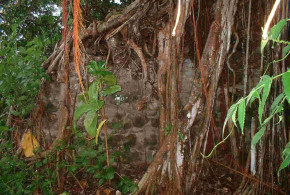
Suwayq Fort, Oman (photo © by Fritz Gosselck).

BIBLIOGRAPHY:

– Al Maamiry, Ahmed Hamoud “Omani – Portuguese history” 80 pp. illustrations, Lancers Publishers, 1982, New Delhi, India.

– Andrade, Rui Freire de “Comentários do Grande Capitão Rui Freire de Andrade” XII, 374 pp. [3] maps Ministério das Colónias, Agência Geral das Colónias 1940 Lisbon, Portugal.

– Dias Farinha, António “Os Portugueses no Golfo Pérsico 1507-1538” 266 pp., Dissertação Faculdade de Letras da Universidade de Lisboa, 1990, Lisbon.

– Dinteman, Walter “Forts of Oman” 128 pp., colour photographs . 1993.

– Gonçalves, Júlio “Mascate, Albuquerque e os sultanatos do Oman 1507-1659” In: “Anais” do Clube Militar Naval, pp. 421-435, 1940, Lisbon, Portugal.

– Muir, J. Reminiscências Portuguesas na Arábia Oriental” 13 pp. Separata do Boletim da Sociedade de Geografia de Lisboa 1961 Lisbon, Portugal.

– Ozbaran, Salih “The Ottoman response to European Expansion. Studies on Ottoman-Portugese relations in the Indian Ocean and Ottoman administration in the Arab lands during the sixteenth Century” xv, 222 pp. black-and-white illustrations, 4 maps, Analecta Isisiana XII, The Isis Press, 1994, Istanbul, Turkey.

– Risso, Patricia “Oman and Muscat: an early modern history” xvii + 258 pp., Croom Helm, 1986, London, United Kingdom.

– Vine, Peter; Casey and Vine, Paula (editors) “Oman in history” 560 pp., Immel Publishing, 1995, London, United Kingdom.

Categories
Dutch Colonialism Malaysia Portuguese Colonialism

The Fort of Malacca: Portuguese-Dutch Fortress of Malacca (Melaka)

Written by Marco Ramerini. Photos by Krzysztof Kudlek. English text revision by Dietrich Köster.

The city of Malacca was conquered by the Portuguese in 1511. Soon after the conquest of the city, which was the most important commercial port in Asia, Afonso de Albuquerque built a fortress to defend the new Portuguese possession.

The first fort, “A Famosa”, was built by Thomas Fernandes and consisted originally of a tower of four floors, serving as home to the captain of the city and surrounded by a wall. The first Captain of Malacca, Rui de Brito Patalim, enlarged this structure by adding another floor to the tower. During the first years of Portuguese rule it also served as a watchtower.

This fortification from the 1560s proved ineffective against the artillery. For this reason from 1564 a new stone wall surrounding the city began to be erected. Four years later, in 1568, the wall was not yet complete and for most of its length was still in wood. The works were completed at the end of the sixteenth century. The perimeter of the walled city then totalled 1310 fathoms.

Four main bastions were built: São Pedro, São Domingos, Santiago and Onze Mil Virgens. Four gates provided access to the fortified enclosure, one on each side. At this time “A Famosa” became known as “Fortaleza Velha”, forming a citadel within the walls of the city.

Porta de Santiago, Malacca, Malaysia. Author and Copyright Krzysztof Kudlek

In the early seventeenth century the fortifications were improved with the addition of some ramparts. These new works of fortification, however, did not prevent the Dutch to conquer the city in 1641 after a siege lasting five months. After the conquest the Dutch proceeded to strengthen the defense of Malacca by building new ramparts and reinforcing the old ones. Ceded in August 1795 by the Dutch to the British, the fort of Malacca was deemed by the new masters as too expensive to maintain and was subsequently demolished.

Today the remains of the fortifications of Malacca are quite scarce, but in recent years excavations have unearthed some parts of the ancient walls of the fortress. The main remain of the fortress is the Porta de Santiago. This was one of the old gates of the city walls during the Portuguese period, which was severely damaged in 1641 during the Dutch siege and later it was demolished and rebuilt. Above the entrance arch are the symbols of the Dutch East India Company (VOC) and the inscription “ANNO 1670”.

REMAINS OF SOME WALLS (MIDDELBURG BASTION) OF THE PORTUGUESE-DUTCH FORT IN MALACCA

Information and photos by Martin Carvalho and Damian Gerard Sta. Maria from Malacca. English text revision by Dietrich Köster.

The photos were taken about a month after the initial discovery. The excavations are —– located next to the former Kancil Restaurant, which still houses a part of the Tourist Information Office. These excavations succeeded in revealing a part of the Portuguese Fort built between 1512 and the 1550s. The Dutch added a square rectangle to the Portuguese structure between the late 1650s and 1670, naming it “Middelburg”. This can be seen from the top view photo and from the other ones. You can also note circular concrete beams protruding at the site. They are the remnants of a Shell petrol depot built by the British in 1905. It was also discovered a huge sewage and water pipe dating back to approximately 1895.

According to the last news about 350 m of the buried walls of the fortress will be reconstructed stone by stone subject to its original dimensions of 8 m by 5 m. The completed structure will encompass the city’s 11.3 ha heritage site in Bandar Hilir. The Heritage Department under the Culture, Arts and Heritage Ministry will implement the project in stages beginning from the ancient wall site in Bandar Hilir, which has been confirmed as the Middelburg Bastion. With the project existing buildings and other structures will not be touched.

The Heritage Department will excavate and expose the southern side of the foundation of the fort’s walls and its six bastions before using laterite stones from Malacca’s Pulau Upeh to reconstruct the fort. The department will also conserve and restore the 23 historical structures within the fort’s precinct.

Categories
Malaysia Portuguese Colonialism

Flor de la Mar (Flor do Mar), 1511. A shipwrecked Portuguese Galleon

Written by Marco Ramerini. Photos by Krzysztof Kudlek. English text revision by Dietrich Köster.

The “Flor do Mar” or “Flor de la Mar” was a Portuguese galleon of 400 tons, which was part of the fleet sent to conquer the city of Malacca in 1511. The vessel was built in Lisbon in 1502 and at the time of its construction it was one of the largest and most beautiful galleons of the time. The ship made ​​its first trip to India in 1502 under the command of  Estevão da Gama. In 1503 the ship was returning, laden with spices, to Portugal.

In 1505 the ship departed newly to Asia under the command of João da Nova. In 1506, during the return trip, the ship was forced to stop for almost a year in Mozambique for repairs. Because of its enormous size, when it was fully loaded, it was difficult to maneuver. In February 1507 the ship set sail from Mozambique and returned without load in India along with the fleet of Tristão da Cunha.

In the following years the Flor do Mar participated in major battles and events: in 1507 it participated in the conquest of Socotra, Curiate (Kuryat), Muscat, Khor Fakkan, and Ormuz. In 1509 it participated in the naval battle of Diu. The new governor of Portuguese India, Afonso de Albuquerque, used it for the conquest of Goa in 1510, and then for the conquest of Malacca in 1511.

At the end of 1511 after the Portuguese conquest of Malacca and the building of a fortress the Viceroy of India Afonso de Albuquerque prepared his fleet for the return to India.

Against the advice of his captains Albuquerque decided to sail from Malacca in December 1511. He filled his ship – the “Flor do Mar” – with the most beautiful treasures captured in Malacca: gold, silver, precious stones, jewels etc. At the time Malacca was in effect the largest commercial port in the East and Afonso de Albuquerque wished to present the treasures to the court of Manuel I of Portugal.

The ships of the fleet were full of booty taken after the capture of the city, but probably in December 1511 during the return voyage to Goa his ship “Flor do Mar” sank during a storm and all the treasures fetched in Malacca were lost. The ship was in fact sinking along the coast of Sumatra island at the northern end of the Strait of Malacca.

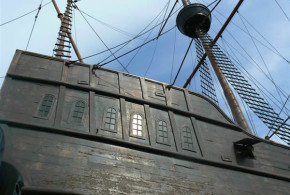
Today a replica of the “Flor de la Mar” is housed in the Maritime Museum in Malacca.

Categories
Dutch Colonialism Macau

Dutch Graves in Macau

Photos by Magiel Venema. English text revision by Dietrich Köster.

The Dutch have never had control over the Portuguese colony of Macao. But despite this they have used this Portuguese outpost in China for their trade. This is evidenced by the numerous tombs Dutch in the two ancient cemeteries of the city: the Roman Catholic cemetery and the Old Protestant Cemetery.

The Roman Catholic cemetery of Macau, Cemitério de São Miguel Arcanjo (Saint Miguel Catholic Cemetery), is located right in the middle of the Macao peninsula, on the Estrada do Cemitério, about half a mile to the northeast of Monte Fort. Inside this cemetery are several interesting Dutch tombstones.

The Old Protestant Cemetery is situated next to the Camões Garden and can be reached by walking north and downhill from the Ruins of São Paulo’s Cathedral. In this cemetery are 162 tombs, several of them are Dutch tombstones. This Cemetery was established by the British East India Company in 1821.

Dutch grave (1786) in the Protestant cemetery, Macau. Photo by Magiel Venema

After the founding of the cemetery some graves were moved from their original positions in the Protestant cemetery. This explains the existence of graves dating back long before the founding of the cemetery. The English East India Company allowed the burial in their cemetery of all foreign. In the Protestants Cemetery are the graves of various nationalities including many Dutch graves some of which date back to the eighteenth century.

 In 2005, the Old Protestant Cemetery was included in the World Heritage of UNESCO as part of the UNESCO site of Macau (Historic Center of Macau).

All the photos of the graves on this page are copyright © by Magiel Venema, my thanks. 

Categories
Asia Portuguese Colonialism Portuguese language

Portuguese language heritage in Asia

Written by Marco Ramerini. English text revision by Dietrich Köster.

The Portuguese language has been in relation to the trade and colonial expansion of Portugal the trade language of the Indian Ocean shores in the 16th, 17th and 18th centuries. Portuguese was used, at that time, not only in the eastern cities conquered by the Portuguese but was also used by many local rulers in their relations with the other European powers (Dutch, English, Danes etc. ).

In Ceylon, for example, Portuguese was used for all contacts between the Europeans and the local peoples. Several Kings of Ceylon spoke it fluently. Portuguese names were common among the nobility. When the Dutch occupied coastal Ceylon they, particularly under van Goens, took measures to stop the use of Portuguese. However, it had become so well established among the Ceylonese that even the families of the Dutch Burghers started to speak it. In 1704, the Governor Cornelius Jan Simonsz said that “if one spoke Portuguese in Ceylon, one could be understood everywhere”.

Also in the Dutch eastern capital city of Batavia (today’s Jakarta) Portuguese was the spoken language in the 17th and 18th centuries. The religious missions contributed to the great spreading of the Portuguese language. Indeed, as many communities converted to Christianity, they adopted the Portuguese mother tongue. Also the Protestant missions (Dutch, Danish, English…) that worked in India were forced to use Portuguese as their evangelisation language.

The Portuguese language has also influenced many an oriental language. Many Portuguese words were permanently lent to various kinds of Eastern languages such as Indian languages (Bengali included), Swahili, Malay, Indonesian, Japanese, Ceylonese languages, Tetum of Timor and also Afrikaans in South Africa.

Besides, where the Portuguese presence was stronger or lasted longer, flourishing communities of “Casados” and “Mestiços” were developed that adopted a variety of the mother tongue: a kind of Creole Portuguese.

What remains today is very little. However it is interesting to notice that, to this day, there are small communities of peoples spread throughout Asia that continue to use Creole Portuguese, although for many years (for centuries, in some cases) they had no contact with Portugal. Another interesting aspect to contemplate is that, during the best period of Portuguese presence in Asia, the number of Portuguese there was never more than 12.000 to 14.000 souls, including the clergy.

Portuguese-speaking communities in Asia (Blue Present-day places, where Portuguese is spoken. Red Places, where communities used to speak Portuguese). Author Marco Ramerini

TODAY, THERE ARE PORTUGUESE SPEAKING COMMUNITIES IN:

Malacca: (Portuguese Settlement, Praya Lane, Bandara Hilir). About 1000 people speak this Creole Portuguese (Papia Kristang). About 80 % of the older residents of the Portuguese settlement in Malacca regularly speak Kristang. There are also some speakers in today’s Singapore and Kuala Lumpur. Kristang is very close to local Malay in its grammatical structure, but its vocabulary is for 95% derived from Portuguese. Not many years ago, Portuguese was also spoken in Pulau Tikus (Penang) but now it is considered extinct. The Eurasian community has 12.000 members on the Malay Peninsula. Active are MPEA (Malacca Portuguese Eurasian Association) and SPEMA (Secretariat of the Portuguese/Eurasian Malaysian Associations) with seven separate member associations in Alor Star, Penang, Perak, Malacca (MPEA), Kuala Lumpur, Seremban and Johor Baru. There is also a Eurasian Association in Singapore. Portugal lost Malacca in 1641.

Korlai: (near Chaul, India). About 900 monolingual people speak this Creole Portuguese, this community has his Portuguese church called: “Igreja de Nossa Senhora do Monte Carmelo”. Originated around 1520 on the west coast of India. Initially isolated from its Hindu and Muslim neighbors by social and religious barriers, the small Korlai community lost virtually all Portuguese contact as well after 1740. Portugal lost Chaul in 1740.

Damão: (Damão Grande or Praça, Campo dos Remédios, Jumprim, Damão da Cima). About 2000 people speak this Creole Portuguese. Portugal lost Damão in December 1961.

Ceylon: [Portuguese Burghers in Batticaloa (Koolavaddy, Mamangam, Uppodai, Dutch Bar, Akkaraipattu); Trincomalee (Palayuttu); Kaffir communities of Mannar and Puttalam ]. It’s now used at home only. It was spoken by 250 families in Batticaloa as late as 1984. There are still 100 families in Batticaloa and Trincomalee and about 80 Afro-Sinhalese (Kaffir) families in Puttalam. Of about 5.000 Creole people (Batticaloa, Trincomalee), only 500 still speak Creole, the younger generations cannot speak the Creole. < Silva Jayasuriya, 2000 > Nearly extinct. In Batticaloa there is the Burgher Recreio Clube “Shamrock” or “Batticaloa Catholic Burgher Union”. There is a little community of Portuguese descendants in the village of WahaKotte (circa 7°42’N. – 80°36’E) (Central Sri Lanka, six kilometers from Galewala on the road between Galewala and Matale), they are Roman Catholic, but since about two generations Portuguese Creole is no longer spoken. Portugal lost Ceylon in 1658.

Macau: About 2.000 people speak Portuguese as their first language, and about 11.500 as their second language. Only a few elderly women speak Macanese a Macao Creole Portuguese. The “Instituto Cultural de Macau” and the “Fundação do Oriente” are still active. There is also a TV channel and several newspapers entirely in Portuguese. Macau was a Portuguese province. On 20 December 1999 it was reverted to China.

Hong Kong: Several hundred people speak Macanese. Essentially, these are people that emigrated from Macao. There is the “Club Lusitano”. Never under Portuguese rule.

Goa: Portuguese is rapidly disappearing from Goa. It is now spoken only by a small segment of the upper class families and about 3 to 5 % of the people still speak it (estimated at 30.000 to 50.000 people). Today 35% of Goa’s population are immigrants from other Indian states. In the Indian school it is taught as third language (not obligatory). There is a department of Portuguese at the Goa University. However, the “Fundação do Oriente” and the Indo – Portuguese Friendship Society (Sociedade de Amizade Indo-Portuguesa) are still active. The last Newspaper in Portuguese shifted over to the English language in 1983. At Panaji many signs in Portuguese are still visible over shops, administrative buildings etc. Portugal lost Goa in December 1961.

Diu: Here the Creole Portuguese is nearly extinct. According to the testimony of Maria Luiza de Carvalho Armando, its seems that the Creole Portuguese language is still used in Diu and according to her Diu it’s the place in India where the Portuguese legacy is the most durable. (Information obtained from Maria Luíza de Carvalho Armando with thanks.) Portugal lost Diu in December 1961.

Timor: Portuguese was spoken in 1950 by less than 10,000 people and in 1974 by only about 10%-20% of the population. In 1975: East Timor had 700,000 inhabitants from which: 35-70,000 knew how to read and write Portuguese and 100-140,000 could speak and understand it. Until 1981 Portuguese was the church language of Timor, when it was supplanted by Tetum. However, it is commonly used as the business language in the town of Dili. Portuguese remains the language of the anti-Indonesian resistance and that of external communications for the Catholic Church. The Creole Portuguese of Timor (Português de Bidau) is now extinct. It was spoken around Dili, Lifau and Bidau. Indonesia invaded East Timor in 1975. Now Timor is an independent nation. It has adopted Portuguese as an official language alongside Tetum.

Indonesia: Flores island: (Larantuka, Sikka) Here Portuguese survives in the religious traditions and the Topasses community (the descendants of Portuguese men and local women) uses it in the prayers. On Saturdays the women of Larantuka say the rosary in a corrupt form of Portuguese. In the Sikka area of eastern Flores, many of the people of Sikka are descendants from the Portuguese and still??? use that language. There is the Confraternity of “Reinja Rosari”. Larantuka was abandoned by Portugal in 1859.

UNTIL A FEW YEARS AGO, PORTUGUESE SPEAKING COMMUNITIES EXISTED IN:

Ceylon: (Creole Portuguese was used amongst the Dutch Burgher community). Till the beginning of the 20th. century Creole Portuguese was spoken by the members of this community. Untill after the Second World War Sri Lankan Catholics in Colombo met for regular church services conducted in Portuguese (at the parish church of St. Anthony’s, Dematagoda). Up to the middle part of this century prayers were being conducted for diminishing groups in Portuguese at a number of Catholic churches in the city (Dematagoda, Hulftsdorp, Kotahena, Kotte, Nugegoda and Wellawatte). Although a verbal language, Portuguese was fast loosing its original purpose at religious devotions in Catholic churches (to be replaced by English and taken over more fashionably and pursued with greater vigour).

Jakarta-Batavia-Tugu: (a suburb of Jakarta). Here, till the beginning of the 20th. century, a kind of corrupted Portuguese was still spoken by the Christian population in Tugu. The last creol speaking died in 1978. Never under Portuguese rule.

Cochin: (Vypeen). It has disappeared in the last twenty years of the 20th century. The community of Portuguese/Indians (about 2,000 people) has its parish church in the old church of Nossa Senhora da Esperança. Portugal lost Cochin in 1663.

Bombaim or Província do Norte: (Baçaim, Salcete, Thana, Chevai, Mahim, Tecelaria, Dadar, Parel, Cavel, Bandora-Badra, Govai, Morol, Andheri, Versova, Malvan, Manori, Mazagão) In 1906, this Creole was, after that of Ceylon, the most important of Indo-Portuguese Creole. In 1906 there were still 5,000 people who spoke Creole Portuguese as mother tongue, of these 2,000 were in Bombaim and Mahim, 1,000 were in Bandora, 500 in Thana, 100 in Curla, 50 in Baçaim and 1,000 in other villages. There were at that time no Creole Portuguese schools and the well-to-do classes tended towards neglecting its use and preferred English. (Costa, 1892 & Dalgado, 1906)

Coromandel: Coromandel: (Meliapore, Madras, Tuticorin, Cuddalore, Karikal, Pondicherry, Tranquebar, Manapar, Negapatam) On the Coromandel coast the Portuguese descendants were generally known by the name of “Topasses”. They were Catholics and spoke Portuguese Creole. With the coming of the English rule in India, they began to speak English instead of Portuguese and also anglicized their names. They are now part of the Eurasian community. In Negapatam, in 1883, there were still 20 families that spoke Indo-Portuguese. (Schuchardt, 1883 & Dalgado, 1917)

HAVE DISAPPEARED FOR MANY YEARS THOSE OF:

Solor & Adonara: Solor, Adonara (Vure) islands on Lesser Sunda islands, Indonesia.

Batavia, Java island: (Dutch community of Batavia, Mardijkers) The Mardijkers are the descendants of the old slaves from Malacca, Bengal, Coromandel, Malabar, that were converted to Protestantism, for which they were set free. They spoke a Creole form of Portuguese and were the main group of the Portuguese community of Batavia. After the Dutch conquest of Malacca and Ceylon their number increased considerably. In 1673 a Protestant church was built in Batavia for the Portuguese community and later, at the end of the XVII century, a second church was built. In 1713 this community had about 4,000 members. (Lopes) Until 1750 Portuguese was the first language in Batavia, but after that date Malay started to dominate. In 1808 Reverend Engelbrecht celebrated the last mass in Portuguese. In 1816 the Portuguese community was incorporated into the Malay community. Also in the Dutch families of Batavia the Portuguese language was vividly used until 1750, in spite of the efforts of the Dutch Government against its use.

Mangalore: A port-city on Karnataka coast.

Cannanore: A port-city on Kerala coast.

Bengal: Bengal: (Balasore, Pipli, Chandernagore, Chittagong, Midnapore, Hugli……) The Portuguese language was in the 17th and 18th centuries the “lingua franca” in Bengal. Up to 1811 Portuguese was used in all Christian churches in Calcutta (Catholics and Protestants). At the beginning of the 20th century only in a few families a corrupted form of Portuguese was spoken, largely mixed with English words. (Campos, 1919)

Moluccas: (Ternate, Ambon, Banda, Makasar) TERNATENO, a Creole Portuguese was spoken on the islands of Ternate and West Halmahera, which is now extinct. AMBON, the Creole Portuguese is extinct, but some traces of Portuguese are in the language now spoken on Ambon, the Malay-Ambon, which has about 350 words of Portuguese origin.

Along the Indian Ocean shores there were about 44 communities where Portuguese was spoken.

BIBLIOGRAPHY:

– Abdurachman, Paramita Rahayu “Some Portuguese loanwords in the vocabulary of speakers of Ambonese Malay in Christian villages of the Central Moluccas”
17 pp. LIPI, 1972, Jakarta, Indonesia.

– Clancy, Clements “The genesis of a language: the formation and development of Korlai Portuguese”
XII, 281 pp. maps, Creole language library vol.16, Benjamins, 1996, Amsterdam and Philadelphia.

– Dalgado, S. R. “Estudos sobre os Crioulos Indo-Portugueses” 187 pp. Comissão Nacional para as Comemorações dos Descobrimentos Portugueses 1998 Lisboa, Portugal.
Dialecto Indo-Português de Goa; Dialecto Indo-Português de Damão; Dialecto Indo-Português do Norte; Dialecto Indo-Português de Negapatão; Berço duma cantiga em Indo-Português. The latest edition of the interesting study of Sebastião Rodolfo Dalgado on the Creole languages of Goa, Damão, Negapatam and the Northern Province of India.

– Dalgado, Sebastião Rudolfo “Dialecto Indo-Português de Ceilão”
301p. (Cadernos Ásia) CNCDP, 1998, Lisboa, Portugal.

– Daus, Ronald “Portuguese Eurasian communities in Southeast Asia”
83 pp. Institute of Southeast Asian Studies, 1989, Singapore.
The Portuguese Eurasian communities in Malacca, Tugu, Larantuka and Singapore.

– Goonatilleka, M.H. “A Portuguese Creole on Sri Lanka: A Brief Socio-Linguistic Survey”
In: SOUZA, Teotónio R. de (ed.) “Indo-Portuguese History. Old Issues, New Questions (3 th ISIPH )”
pp. 147-180 Concept, 1985, New Delhi, India.

– Hettiarachchi, A. S. “Influence of Portuguese on the Singhalese Language”
JCBRAS Vol. IX, 1965, pp. 229-238

– Jackson, Kenneth David “Sing without a shame:oral traditions in Indo-Portuguese creole verse: with transcription and analysis of a nineteenth-century manuscript of Ceylon Portuguese Creole”
XXVII, 257 pp. Creole Language Library, Benjamins, 1990, Amsterdam and Philadelphia.

– Lopes, David “A Expansão da Língua Portuguesa no Oriente durante os Séculos XVI, XVII e XVIII”
265 pp. Portucalense Editora, 1969, Porto, Portugal.

– Matos, Luís de “O português, língua franca no Oriente”
In: “Colóquios sobre as províncias do Oriente” Vol. 2 Junta de Investigações do Ultramar, 1968, Lisboa. – pp. 11-23
(Estudos de Ciências Políticas e Sociais ; 81)

– Silva Jayasuriya, Shihan de “Indo-Portuguese of Ceylon: a contact language”
188 pp. Athena Publications, 2001, London, UK.

– Silva Rego, Padre António do “Dialecto português de Malaca e outros escritos”
304 pp. (Cadernos Ásia) CNCDP, 1998, Lisboa, Portugal.
Dialecto Português de Malaca; A Comunidade Luso-Malaia de Malaca e Singapura; A cultura Portuguesa na Malaia e em Singapura.

– Teixeira, Pe. Manuel “The Influence of Portuguese on the Malay Language”
In: “Journal of the Malayan Branch of the Royal Asiatic Society”, 1962, vol. XXXV (Pt. 1).

– Theban, Laurentiu “Situação e perspectivas do português e dos crioulos de origem portuguesa na Índia e no Sri-Lanka” In: “Actas do Congresso sobre a situação da língua portuguesa no Mundo” vol. 1 pp. 269-285 Imprensa Nacional, 1985, Lisboa, Portugal.

Categories
Indonesia Portuguese Colonialism

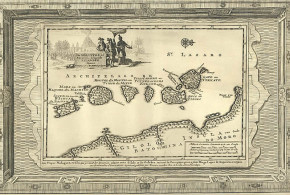
The Portuguese Fort on Solor Island, Indonesia

Written by Mark Schellekens. English text revision by Dietrich Köster.

On January 7th I paid a visit to the island of Solor off Flores’ north east coast. My main goal was to have a birdwatching trip on an virtually unknown island combined with a visit to the ruins of the fort.

Solor is easily reached from both Flores and nearby Adonara. Direct small boats go early mornings from both Larantuka on Flores and Wairwerang on Adonara to Menanga and Lemakera on Solor.

The fort is located in the village of Lohayong (about 3km west of Menanga) on the eastern part of the island. The site of the fort is sadly overgrown with vegetation and villagers have built houses on the foundations of the fort.

Several walls are still standing up and the entrance can still be found as well as 2 abandoned cannons. Foundations can easily be traced and some of the walls facing the sea are still standing up.

The soil at the site is littered with debris from the fort and pieces of glass with VOC-logo and pieces of Dutch pottery were also found.

Before visiting the fort, visitors are asked to sign the guestbook of the mayor of Lohayong and donate a small fee.

In the village of Lemakera on the eastern tip of Solor there is a collection of 13 Portuguese guns, which were left behind. Some women guard the guns and a small fee will be asked, if one wants to take pictures of the guns.

If you know or you have photos of colonial remains around the world, send it to me, I’ll be happy to publish it in the web site. Thank you. Marco. My e-mail is on the Home page.

Categories
Indonesia Portuguese Colonialism

The Portuguese on Solor and in the Lesser Sunda Islands

Written by Marco Ramerini. English text revision by Dietrich Köster.

SOLOR AND THE LESSER SUNDA ISLANDS

The early Portuguese contact with these islands was in the years about the 1520s. They frequented these islands mainly to purchase sandalwood. The early traders established only temporary warehouses. They did not build permanent trading posts, farms or fortresses, because this task was left to the Dominican missionaries. In 1561 four Dominican friars under the orders of Brother António da Cruz left Malacca to preach the Gospel on those islands. They settled on Solor. The friars had a noticeable success in the conversions. In order to protect their spiritual work from the enemies, they built a stone fortress at Solor in 1566.

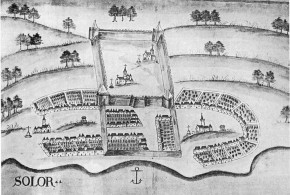
Within the fort were built the friars’ dormitory, a seminary (in 1600 it contained 50 pupils) and the church of Nossa Senhora da Piedade reserved to the Portuguese. The Portuguese captain resided in a tower. On the left side of the fort a native village was built adjacent to the church of São João Baptista. A few years later the church of Misericórdia was built outside the fort near the sea. New conversions were also realized on the nearby islands of Adonara and Flores.

In the island of Ende Minor the friars built a fort (1595) and within its walls the church of São Domingos was built. The converted indigenous population settled in the vicinity of the fort, where three native villages were founded. Numbas, close to the fortress; Currolalas on the left side with the church of Santa Catarina de Siena; and Charaboro on the right side with the church of Santa Maria Madalena. The first commander of the fortress of Ende was capitão (captain) Pero Carvalhais.

By 1599 the Dominicans had built as many as 18 churches on the Solor islands:

SOLOR: – Nossa Senhora da Piedade, inside the fortress. – São João Baptista, on the left of the fort, was the native’s church. – Misericordia, in the village of Laboiana. – São João Evangelista, in the village of Lamaqueira; it was destroyed in 1598. – Madre de Deus, in the village of Guno.

ENDE: – São Domingos, inside the fort. – Santa Catarina de Siena, in the village of Currolalas. – Santa Maria Madalena, in the village of Charaboro.

FLORES: – São Lourenço, in the village of Lavunama. – Nossa Senhora de Esperança, in the village of Boibalo. – Nossa Senhora, in the village of Larantuca. – Santa Luzia, in the village of Sicà. – name unknown, in the village of Pagà. – Nossa Senhora de Assunção, in the village of Quevà. – São Pedro Martir, in the village of Lena. – Nossa Senhora da Boa Viagem, on the beach of Dondo, but it was neglected a short time after being built.

ADONARA: – Espírito Santo in the village of Cramà. – name unknown in the village of Lamala, destroyed a short time after a rebellion.

On 27 January 1613 a Dutch fleet appeared off Solor. The Portuguese captain Manuel Alvares had 30 Portuguese and 1000 natives at his disposal to defend the place. After nearly 3 months of siege the Dutch conquered the Solor fortress on 18 April 1613. They renamed it Fort Henricus.

In 1615 (?) the Dutch fled from the fort, but in 1618 they reoccupied it. Again in 1629-30, as the Dutch left Solor, the Portuguese wasted no time and occupied Solor again in 1630. However, in 1636 they left Solor and it remained deserted till the Dutch returned again in 1646.

The Dominicans moved their headquarters to Larantuka (Flores) in 1613. This was the center of the Portuguese in the Lesser Sunda islands up to 1662, when the headquarters were moved to Lifau (today Oecussi in Timor).

BIBLIOGRAPHY:

– Boxer,Ch.R. “Francisco Vieira de Figueiredo: a Portuguese merchant-adventurer in South East Asia, 1624-1667” 118 pp. Martinus Nijhoff 1967, ‘s-Gravenhage, The Netherlands. The adventurous history of the life of Francisco Vieira de Figueiredo in Makassar and Larantuka.

– Kartodirdjo, Sartorio “Religious and economic aspects of Portuguese-Indonesian relations”, in: STUDIA N° 29, pp. 175 – 196, 1970, Lisbon, Portugal.

– Pinto da França, A. “Influência Portuguesa na Indonésia” in: STUDIA N° 33, pp. 161-234, 1971, Lisbon, Portugal.

– Villiers, J. “As derradeiras do mundo: The Dominican Mission and the Sandalwood trade in the Lesser Sunda Islands in the sixteenth and seventeenth centuries” In: Various Authors “II Seminário Internacional de História Indo – Portuguesa” pp. 572 – 600 IICT & CEHCA, 1985, Lisbon, Portugal.

Categories
Indonesia Moluccas Portuguese Colonialism

The Portuguese in the Moluccas: Ternate and Tidore

Written by Marco Ramerini. English text revision by Dietrich Köster.

TERNATE AND TIDORE

The first Portuguese expedition to the Moluccas under the command of António de Abreu arrived in Amboina and on the Banda islands in 1512. After an adventurous voyage he went back to Malacca. Francisco Serrão and other members of this expedition wrecked on a reef off Lucopino island (Nusa Penju) not far from Ambon island, but somehow managed to reach first Ambon and then Ternate.

There the Sultan of Ternate adopted Serrão as his personal councilor and made him and his companions prominent figures of his royal court. From 1513 the Portuguese sent an annual trading fleet to the Spice Islands. The first under Captain António de Miranda de Azevedo opened two small “feitorias”, one in Ternate and one in Batjan.

On Febraury 1522 the Portuguese captain António de Brito came to the Banda islands and strengthened the friendship with the King of these islands. To mark this event they erected a stone “padrão” with the arms of the King of Portugal. António de Brito arrived in Ternate in May of 1522, when he built the fortress of São João Baptista de Ternate. The foundation stone of the fortress was laid on June 1522. The Jesuits soon started a school in Ternate.

The Portuguese rule in these islands was always weak. This was due to the remoteness of the islands and to the small number of Portuguese , who arrived there; the Europeans were never more than a few thousand.

Several Spanish expeditions arrived in Tidore; the first was that of Magalhães. The Spaniards settled in Tidore and annoyed the Portuguese for many years.

On 25 October 1536 the Portuguese governor, António Galvão arrived in Ternate. He was a good governor, reconciling, organizing and evangelizing the Moluccas. He was also the builder of the Portuguese town of Ternate, he built a school and a hospital and had a stone wall built all around the town. António Galvão is worshipped as the apostle of the Moluccas.

On 15 July 1575, the Portuguese surrendered the fort to the Ternatese.

The Portuguese fort of Ternate.

The Spanish town of Ternate: Ciudad del Rosario.

[divider]

[divider]

BIBLIOGRAPHY:

– Andaya, Leonard Y. “The world of Maluku: Eastern Indonesia in the early modern period” University of Hawaii Press, 1993, Honolulu.

– Argensola, Bartolomé Leonardo “Conquista de las islas Malucas” 372 pp. EdicionesPolifemo, 1992 (1609), Madrid, Spain.

– Des Alwi & Hanna, A. Willard “Turbolent times past in Ternate and Tidore” (also for the Dutch history) 290 pp. Rumah Budaya 1990 Banda Neira, Moluccas, Indonesia.

– Jacobs, Hubert “A treatise on the Moluccas c. 1544. Probably the preliminary version of António Galvão’s lost História das Molucas” x, 402 pp. Sources and studies for the history of the Jesuits n° 3, Institutum Historicum S. I., 1971, Roma, Italia.

– Jacobs, Hubert “Documenta Malucensia” Vol. I-II-III Vol. I 1542-1577. XLII-84*-760 pp. (vol. 109). Monumenta Historica Societatis Iesu, 1974, Roma, Italia. Vol. II 1577-1605. XXXII-65*-794 pp. (vol. 119). Monumenta Historica Societatis Iesu, 1980, Roma, Italia. Vol. III 1606-1682. XXIV-54*-778 pp. (vol. 126). Monumenta Historica Societatis Iesu, 1984, Roma, Italia.

– Perez, Lorenzo OFM “Historia de las misiones de los Franciscanos en las islas Malucas y Celebes” In: “Archivum Franciscanum Historicorum” vol. VI (1913), pp. 45-60, 681-701; vol. VII (1914) 198-226, 424-446, 621-653.

– Pinto da França, A. “Influência Portuguesa na Indonésia”, in: STUDIA N° 33, pp. 161-234, 1971, Lisbon, Portugal.

– Ramerini, Marco “Le Fortezze Spagnole nell’Isola di Tidore, 1521-1663” Roma, 2008

– Rebelo, Gabriel “Informação das cousas de Maluco ……. 1569” 1856 & 1955, Lisbon, Portugal.

Categories
Indonesia Moluccas Spanish Colonialism

The Spanish Presence in the Moluccas: Ternate and Tidore

Written by Marco Ramerini. English text revision by Geoffrey A. P. Groesbeck

The islands formerly known as the Moluccas – the Spice Islands – are five islands of volcanic origin (Ternate, Tidore, Moti, Makian, and Bacan). They are found off of the west coast of the island of Halmahera, in the Indonesian archipelago.

These islands were the only ones in the world where, at the time of the arrival of the Portuguese (c. 1510), cloves grew wild. Clove is an aromatic spice of the family Myrtaceae, whose botanical name is Caryophyllus Aromaticus (in full, Eugenia Caryophyllata, Syzygium Aromaticum).

This singular condition made the Moluccas islands famous since the ancient times. Clove was one of the most important trading commodities. It was traded in the Asian markets (i.e., Arabic-speaking countries, and China and India) and also the European ones. Its oil was used for the treatment of food as well as like essence to perfume the breath, and as an anesthetic for toothache.

The Moluccas had this key, lucrative commodity, but had to import most of their foodstuffs from other islands: sago and rice, for example, came from Halmahera, Ambon and Bacan. Cloves were exchanged for clothing, silk, porcelain, gold, silver, knives, glass, and other items.

All the Moluccas are dominated by high volcanoes, some of which are still active. Beyond the five main islands, there are also three smaller volcanic ones: Hiri to north of Ternate, Maitara between Ternate and Tidore, and Mare between Tidore and Moti.

Because of the continuous trade contacts between the Moluccas and Muslim merchants from Arabia and elsewhere in Asia, Islam made its entry in the islands around 1430-1460, with the conversion of various local kings. With the subsequent arrival of Christianity with the Portuguese, these two religions represented an important, “elitist” element, although the majority of the population still remained animist.

In 1512, when the Portuguese first arrived, two main kingdoms controlled the Moluccas: the Sultanate of Ternate, and the Kingdom of Tidore. Ternate one controlled, in addition to the island by the same name, half of the island of Moti; the northern side of the island of Halmahera (called by the Portuguese Moro); the island of Ambon; the east part of Ceram; and the northeast area of Sulawesi.

Tidore controlled, in addition to Tidore itself, the other half of the island of Moti; the island of Makian; the greater part of the island of Halmahera; and the western side of New Guinea. Control on these islands was exercised directly or through vassalage.

Two other smaller states also existed: Bacan and Jailolo. Bacan, whose main village was on the island of Kasiruta, extended its influence over the archipelago of Bacan and to the northern side of Ceram. Bacan was a great producer of sago, the basic food of the sparsely populated islands.

Jailolo in the past had been the more important of the two entities, but by the 1500s it was in decline and controlled only the northwestern side of Halmahera. Jailolo essentially was annexed by Ternate and the Portuguese in 1551.

In 1522, the sultan of Ternate make an alliance with the Portuguese, asking for and obtaining the construction of a Portuguese fortress on the island. The first stone of the fortress was laid on the feast day of Saint John the Baptiste, on 24 June 1522. Thus, the fort was called “São João Baptista de Ternate”. The alliance with the Portuguese tipped the balance in favor of Ternate in its struggles with Tidore. As a result, the king of Tidore asked in turn for the help of the Spaniards when Magellan’s expedition stopped at Tidore.

As is well known, starting with the Magellan expedition of 1521, the Spaniards tried several times to gain control of the “Spice Islands” to thwart the Portuguese, with whom they often nearly came to blows. The Spaniards established alliances with the sultans of Tidore and Jailolo, and Spanish troops were present in the islands during the years 1527-1534 and again between 1544-1545. However, the failure to discover a return passage through the Pacific prevented the Spanish from competing with the Portuguese as a naval power. Earlier, in 1529, in an attempt to defuse the situation, an agreement was reached between Spain and Portugal, the Treaty of Saragozza. Under the terms of this treaty, the king of Spain had at least nominally abandoned the right for a Spanish presence on the islands in exchange for a sum of money.

The first period of Spanish interest in the Moluccas was characterized by fights against the Portuguese for the control of the islands. It began with the arrival of the Magellan expedition, and ended in 1545 with the surrender to the Portuguese by Villalobos’ army. Between these two expeditions, the Spaniards had sent other fleets, including those of Loaisa (1527) and Saavedra (1528), in addition to the unlucky expedition of Grijalva (1538). The expedition of Villalobos was launched after the Treaty of Saragozza; thus it was directed to seek commerce with unspecified islands, in other words, those not occupied by Portugal. The center of activity for the Spaniards remained for the whole period the island of Tidore.

This first period of interest for the Spaniards in the Moluccas, covering the years 1521-1606, can be divided into two distinct parts: the first part was that above, characterized by fights against the Portuguese for control of the islands, beginning with the arrival of Magellan’s expedition in 1521 and ending in 1545 with the surrender to the Portuguese of the men of Villalobos.

Moluccas 1714.
Moluccas 1714.

The second part of this first period took place during the union between the crowns of Spain and Portugal. At this time, Spanish expeditions departed from Manila in the Philippines and were organized with the aim of helping Portuguese troops defeat their Ternate enemies, who were rebelling against Portuguese control, and who had managed to expel them from the island. The main objective of these expeditions was the “reconquista” of the Portuguese fortress of Ternate. None of six successive Spanish attempts reached this objective, however.

These attempts began in 1582 with the expedition of Francisco Dueñas. This first expedition was only an information-gathering exercise, designed to learn more about the military situation on the islands. Francisco Dueñas remained in the Moluccas for approximately two months between March and April of 1582. The next expedition was that commanded by Juan Ronquillo, between 1582 and 1583, in which the Spaniards collaborated with the Portuguese in some punitive expeditions. In 1584, Pedro Sarmiento went, and then in 1585 Juan de Morón as well. Neither of these two expeditions had the hoped-for result: the fortress of Ternate was attacked, but without result. A larger and better assembled army left Manila in 1593 under the command of the governor of the Philippines, Gómez Pérez Dasmariñas. A rebellion and the murder of Dasmariñas before reaching the Moluccas cancelled the operation. The final Spanish expedition of this period was that sent from Manila to aid the fleet of the Portuguese admiral André Furtado de Mendonça. The Spanish assistance was commanded by Juan Juárez Gallinato, and left Manila at the end of 1602. A combined Spanish-Portuguese attack against the fortress of Ternate yielded no success.

What was instead successful was the attack by the Dutch on the fortress of Tidore in 1605. It was conquered on 19 May 1605. But without a sufficient number of men to garrison the conquered fort, the Dutch commander, vice admiral Cornelis Bastiaensz, was limited to leaving just a few men stationed at a small trading post. A Spanish response to the sudden Dutch presence was not late in arriving. In 1606, an expedition led by the governor of the Philippines, Pedro de Acuña, reestablished Iberian control on the Moluccas.

After his rapid victory, Acuña deported to Manila the sultan of Ternate, Said Barakat, with his son the prince, and all his dignitaries, in total about thirty persons. The Spanish remained on Ternate for 57 years, from 1606 until 1663 (although on the island of Siau, a very small Spanish garrison remained from 1671 to 1677). The Spanish also occupied a few smaller spice islands as well.

This period was characterized by continuous fighting against the Dutch, who nearly always had the upper hand at sea and better arms as well as more soldiers and ships. For most of the period the Spaniards had a faithful ally in the sultan of Tidore, while the Dutch had the same in that of Ternate.

After the conquest of Ternate in 1606, the Spaniards were nominally masters of the Spice Islands. However, they did not succeed overall, in contrast to the Dutch, who returned again and formed an alliance with the rebels on Ternate. In fact, the Spanish presence was mainly a military one thanks to the intransigent hostility of the Ternate rebels and the tenacious Dutch, who were more battle-trained in any case.

Starting from the year 1607, the Dutch extended their control over the more profitable and desirable part of the Moluccas. In 1607 they constructed a fort on the same island of Ternate just a few kilometers from the Spanish city. It was first known as Fort Malayo and later Fort Orange (Benteng Orange, in the city of Ternate). On the same island in October 1609, the Dutch built a fort at Tacome (Fort Willemstadt). The fort of Tacome was situated in the northern side of the island, in an area rich of cloves. A third fort also was constructed, in 1612, at Tolucco (Fort Hollandia). The main Dutch base in the Moluccas remained, however, Fort Malayo. In a few years, practically the greater part of the island of Ternate had been lost to Spanish control. Great aid was rendered to the Dutch from their natural allies on Ternate. In the same years when these forts on Ternate were built, Dutch control was extended also to the other islands of the archipelago. From 1608, the island of Makian also was occupied by the Dutch, who constructed three fortresses along the coasts of the island. Makian was the richest island in the area, and very much desired by the Dutch, who aimed to control its commerce in spices. Another fortress, Fort Nassau, was built in 1609 on the island of Moti (Motir), situated between Tidore and Maquiem (Machian). This island also was rich in cloves. Also in 1609, the Spanish fort of Bachan was captured by the Dutch commander, Vice Admiral Simon Jansz Hoen.

After 1606, and between 1607 and 1610, the Dutch with their native allies succeeded in putting the Spanish on the defensive and took control of the greater part of the islands. Under Spanish control remained only the southern side of the island of Ternate (with its main town of “Nuestra Señora del Rosario”); the entire island of Tidore; and some ports on the islands of Halmahera and Morotai. The Spanish garrisons had their headquarters in the islands of Ternate and Tidore. It is often difficult to understand by the documents where they were situated. The Spanish “presidios”, were sometimes called by different names, causing not a little difficulty in understanding which was which.

In addition to several fortified places on Ternate and Tidore, the Spanish from time to time sporadically maintained garrisons also on the peripheral islands of Halmahera, Morotai and Sulawesi. These were strategic locations for maintaining garrisons. The islands were sources of sago and other indispensable food for the maintenance of the garrisons and the population of the islands of Ternate and Tidore, two islands where difficult terrain and constant state of war did not allow the cultivation of such products. The Spanish garrisons depended on restocking of their food, clothing and ammunition supplies almost exclusively from the so-called fleet of “soccorro” that was sent every year from the Philippines. If one of these fleets was late, or worse still, was captured by the Dutch or shipwrecked in bad weather, there ensued enormous want on the part of both the Spanish soldiers of the garrisons and the population of the city of Ternate.

In spite of these deprivations and the high human and material cost, the Spanish maintained garrisons in Ternate, Tidore and other islands until 1663, when the governor of the Philippines, Manrique de Lara, decreed the dismantling and abandonment of all the garrisons of the Moluccas.

The Spanish town of Ternate: Ciudad del Rosario.

Extract from my studies: “The Spanish presence in the Moluccas, 1606-1663/1671-1677” and “Le fortezze Spagnole nell’Isola di Tidore, 1521-1663” (“The Spanish fortresses in Tidore Island 1521-1663, Moluccas, Indonesia“).

[divider]

[divider]

BIBLIOGRAPHY:

– Various Authors “Correspondencia de D. Jeronimo de Silva con Felipe III, D. Juan de Silva, el Rey de Tidore y otros personajes, desde abril 1612 hasta febrero de 1617, sobre el estado de las islas Molucas” In: “Coleccion de documentos ineditos para la historia de Espana” vol. n° 52, pp. 5-439, 1868. Madrid.

– Argensola, Bartolomé Leonardo “Conquista de las islas Malucas” 372 pp. Ediciones Polifemo, 1992 (1609), Madrid, Spain. English edition: “The discovery and conquest of the Molucco and Philippine Islands” 260 pp. ills. 1708, London, UK. French edition: “Histoire de la conquete des isles Moloques par les espagnols, par les portugais, et par les hollandois. Amsterdam 1706” Sabin, 1947

– Belen Banas Llanos, Maria “Las islas de las especias. Fuentes etnohistoricas sobre las Molucas XIV-XX” 160 pp. Universidad de Extremadura, 2000, Caceres, Spain.

– Blair, Emma Helen & Robertson, James A. “The Philippine Islands 1493 – 1898” CD-Rom BPI Foundation Inc., 2001, Manila, Philippines.

– Colin, F. “Labor Evangelica” 3 vols. 1900-1903, Barcelona. Vol. I pp. xix+239+636 Vol. II pp. 725 Vol. III pp. 831

– Noguera, P. H. “Guia de fuentes manuscritas para la historia de Filipinas conservadas en Espana” Fundacion Historica Tavera, 1998, Madrid

– Pastells, P. “Historia General de Filipinas” Tomo V, VI, VII Barcelona, Spagna.

– Prieto Lucena, A. M. “Filipinas durante el gobierno de Manrique de Lara, 1653-1663” xiv+163 pp. Escuela de Estudios Hispano-Americanos de Sevilla, 1984, Sevilla, Spagna.

– Ramerini, Marco “Le Fortezze Spagnole nell’Isola di Tidore 1521-1663” Firenze, 2008

– Van der Wall, V. I. “De Nederlandsche oudheden in de Molukken” xx, 313 pp. with 3 folding maps and 155 illustrations on 93 plates. 1928, ‘s Grav., NL. pp. 227-275 Description of the 16th and 17th century Dutch, Portuguese and Spanish fortresses, graves, inscriptions and other monuments on the Moluccas. The monuments are described in their historical context, with emphasis on the history of the VOC.

– Wessels, C. “De Katholieke Missie in het Sultanaat Batjan (Molukken) 1557-1609” ? In: “Historisch Tijdschrift, year 8” 427 pp. 1929, Tilburg, NL. First attempt of a description of Portuguese & Spanish roman-catholic missionary progress in the Sultanate of Batjan (Moluccas).

– Wessels, C. “De Augustijnen in de Molukken, 1544-1546; 1606-1625” In: “Historisch Tijdschrift” n°13 pp. 44-59 Bergmans & Cie, 1934, Tilburg

– Wessels, C. “De katholieke missie in de Molukken, Noord-Celebes en de Sangihe-Eilanden gedurende de spaansche bestuursoeriode 1606-1677” 141 pp. Drukkerij Henri Bergmans & Cie, 1935, Tilburg, NL.

Categories
Dutch Colonialism Indonesia Malaysia Moluccas Philippines Spanish Colonialism

The abortive expedition of Don Juan de Silva against the Dutch in the East Indies (1612-1616)

Written by Marco Ramerini. English text revision by Dietrich Köster.

English translation of a small part of my work entitled “La presenza Spagnola alle Isole Molucche, 1606-1663”.

In the propositions of the governor of the Philippines, Don Juan de Silva, a big joint expedition of Spaniards and Portuguese should succeed in getting rid of the Dutch forces present in Indonesian islands one time for all. The Dutch feared also such expedition (“Generale Missiven” vol. I pp. 37-38). In 1612 in order to agree with the viceroy of Portuguese India, de Silva had sent to India the former governor of Ternate Cristobal de Azcueta, but the entire expedition disappeared in a shipwreck between Manila and Macau.

The governor of the Philippines did not loose his courage and charged this time 2 Jesuits to reach Goa, father Pedro Gomes, rector of the Company in Ternate and father Juan de Ribera, head of the Manila college. At the end of 1614 ( Ribera left in november 21th Cavite harbour) they went with 2 different fleets to Goa, where they arrived in 1615 without problems . The agreement, which the 2 fathers reached with the viceroy, required the Portuguese to contribute with 4 big galleons, which would be sent to Malacca.

Father Pedro Gomez returned to Manila in July 1615 to inform the governor of the results of the mission and to tell him that the 4 galleons would soon sail to the Philipines. De Silva had prepared a big fleet. In order to obtain the artillery for this expedition he had weakened the defences of the city of Manila with grave risks in case of an attack on the city by the Dutch.

When the Portuquese galleons did not arrive, he thought of going at their encounter. Notwithstanding the negative advice of many of his subordinates he decided to depart in February 1616 to Malacca instead of sailing directly to the Moluccas. It seemed that Jeronimo de Silva had concluded treaties with the inhabitants of the Makian and Moti islands and that upon arrival of the great expedition the islanders would rebel against the Dutch and help the Spaniards. [1]

The governor suffered of bad health. It seemed that the illness manifested itself already for the first time before the departure from Manila. There are testimonies of the fluctuating health of the governor since the first expedition to the Moluccas in 1611. Several times he had already sent petitions to the King to be replaced in his function to be able to return home.

In spite of this the governor of the Philippines sailed from Manila on 9 February 1616 at the head of an important expedition composed of 10 big galleons, 4 galleys, a patach and other minor vessels. The galleons were: the ship of the General-Staff “Salvatore” of 2,000 (volumetric) tons, the flagship “San Marcos” of 1,700 tons, the 2 galleons “San Juan Bautista” and “Espiritu Santo” both of 1,300 tons, further the smaller galleons “San Miguel” (800 tons, “San Felipe” (800 t.) , “Nuestra Señora de Guadalupe” (700 t.), “Santiago” (700 t.), “San Andrés” (500 t.), “San Lorenzo” (400 t.). On this fleet had embarked 5,000 men, both soldiers and sailors, of which less than 2,000 Spaniards, a unit of Japanese infantry and about 300 pieces of artillery. Six Jesuits took also part in the expedition.

The fleet was the mayor armada, which these islands had ever seen. So marvelous that father Colin asked himself , “how was it possible to build such machines in these recently conquered countries populated with Spaniards, the most remote and distant part of the entire monarchy”. The fleet took the direction of the Strait of Malacca with the intention to unite forces with a Portuguese armada and to attack together first of all the Dutch factory on Java and thereafter the Dutch bases on the islands of the Moluccas.

But the Portuguese fleet sent by the viceroy of Goa had already been completely destroyed near Malacca, attacked by Dutch vessels. In order to avoid the capture of the big galleons by the Dutch the Portuguese were forced to burn them.

The Spanish armada entered the Strait of Singapore on February 25th, 1616. From there de Silva sent Juan Gutierrez Paramo to Ternate with a “socorro” (relief fleet) with the new title of sergeant-mayor.[2] Probably Juan de la Umbria was sent to Ternate together with Paramo.[3] The health condition of de Silva deteriorated and on April 19th 1616, the eleventh day of his suffering, he died in the city of Malacca. The whole entreprise ended up in a gigantic fiasco. Nothing had been done against the Dutch and the death of de Silva in Malacca shortly after his arrival. It was the inglorious end of this expedition.

The armada returned to Manila at the beginning of June 1616.[4] Caused by fever and other ilnesses that struck the fleet crews during their stay in Malacca and the Strait of Singapore, a large part of the men of the fleet died and the vessels returned to Manila “sin gente” (without people). [5])

The decision of de Silva to go first to Malacca instead of pointing directly to the Moluccas is a bit strange, considering that according to the treaty the Portuguese galleons should have sailed to the Philippines in order to join the Spanish fleet. Besides this, at the moment of departure of de Silva from Manila the Portuguese fleet should have arrived in time, if they had not been intercepted by the Dutch. Strange enough was that de Silva wanted in any case try to unite his own force with that of the Portuguese, although he had at his command a big and important naval force and the position of the Dutch in the Moluccas was very precarious as various testimonies inform us. “The enemy is meager in this season”. Secondly, Vergara was certain that a large part of the islands would have been captured by the Spaniards, if the Spanish fleet would not have waited and have sailed directly to the Moluccas without passing via Malacca.[5]

The Spanish town of Ternate: Ciudad del Rosario.

The Spanish fortresses on Tidore Island 1521-1663, Moluccas, Indonesia.

NOTES:

[1] Correspondencia””, Jeronimo de Silva, pp. 284-285
[2] AGI: “Confirmación de encomienda de Filipinas. Juan Gutierrez Paramo. 10-03-1625”, Filipinas,48,N.1
[3] AGI: “Confirmación de encomienda de Marinduque, etc. Juan de la Umbria. 02-10-1623”, Filipinas,47,N.60
[4] For further information about this expedition see: (Colin-Pastells “Labor Evangelica” vol. III pp. 581-646)
[5] AGI: “Carta de Lucas de Vergara Gaviria al Rey defensa Maluco. Terrenate, 31 May 1619” Patronato, 47, R. 37

AGI= Archivo General de Indias/ General Archives of the Indies; Sevilla, Spain

Categories
Indonesia Portuguese Colonialism

Ambon: The Portuguese in the Moluccas, Indonesia

Written by Marco Ramerini. English text revision by Dietrich Köster.

Ambon is an island located in the south of the Spice Islands in what is today the Indonesian archipelago.

In the year 1569 the Portuguese Gonçalo Pereira Marramaque erected a wooden fort on the northern coast of the Ambon island. In 1572 the fort was moved to the southern side of the bay. Subsequently Sancho de Vasconcelos built a temporary fort at Gelala and another at Batumarah, both of wood; and finally he built a stone fortress, where the town of Ambon is situated today.

The first stone was laid on 25 March 1576 and the fortress was named “Nossa Senhora da Anunciada”. In July 1576 the new fortress was inaugurated. Inside the square-sized construction crowned with four towers, one at each corner, there were the captain’s residence, a meeting room, some storehouses and dwellings for the military officials.

The town was built around the fortress and was divided into several quarters, all inhabited by Christians. The Portuguese town was not walled, only the Jesuits (in Ambon since 1578) had a stone wall around their garden to protect themselves against attacks of enemy villages. Near their residence was the church of “Sant’ Iago” (1581) covered by a thatched roof.

The Jesuits also cared for the church of São Tomé (1581). They used their residence in Ambon like a pastoral center for Ambon and the three Lease Islands: Haruku, Saparua, Nusalaut. The Ambon residence was for some years (1575-1578) the center of the Moluccas Jesuit mission.

Along the shore was situated the oldest church of Ambon called “São Paulo”, a fortress church. Near the southeastern side of the fort were the hospital and the “Igreja da Misericórdia”. This brotherhood “Confraria da Misericórdia” was founded in 1579.

The town of Ambon was besieged many times. Its history is a history of war. In 1591 and in 1593 it was besieged by the Ternatans; in 1598 by the Javanese; in 1600 by the Dutch; finally on 23 February 1605 the Portuguese fortress surrendered to the Dutch.

BIBLIOGRAPHY:

– Jacobs, Hubert “The Portuguese town of Ambon, 1567-1605” In: Various Authors “II Seminário Internacional de História Indo–Portuguesa” 601-614 pp. IICT & CEHCA 1985 Lisbon, Portugal.

– Jacobs, Hubert “Documenta Malucensia” Vol. I-II-III Vol. I 1542-1577. XLII-84*-760 pp. (vol. 109). Monumenta Historica Societatis Iesu, 1974, Roma, Italia. Vol. II 1577-1605. XXXII-65*-794 pp. (vol. 119). Monumenta Historica Societatis Iesu, 1980, Roma, Italia. Vol. III 1606-1682. XXIV-54*-778 pp. (vol. 126). Monumenta Historica Societatis Iesu, 1984, Roma, Italia.

Categories
Indonesia Moluccas Portuguese Colonialism

The Portuguese fort of Ternate

Written by Marco Ramerini. English text revision by Dietrich Köster.

The Portuguese fort of Ternate was founded by António de Brito in 1522, the foundation stone of the fortress was laid the day of the feast of St. John the Baptist, June 24, 1522, the fort was named “São João Bautista de Ternate.” The outer wall of the fortress enclosing a space of 26 or 27 Portuguese square fathoms, the wall measured 1 arm of thickness and the tower of the fort measured 5 fathoms or 40 palms and was a two-storey building. 1 The fortress was built by the Portuguese on the spot, where the principal city of the Sultanate of Ternate (south-west of the island) used to be, a league from the island’s main port, called Talangame, where the ships anchored. 2

This is the description of the construction of the fort made ​​by Gaspar Correia: …mandou o capitão abrir os alicerces, e elle com toda a gente, sendo dia do bemauenturado são João Bautista, vinte e cinco (The day is June 24) dias de julho de 522, foi dita sua missa solene, festejada com muita artilharia dos navios,...” “E foi a primeira huma torre quadrada afastada do mar um jogo de bola, e de ahy correo o muro atrauessando pera a terra espaço de trinta braças, de onde tornou a voltar, fazendo quadra, outras trinta braças, em que se fez outra tal torre, e de ahy voltou à praia, onde fez outro canto, e correu o muro ao longo da praia a çarrar (=encerrar) na primeyra torre, junto da qual fiqou a porta de longo da praia, com sua gorita (=guarita). Assy (=assim) que a obra se foy fazendo com estas duas torres sómente, que depois nas quinas das quadras se fizeram outras taes torres, e no meo (=meio) se fez a torre da menagem grande, e no primeiro sobrado varandas para todas partes, e no sobrado de cyma suas guaritas, e fortemente madeirado, d’onde podiam tirar falcões;… 3

In 1526 three years after the work started António de Brito gave the command of the fortress of Ternate to Garcia Henriques. The work of the fortress was far from being complete, in fact Castanheda informs us that on the side that looked at the sea the wall had not yet been completed, while on the side which faced the mountain only two ramparts were built, one only 2 fathoms high and the other “não tinha feyto mais que os alicerces“. The tower “da managê” was high “xl palmos cõ dous sobrados, & do derradeyro até ho telhado sem paredes se não cõ caniçadas de canas fédidas forradas desteiras, & disto erão feytos os repartimentos das camaras“, also of the same material of the walls were made ​​the Feitoria, where owing to the incompleteness of the work the pigs and goats could move freely. 4

In 1537 at the time of the Portuguese Governor António Galvão the city of Ternate had a population of 123 Portuguese and with their wives, their children, their slaves and servants the total number reached 1,600 people. 5 In front of the Portuguese fort was a coral reef, which made it difficult to accede the ships. It had three passes, the first was called “Lymatao“, it was located to the south at the end of the town “dos mouros”, the channel in the center was called “barra d’arvore“, because it was located in front of a high tree and the last channel called “barra da Nossa Senhora“, located at the eastern end of the Portuguese city, about 200 fathoms (about 440 m.) from the fort in front of the chapel dedicated to “Santa Maria“. During the government of António Galvão the Central and Southern channels were closed with stones, whereas the “barra da Nossa Senhora” was made ​​more navigable, measuring two fathoms (4.40 m.) in depth.  6

In 1537 Galvão began the construction around the Portuguese city of walls, mud walls, moats and ramparts. The Feitoria was surrounded by mud walls, and inside were also built some warehouses to store the cloves. It was founded a “Casa da Misericórdia“, a water mill, which received water from three leagues away (between 12 km and 18 km) through pipes. Finally ​​a feeble attempt was made to cultivate rice, vegetables and cereals, in the area around the town the breeding was also started and finally a small school for the children of prominent indigenous people and the Portuguese was founded. 7

Another interesting description of the Portuguese fort and the city is given by the “Livro das cidades e fortalezas que a coroa de Portugal tem nas partes da Índia …” written in 1582: the fortress was situated south of the city of the Sultan, along the sea, to a “tiro de espera” from the city “dos Mouros“, the conformation of the land between the fortress and the indigenous city prevented the view between the two. To the south of the fortress was developing a rather large city inhabited by Portuguese casados ​​and indigenous Christians, this was surrounded by a wall “de taipa muito forte“. The harbor in front of the castle is described as a poor port, because the barrier of rock and coral that prevents the larger vessels (“que demandem mais altura que duas braças de agoa“) the passage. Between the mountains and the island fortress on a “outeiro alto“, the Portuguese had built a bastion, where they had placed some pieces of artillery.  8

In 1606 the Spaniards took the control of Ternate; they settled, where the old Portuguese fort used to be.

The Spanish town of Ternate: Ciudad del Rosario.

[divider]

[divider]

NOTES:

1 Jacobs, H. “A treatise on the Moluccas (c. 1544)” p. 211

2 Jacobs, H. “A treatise on the Moluccas (c. 1544)” p. 235

3 Gaspar Correia “Lendas da India”, vol. II pp. 714-715

4 Fernão Lopes de Castanheda “História do descobrimento e conquista da Índia pelos portugueses” Livro VI, cap. 128, pp. 358-359. See also: Gaspar Correa “Lendas da India” vol. II p. 996

5 Jacobs, H. “A treatise on the Moluccas (c. 1544)” p. 287

6 Jacobs, H. “A treatise on the Moluccas (c. 1544)” p. 289-291

7 Jacobs, H. “A treatise on the Moluccas (c. 1544)” p. 293-299)

8 “Livro das cidades e fortalezas que a coroa de Portugal tem nas partes da Índia …” foglio 64v. This “outeiro alto” could be the same place where the Spaniards built the Fuerza Nueva fortress.

Categories
Indonesia Portuguese Colonialism

Makassar and the Portuguese

Written by Marco Ramerini. English text revision by Dietrich Köster.

The Kingdom of Makassar at the time of Portuguese expansion in the Asian seas comprised the two Kingdoms of Gowa and Tallo. Portuguese merchants frequented Makassar intermittently during the 16th century, but it was only after the Islamization of the Makassar Kingdom (1600s), that their presence grew.

During the 17th century the Portuguese used Makassar as a commercial center for silk, cloves, textiles, sandalwood and diamonds. In the 1620s regularly there were as many as 500 Portuguese merchants, who frequented the port of Makassar. They traded here in safety and the Sultans were fluent in Portuguese and gave aid and comfort to them. The friendly relations between Makassar and Portugal were strenghtened by their common attempts to stop the Dutch power in the Moluccas and Sunda islands.

The prosperity of Makassar greatly increased after the fall of Malacca into Dutch hands (1641), when many Portuguese merchants emigrated to Makassar. In the 1650s the Dominicans founded a church in Makassar. In 1660 there were about 2.000 Portuguese residents in the town. They lived in their own residential area called Portuguese quarter.

In June 1660 a strong Dutch fleet comprising 31 ships and 2.600 men attacked Makassar and stormed the fort of Panakkukang in the port. The main Dutch aim for this attack was to expel the Portuguese from Makassar. A treaty between the Dutch and the Makassars was signed and finally ratified on 2 December 1660. The terms were: The Portuguese should be expelled from Makassar within a year.

The Portuguese departure would have been the complete ruin of the Kingdom. For this reason the Sultan openly attempted to delay their departure. The terms of the treaty were not respected and the Portuguese stayed in Makassar for several years more, but slowly they went to Flores (Larantuka), Solor, Macau, Timor, Siam or Batavia. Finally in 1665 the last Portuguese merchants were forced to leave due to the Dutch pressure.

BIBLIOGRAPHY

– Borges, Maria do Carmo Mira, “Os portugueses e o sultanato de Macassar no século XVII” 269 pp., Tese Mestrado História dos Descobrimentos e da Expansão Portuguesa, Universidade Nova de Lisboa, 1996, Lisbon.

– Jacobs, Hubert “Jesuit Makasar Documents, 1612-1682” XXIII-36*-284 pp. (vol. 134). Monumenta Historica Societatis Iesu, 1988, Rome, Italy.

– Jacobs, Hubert, “The first locally demonstrable Christianity in Celebes 1544”, in: STUDIA N° 17, pp. 251 – 305, 1966, Lisbon, Portugal.

Categories
Indonesia Portuguese Colonialism

Portuguese Fort in Ende Island, Indonesia

Written by Marco Ramerini.

In 1595, the Dominican friars led by Brother Simone Pacheco built a little Fort on the island of Ende Minor (Palau Ende) to protect local Christians from Islamic attacks. This small fort was named by the Portuguese as Fortaleza de Ende. Pero Carvalhais was its first captain. Within the walls of the fort was built the church of São Domingos. Other churches were built in the two neighboring villages of Currolalas (Church of Santa Catarina de Siena) and Charaboro (Church of Santa Maria Madalena).

Written by Mark Schellekens. Photos by Mark Schellekens and Greg Wyncoll. English text revision by Dietrich Köster.

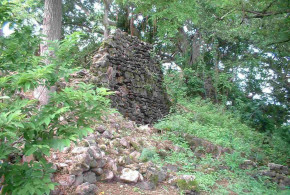
The ruins of the Portuguese fort on Ende island (Ende Minor) are nothing more then a collection of coral rocks. Just a single wall remains standing up and for the rest there are some floor parts and foundations visible.

The site is used nowadays by local farmers to farm Tapioca and corn and little remains as most of the stones from the fort have been used to build houses in the village of Kemo (pronounced as “K’mo”).

This village is easily reached from mainland Flores, from the town of Ende from where 4-5 boats daily sail to Kemo, where the ruins are located.

[divider]

[divider]

BIBLIOGRAPHY:

– Jacobs, Hubert “Documenta Malucensia”, Vol. II 1577-1605. XXXII-65*-794 pp. (vol. 119), Monumenta Historica Societatis Iesu, 1980, Rome, Italy.

– Leitão, Humberto, “Os Portugueses em Solor e Timor de 1515 a 1702”, 302 pp., Tipografia Liga dos Combatentes da Grande Guerra, 1948, Lisbon, Portugal. An old work, but one of the few about this subject; interesting.

– Matos, A. T. de, “Timor Português 1515-1796: contribuição para a sua história”, 489 pp., map, Instituto Histórico Infante Dom Henrique, 1974, Lisbon, Portugal. The main book on early Timor history.

– Sá, Artur Basílio de, “Documentação para a história das missões do Padroado Português do Oriente: Insulíndia” Vol. VI (1595-1599) xxi+432 pp., IICT Centro de Estudos de História e Cartografia Antiga, 1988, Lisbon.

– Villiers, J., “As derradeiras do mundo: The Dominican Mission and the Sandalwood trade in the Lesser Sunda Islands in the sixteenth and seventeenth century”, in: Various Authors, “II Seminário Internacional de História Indo–Portuguesa”, pp. 572-600, IICT & CEHCA, 1985, Lisbon, Portugal.

Categories
Danish Colonialism India

Tranquebar: a Danish fort in India

Written by Marco Ramerini.

Tranquebar (Tharangambadi) is a small village in Tamil Nadu in India located on the Coromandel coast about 30 km north of Nagapattinam. Tranquebar has the distinction of have been a Danish colony between 1620 and 1845. The Danes in 1620 founded the Fort Dansborg and made ​​it their main trading settlement along the Indian coast.

Tranquebar (Dansborg castle):

  • Danish: 1620-May 1801
  • English: (May 1801-Aug. 1802)
  • Danish: Aug. 1802-1808
  • English: (1808-20 Sep. 1815)
  • Danish: 20 Sep. 1815-7 Nov. 1845
  • English: (7 Nov. 1845- 1947)

[divider]

[divider]

BIBLIOGRAPHY:

– Barner Jensen, Uno “Danish East India trade coins and the coins of Tranquebar 1620-1845” 48 pp. Uno Barner Jensen 1997 Brovst, Denmark. A complete study on the Danish coins of Tranquebar.

– Brijraj Singh “The First Protestant Missionary to India Bartholomaeus Ziegenbalg (1683-1719)” 195 pp. 1999, Contents: 1. Introduction. 2. Ziegenbalg’s life. 3. Tranquebar. 4. Ziegenbalg and language. 5. Ziegenbalg, educator. 6. Ziegenbalg and Hinduism. 7. Ziegenbalg in inter-faith dialogue. 8. The missionary enterprise and colonialism; or, was Ziegenbalg a colonialist? Appendix: 1. Partial checklist of Ziegenbalg’s works: prepared from secondary sources. 2. Tamil: texts mentioned in the genealogy of the South-Indian Gods. Works cited. Index. By focusing upon aspects of the life and work of Bartholomaeus Ziegenbalg, the first protestant missionary to India, this book offers an insight into a little-known corner of South India’s cultural history. The author reflects on the nature of south Indian society when Ziegenbalg arrived there and the way and extent to which his work changed it.

– Feldbaek, O. “India trade under the Danish flag 1772-1808” 359 pp. Monograph Series n° 2 Scandinavian Institute of Asian Studies 1969

– Feldbaek, O. “The Danish Asia trade, 1620-1807: value and volume” In: “An Expanding World” Vol. n° 10; Prakash, Om “European commercial expansion in early modern Asia” pp. 293-317 Also in: “The Scandinavian Economic History review” Vol. 39, n° 1 Odense, 1991, pp. 3-27

– Fenger “History of Tranquebar Mission” 1863, London, UK. – Glamman, K. “The Danish East India Company” In: “Actes du 8ème Colloque Intern. d’Histoire Maritime” 1966, Beirut, Lebanon.

– Gray, J. C. F. “Tranquebar: A Guide to the Coins of Danish India, Circa 1620 to 1845” 83 pp. Quarterman Publications Incorporated, 1974

– Rasmussen, Peter Ravn “Tranquebar: the Danish East India Company 1616-1669” Internet article Peter Ravn Rasmussen, 1996, Denmark.

– Subrahmanyam, S. “The Coromandel Trade of the Danish East India Company, 1618-1649” Scandinavian Economic History Review, Vol. XXXVII, No. 1, 1989. pp. 41-56

Categories
India Portuguese Colonialism

Population of the Portuguese Settlements in India

Written by Marco Ramerini. English text revision by Dietrich Köster.

Diu: (20°43’N – 71°00’E)

Damão Grande or Praça de Damão (Damão, Moti Daman or Daman): (20°25’N – 72°50’E)

1634: 400 “almas entre portugueses e nativos cristãos”. Source: Leão “A Província do Norte do Estado da Índia”

1662: 100 “casais portugueses”. Source: Leão “A Província do Norte do Estado da Índia”

Bassein or Baçaim (Vasai): (19°20’N – 72°49’E)

1634: 400 “casados brancos”, 200 “pretos cristãos” and 1.800 slaves in the town, “fora dos muros” there were 250/300 “casados brancos” and 2.000 “nativos”. Source: Leão “A Província do Norte do Estado da Índia”

1662: 5.000 “homens de armas”. Source: Leão “A Província do Norte do Estado da Índia”

1720: the Province of Baçaim numbered 890 “europeus”, 58.131 “cristãos”. Source: Leão “A Província do Norte do Estado da Índia”

Tana:

1634: 80 “casas de brancos” and 100 “casas de pretos”. Source: Leão “A Província do Norte do Estado da Índia”

Bombaim:

1634: 12 “casados portugueses” and 50 “pretos”. Source: Leão “A Província do Norte do Estado da Índia”

Old Map of Bassein (Vasai)

Chaul:

1634: 200 “casados portugueses” and 50 “pretos cristãos”. Source: Leão “A Província do Norte do Estado da Índia”

1666: 21 “chefes de família portugueses”. Source: Boxer “O Império colonial português 1415-1825”

Goa:

1550: 2.000 “casados”. Source: Disney “Twilight of the pepper Empire”

1630: 800 “casados”. Source: Disney “Twilight of the pepper Empire”

16th – 17th centuries between 1.000/2.000 and 4.000/5.000 “soldados”. Source: Disney “Twilight of the pepper Empire”

1666: 320 “chefes de família portugueses”. Source: Boxer “O Império colonial português 1415-1825”

1866: 2.240 “descendentes” or “mestiços”. Source: Boxer “O Império colonial português 1415-1825”

1871: 2.500 “descendentes” or “mestiços”. Source: Boxer “Relaçoes raciais no Império colonial português”

1956: 1.100 “descendentes” or “mestiços”. Source: Boxer “Relações raciais no Império colonial português”

Onor (Honawar): (14°17’N – 74°26’E)

1634: 30 “casados”. Source: Disney “Twilight of the pepper Empire”

Barcelor or Braçalor (Basrur): (13°38’N – 74°44’E)

1634: 30 “casados” and 35 “soldados casados”. Source: Disney “Twilight of the pepper Empire”

Mangalore (Mangalor): (12°54’N – 74°50’E)

1634: 35 “casados”. Source: Disney “Twilight of the pepper Empire”

Cannanore: (11°51’N – 75°22’E)

1630s: 40 “casados”. Source: Disney “Twilight of the pepper Empire”

Cranganore (Kodungallor): (10°13’N – 76°13’E)

1630s: 40 “casados” and 100 “soldados”. Source: Disney “Twilight of the pepper Empire”

[divider]

[divider]

Cochim. From Livro das Plantas de Todas as Fortalezas (1635). Author Bocarro. No Copyright
Cochim. From Livro das Plantas de Todas as Fortalezas (1635). Author Bocarro

Cochin, Cochin de Baixo or Santa Cruz: (09°57’N – 76°15’E)

1630s: 500 “casados” (of whom 300 Portuguese and 200 Indian Christians). Source: Disney “Twilight of the pepper Empire”

Coulão (Quilon): (08°53’N – 76°35’E)

1630s: 60 “casados”. Source: Disney “Twilight of the pepper Empire”

Tuticorin or Tutucorim: (08°48’N – 78°09’E)

1640: pequena povoação de “casados”. Source: Subrahmanyam “Improvising Empire – Portuguese trade and settlements in the Bay of Bengal 1500 – 1700” or “Comércio e conflito – A presença portuguesa no Golfo de Bengala 1500 – 1700”

Nagapatao or Negapatao (Negapatam or Nagapattinam): (10°47’N – 79°50’E)

1533: 30 “fogos”, 1540: 100 “fogos”, 1630: 500 “fogos”.Source: Subrahmanyam “Improvising Empire – Portuguese trade and settlements in the Bay of Bengal 1500 – 1700” or “Comércio e conflito – A presença portuguesa no Golfo de Bengala 1500 – 1700”

1577: 60 “casados”, 200 “eurasiáticos”, 3000 Indian Christians. Source: Diffie-Winius “Foundation of the Portuguese Empire 1415-1580”

Porto Novo (Parangi-Pettai): (11°29’N – 79°46’E)

São Tomé de Meliapor: (13°00’N – 80°15’E)

1530: 40 “casados”, 1545: 100 “famílias”. Source: Subrahmanyam “Improvising Empire – Portuguese trade and settlements in the Bay of Bengal 1500 – 1700” or “Comércio e conflito – A presença portuguesa no Golfo de Bengala 1500 – 1700”

1600: 600 “casados”, from 1610s. in decline. Source: Subrahmanyam “Improvising Empire – Portuguese trade and settlements in the Bay of Bengal 1500 – 1700” or “Comércio e conflito – A presença portuguesa no Golfo de Bengala 1500 – 1700”

1537: 50 “casados”. Source: Diffie-Winius “Foundation of the Portuguese Empire 1415-1580”

Sé de Santa Catarina, Goa, India. Author Ondrej Zvacek. Licensed under the Creative Commons Attribution-Share Alike
Sé de Santa Catarina, Goa, India. Author Ondrej Zvacek

Paliacate or Paleacate (Pulicat): (13°24’N – 80°19’E)

1520: 200 – 300 “habitantes”, 1545: 600-700 “familias”, from 1565 in decline. Source: Subrahmanyam “Improvising Empire – Portuguese trade and settlements in the Bay of Bengal 1500 – 1700” or “Comércio e conflito – A presença portuguesa no Golfo de Bengala 1500 – 1700”

Masulipatam or Masulipatao: (16°11’N – 81°08’E)

Balasore or Balasor: (21°29’N – 86°57’E)

Pipli: circa (21°37’N – 87°20’E)

Tambolim (Tamluk or Tumlook): (22°18’N – 87°55’E)

Angelim (Hidgelee or Hijili): circa (22°14’N – 88°03’E)

Porto Pequeno, Sategão, Satigão, Sateguam or Satigam (Satgaon): (22°57’N – 88°24’E)

Ugolim, Golim or Dogolim (Hugli or Hooghly): (22°54’N – 88°24’E) 1603: 5.000 “portugues”. Source: Diffie-Winius “Foundation of the Portuguese Empire 1415-1580”

Notes:

Fogos and Famílias: Families.

Casados: Portuguese soldiers retired after marriage.

Descendentes: Euro – Asiatic or Mestizo (Mestiços) also Luso – Indians.

Pretos: Blacks (in this case Indians or African slaves brought to India and liberated after serving in the military forces with valour).

At that time every family was composed of about 5-6 persons. So the number of Casados, Familias, Fogos must be multiplied by 5 or 6. 

LUSO – INDIANS and EURASIANS STATISTICS in BENGAL:

Calcutta Census:

1837: 3.181 Luso – Indians, 4.746 Eurasians.

1876: 5 Portuguese, 707 Luso – Indians, 10.566 Eurasians.

1881: 19 Portuguese, 36 Goans, (261 speaking the Portuguese language), 9.410 Luso – Indians and Eurasians.

1911: 10 Portuguese, (254 speaking the Portuguese language), 644 Goans.

Cloister of the Franciscan Igreja de Santo António. Vasai, Bassein, Baçaim. Author and Copyright Sushant Raut

Hoogly Census:

1912: 94 Eurasians.

Geonkhali (Midnapore district):

1911: 129 Luso – Indians.

Chittagong:

1859: 1.025 Feringhis or Luso – Indians.

1860: 985 Feringhis or Luso – Indians.

1866: 865 Feringhis or Luso – Indians.

Noakhali:

1901: 490 Feringhis or Luso – Indians.

Bakarganj:

1876: 800 Feringhis or Luso – Indians.

1918: 841 Feringhs or Luso – Indians.

In 1919 in Eastern Bengal the number of Luso-Indians or Feringhis was about 10.000: Dacca District: 6.000, Chittagong: 1.000, Bakarganj District: 1.000, Noakhali: 800, Assam, Tippera: 1.20.

[divider]

[divider]

BIBLIOGRAPHY:

– Campos, J. J. A. “History of the Portuguese in Bengal” 283 pp. 3 maps Butterworth & Co. 1919 Calcutta, India. An old, but very interesting, book about the Portuguese history in Bengal, history unknown to many people.

– Boxer “Relações raciais no Império colonial português”

– Boxer “O Império colonial português 1415-1825”

– Disney “Twilight of the pepper Empire”

– Leao “A Província do Norte do Estado da Índia”

– Subrahmanyam, Sanjay “Comércio e conflito: a presença portuguesa no Golfo de Bengala” Orig. Tit. “Improvising empire – Portuguese trade and settlement in the Bay of Bengal 1500-1700” 293 pp Edições 70, 1994 Lisboa, A collection of very interesting Subrahmanyam’s articles.

– Subrahmanyam, Sanjay “The South Coromandel Portuguese in the late 17th century: a study of the Porto Novo: Nagapattinam complex”, in: STUDIA N° 49, pp. 341-363, 1989, Lisbon, Portugal.

– Diffie-Winius “Foundation of the Portuguese Empire 1415-1580”

Categories
India Portuguese Colonialism

Goa: the capital of Portuguese India

Written by Marco Ramerini. English text revision by Dietrich Köster.

Goa is situated on an island at the mouth of the Mandovi River. At the time of the arrival of the Portuguese in India, Goa was under the rule of the Sultan of Bijapur, for whom Goa was the second most important city. It was wealthy and possessed a grand natural harbour.

On 28 February 1510 Afonso de Albuquerque, the Governor of Portuguese India, arrived with a fleet of several ships and anchored off Goa harbour. The following morning some Portuguese boats were sent out as patrol. They landed and conquered the Fortress of Pangim. The next day a message from the inhabitants of Goa was received. They offered the surrender of the city and the vassalage to the King of Portugal. In the morning of 4 March 1510 Albuquerque with 1,000 Portuguese soldiers and 200 Malabarese entered Goa. Albuquerque’s first care was to repair Goa’s fortifications. He also established a mint, for the quick coinage of gold, silver and copper money.

Indo-Portuguese art (17th-18th century). Turin, private collection, photo courtesy of Walter and Mario Chiapetto

The Bijapurese organized a large army and marched towards Goa. The ruinous condition of Goa’s fortification forced Albuquerque after a fierce resistance to abandon the town to the Sultan of Bijapur. Adil Khan at the head of 50,000 soldiers entered Goa on 20 May 1510. The Portuguese fleet was now blockaded by the monsoon at the mouth of Mandovi River and the Portuguese ships were exposed to the Moors’ cannonade. Albuquerque’s tenacity let him resist till 16 August 1510, when the entire Portuguese fleet sailed away. Albuquerque waited for reinforcements from Lisbon and when these arrived, he soon prepared a fleet of 23 ships and 2,000 men to conquer Goa definitively. In the morning of 25 November 1510 Albuquerque’s men attacked the city and at midday Goa was again in Portuguese hands.

[divider]

[divider]

Soon after the conquest of Goa ambassadors from various Indian Kingdoms came to Goa in search for the conclusion of an alliance. For the next two years Goa was again and again under the attacks of the Sultan of Bijapur Adil Shah (Hidalcao), who was resolutely determined to reconquer the town. In 1512 a new attempt was made by the Adil Shah to drive away the Portuguese from Goa. In this year the Moors fortified Benasterim, which controlled the principal passage from the mainland to the island of Goa. Albuquerque, returning from Malacca, wasted no time and soon attacked the fortress, which was taken after several days of siege. Thereafter he ordered to reinforce the forts of Benasterim, Devarim and Pangim, which commanded the principal passes to the mainland. He also founded a hospital and built several churches in Goa (Igreja do Priorado do Rosário, Capela de Santa Catarina).

On 15/16 December 1515 Goa’s conqueror Afonso de Albuquerque died in the harbour of Goa. His mortal remains were temporarily buried in the chapel, he had built in Goa, and were later (1566) conveyed to Portugal. He was the builder of the Portuguese Empire in the East (Goa, Malacca, Hormuz). He was relentless with his enemies, but he also seems to have appreciated the character of the Asiatic peoples and he often left the civil administration of the places, he conquered, in the hands of the natives. He was the first to encourage the marriage of Portuguese soldiers with native women.

In 1530 the capital of Portuguese India was transferred from Cochin to Goa and in 1534 it became the centre of the Roman-Catholic Church for the entire Orient and finally in 1557 Goa became seat of an archbishopric. On this occasion a large cathedral was built (Sé Catedral de Santa Catarina 1562-1619). St. Francis Xavier arrived in Goa in 1542.

In 1543 the Goan territory was enlarged through the annexation of the provinces of Bardez and Salcete. In 1560 the inquisition (active 1560-1774 and 1779-1812) was introduced. In 1570 the Sultan of Bijapur made the last effort to dislodge the Portuguese from Goa, but after a siege of ten months he was forced to give up.

At the beginning of the 17th century Goa was the capital of an empire, which spread from Mozambique to Nagasaki controlling the Indian Ocean trade. This was the period of great brightness for Goa and the Portuguese power in the East. The city was called “Goa Dourada” and “Roma do Oriente”. It is said that Goa had 200,000 inhabitants in those days and was able to compete with the most important cities in the world. A lot of magnificent churches and buildings were built during these years. Several of them still exist today. A Portuguese proverb of the time said: “Quem viu Goa, dispensa de ver Lisboa”.

The decline of Goa began with the coming of the Dutch, who several times during the 17th century blockaded Goa from the sea and destroyed the Portuguese power in the East between 1600 and 1650. In spite of this Goa was never conquered and remained in Portuguese hands till December 1961 when it was occupied together with Damão and Diu by the Indian Army. In 1760 Velha Goa was abandoned and the seat of the government was transferred to Pangim, which in 1843 was officially declared the capital of Portuguese India. In 1763 the districts of Ponda, Quepem, Sanguem and Canacona were added to the Portuguese possessions. Finally, in 1788 the districts of Pernem, Satari and Bicholim were also added.

THE CHURCHES OF OLD GOA TODAY

Sé Catedral de Santa Catarina, the largest church of Goa. It was built between 1562 and 1619 and the altar was finished in 1652. The northern tower of this church collapsed in 1776. There is a golden bell in the southern tower.

Igreja e Convento de São Francisco de Assis: The church was built in 1661 on the site where used to be an old Franciscan chapel. This church has a beautiful portal in Manueline style. Today the Convent is a museum.

The Capela de Santa Catarina was built in 1552 on the site of the old chapel (1510), built by Afonso de Albuquerque.

The Igreja and the Convento de São Caetano were built by Italian friars of the Theatine Order in the years 1655-1661.

The Basílica do Bom Jesus, built during the years 1594-1605, is one of the richest churches in Goa and is principally known for the tomb of St. Francis Xavier. This basílica, where the mortal remains of St. Francis Xavier are kept, is the best specimen of baroque architecture in India and has a cross-shaped ground plan. This beautiful tomb of St. Francis Xavier was a gift from the Medici Cosimo III, the Grand Duke of Tuscany.

Ruins of the Igreja e Convento dos Agostinianos. They were built by Augustinian Friars in 1602. Of this church and convent today only remain the tower and the arches in a ruined state. The tower has four storeys with an arch on each of them left and is nearly 46 meters high.

Igreja do Priorado do Rosário, Capela Real de Santo António, Igreja and Convento de Santa Mônica (1606-1627), Igreja da Cruz dos Milagres (1671), Ruins of the Igreja e Colégio de São Paulo (1541-1543).

STATISTICS OF GOA: 1881

Population (1881): 445,449 (2,500 were “Mestiços” or “Descendentes”). Religion (1881): Christians: 55 % (there were 96 Catholic Churches); Hindus: 45 %. Languages (1881): Konkani: all the classes of the peoples, except Europeans and “Mestiços”, use the Konkani language with some admixture of Portuguese words. Portuguese: the official language, is principally spoken in the capital and in the chief towns.

STATISTICS OF GOA: 1981

Languages (1981): Konkani 600,004; Marathi 266,649; Gujarati 77,677; Kannada 33,512; Urdu 27,703; Hindi 21,158; Malayalam 7,634; English 6,407; Telugu 5,527; Tamil 3,884; Punjabi 1,314. Portuguese: it is now spoken only by a small segment of the upper class families and about 3 to 5% of the people still speak it (estimated at 30,000 to 50,000 people).

STATISTICS OF GOA: 1991

Population (1991): 1.169.793. Religion (1991): Hindus: 756.621 (64.68%); Christians: 349.225 (29.85%); Muslim: 61.455 (5.25%); Sikhs: 1.087 (0.09%); Jains: 487 (0.04%); Buddhist: 240 (0.02%); Others: 403 (0.03%).

[divider]

[divider]

BIBLIOGRAPHY:

– Various Authors “Commerce and Culture in the Bay of Bengal, 1500-1800” 416 p. plates, edited by Om Prakash and Denys Lombard, 1999,

– Arasaratnam, S. and Aniruddha, R. “Masulipatnam and Cambay: a history of two port towns, 1500-1800” xiii, 314pp. maps Munshiram Manoharlal, 1994, New Delhi, India.

– Banerji, Chitrita “How Bengal Discovered Chhana” Portuguese influences in Bengala food.

– Campos, J. J. A. “History of the Portuguese in Bengal” 283 pp. 3 maps Butterworth & Co. 1919 Calcutta, India. An old, but very interesting, book about the Portuguese history in Bengal, history unknown to many people.

– Cortesão, Armando “A cidade de Bengala do século XVI e os Portugueses” 35 pp. Tip. da Sociedade Astória, 1944, Lisboa

– Ferroli, D. “The jesuits and Mysore” 238 pp. Xavier Press, 1955, Kozhikode, India.

– Jeyaseela, Stephen S. “Portuguese on the Tamil Coast: Historical Explorations in Commerce and Culture, 1507-1749” xix + 437 pp. Illus., Maps, Navajothi Publishing House, 1998, Pondicherry, India.

– Jeyaseela Stephen S. “Coromandel Coast And Its Hinterland: Economy, Society And Political System, 1500-1600” 269 pp. Manohar Publishers & Distributors, 1997, Delhi, India.

– Mordechai, Arbell “The Portuguese Jewish community of Madras, India, in the Seventeenth century” In: “Los Muestros. The Sephardic Voice” n° 41, Dec. 2000

– Subrahmanyam, Sanjay “Comércio e conflito: a presença portuguesa no Golfo de Bengala” Orig. Tit. “Improvising empire Portuguese trade and settlement in the Bay of Bengal 1500-1700” 293 pp Edições 70 1994 Lisboa A collection of very interesting Subrahmanyam’s articles.

– Subrahmanyam, Sanjay “The South Coromandel Portuguese in the late 17th century: a study of the Porto Novo. Nagapattinam complex” In STUDIA N° 49, pp. 341-363, 1989, Lisbon, Portugal.

– Varadarajan, L. “São Tomé: early European activities and aspirations” In: Various Authors “II Seminário Internacional de História Indo – Portuguesa” 429-441 pp. IICT & CEHCA 1985 Lisbon, Portugal.

Categories
Dutch Colonialism India

The Dutch in Malabar (Kerala), India

Written by Marco Ramerini. English text revision by Dietrich Köster.

In 1650 the VOC possessed only the unfortified factories in Kayamkulam and Cannanore. But at the end of the hostilities with the Portuguese in 1663 the Dutch became the new rulers of the Malabar Coast. They possessed military outposts at 11 places: Alleppey, Ayacotta, Cheramangalam, Pappinivattam, Ponanni, Pallipuram, Cranganore, Chettuwaye, Cannanore, Cochin, and Quilon.

Cochin and Quilon were the most important of all.

– Cochin was the headquarters of the VOC in Malabar and the residence of the Commander. The Dutch reduced the area of the old Portuguese town and put down most of the public buildings built by the Portuguese. The Kingdom of Cochin was under the influence of the Dutch and the king was a puppet of the VOC.

– Quilon was a fortified city.

Cochin in 1761. Histoire générale des Voyages. No Copyright
Cochin in 1761. Histoire générale des Voyages

– Cranganore was a little city with a small fort, but the place was of major strategic importance; it was “the key” to Cochin.

– Cannanore was a city with a good harbour and a strong stone fort called Fort Sant’Angelo.

The Dutch ruled Malabar for more than 130 years and forced the rulers of Malabar to agree to monopolistic contracts with the VOC for pepper and cinnamon. Unlike the Portuguese in Malabar they did not try to convert indigenous peoples to the Dutch Reformed Doctrine. However, they helped the St. Thomas Christians of Malabar against the Roman Catholic Church.

The Dutch compiled and published a monumental work (12 volumes and nearly 800 illustrations) on the medicinal properties of Malabar plants: the “Hortus Indicus Malabaricus”, which remains unsurpassed even to this day.

In Cochin the Dutch established an Orphanage for the poor children. Only the children of the Europeans were admitted. Also a leper asylum was built on Vypeen island.

During the Dutch occupation of Cochin they made several changes in the city. In 1697 they reduced the Portuguese fort. They developed the harbour and built piers.

They enlarged the palace built by the Portuguese at Mattancheri for the King of Cochin, which from this time onwards became known as the “Dutch Palace”.

In 1744 an impressive building – the country house of the Dutch Governors – was erected on Bolghatti island. They also built many merchants’ houses and warehouses in Cochin.

[divider]

[divider]

THE DUTCH IN MALABAR

QUILON

29 Dec. 1658 – 14 Apr. 1659

24 Dec. 1661 – 

CRANGANORE

15 Jan. 1662 – 

COCHIN

7 Jan. 1663 – 1795

CANNANORE

15 Feb. 1663 –

[divider]

[divider]

BIBLIOGRAPHY:

– Baldaeus, Philip “A Description of East India Coasts of Malabar and Coromandel and also of the Isle of Ceylon” 360 pp. maps, Reprint of the 1703 edition, Asian Educational Services, 1996, New Delhi-Madras, India. Translated from High Dutch in 1672, this book gives a description of the East Indian Coasts of Malabar and Coromandel and the Island of Ceylon together with details of all the adjacent kingdoms, principalities, provinces, cities, chief harbours, structures, pagan temples, products and living creatures. It also details the manners, habits, economies and ceremonies of the inhabitants as well as the warlike exploits, sieges, sea and field engagements between the Portuguese and Dutch.

– Koshy, M.O. “The Dutch power in Kerala 1729-1758” 334 pp. 2 maps Mittal Publ. 1989, New Delhi, India. Index: The rise of the Dutch power in Kerala 1604-1663, the early history of the Dutch settlements in Kerala 1663-1728, the Dutch involvement in the regional power politics of Kerala, the confrontation at Colachel, the treaty of Mavelikara, the Dutch and the Zamorins of Calicut, the Dutch and the Kingdom of Kolattiri, the Dutch and the other European powers, the Dutch trade in Kerala, the administrative system of the Dutch East India Company and its policy in Kerala, the Dutch impact on Kerala.

– Meyer, Raphael “The Jews of Cochin” Internet article American Asian Kashrus Services, 1995

– Poonen, T.I. “Dutch hegemony in Malabar and its collapse 1663 – 1795” 238 pp. Department of Publications, University of Kerala, 1978, Trivandrum, India.

– Ramachandran, Vaidyanadhan “Communication History of the Dutch in India” 46 pp. Artline Printers, 1997, Madras, India.

Categories
India Portuguese Colonialism

The Portuguese in Cochin (Kochi), India

Written by Marco Ramerini. English text revision by Dietrich Köster.

The city of Cochin (today: Ernakulam) was from the 24 December 1500, when the first Portuguese fleet called on its port, a firm ally of the Portuguese. The admiral of this fleet was Pedro Alvares Cabral (the discoverer of Brasil). The Rajah (king) of Cochin allowed, a “feitoria” (factory) to be allocated to the Portuguese and upon Cabral’s departure he allowed 30 Portuguese and four Franciscan friars to stay in Cochin.

In 1502 a new expedition under the command of Vasco da Gama arrived at Cochin and the friendship with the Rajah of Cochin was renewed. After the departure of Vasco da Gama the Zamorin of Calicut, enemy of the Portuguese, attacked Cochin and destroyed the Portuguese “feitoria”.

The Rajah of Cochin and his Portuguese allies were forced to withdraw to the island of Vypin. Here they were reinforced by the crews of three ships under the leadership of Francisco de Albuquerque and some days later by Duarte Pacheco Pereira (the author of “Esmeraldo de situ orbis”) and the Calicut troops immediately abandoned the siege.

On 27 September of 1503 the foundations of a timber fortress were laid. This was the first fortress erected by the Portuguese in India.

On departure of the Portuguese fleet bound for Portugal Duarte Pacheco Pereira was left behind with three ships in Cochin for the assistance to the Rajah. Meanwhile the Zamorin of Calicut formed a force of 50,000 men and 280 ships to drive the Portuguese out of Cochin. Duarte Pacheco Pereira was in command of only 100 Portuguese, 300 Malabar troops and about 5,000 soldiers of the King of Cochin (of whom the majority deserted).

Pereira was a formidable commander. For five months he and his men were able to sustain and drive back all the assaults of Zamorin. He saved Portugal from being driven out of India. After this victory Pereira returned to Portugal and the King paid him the highest honours. However, subsequently he was to be imprisoned on charges, which afterwards proved to be false. Later he became Governor of the castle of São Jorge da Mina (1519-1522) on the Gold Coast. He concluded his days in obscure poverty.

[divider]

[divider]

In 1505 a stone fortress replaced the wooden fortress of Cochin. The first church of Cochin was São Bartolomeu, built in 1504. In 1506 the construction of Santa Cruz church (which gave its name to the Portuguese town) was initiated. The foundation of the parish church Madre de Deus was laid in 1510. In 1550 the Jesuits added a large three-storied college to the church.

For a better defence of the town a fort called “Castelo de Cima” was built on Vypeen island at Paliport. In 1510 Afonso de Albuquerque started a school (a Portuguese “casado” Afonso Alvares was the teacher), but after his death it closed down. However, the Franciscans started a new school in 1520. They built a friary (Santo António) (1518-1520), a seminary and the beautiful church dedicated to São Francisco de Assis (1516-1522). Vasco da Gama was originally buried in it on Christmas eve 1524. The floor of this church was paved with tombstones, which in 1887 were removed and fixed on its walls, where they are still today. This church is a living historical monument of today’s Cochin.

At the beginning of XVI century Cochin was the seat of the Portuguese in India, including the time of the capture of Goa in 1510. The transfer of the capital of Portuguese India to Goa finally took place in 1530. In 1557 the palace of the King at Mattancheri was built. After the VOC (Dutch East India Company) conquest of Cochin in 1663) this palace was enlarged by the Dutch and is known today as the “Dutch Palace”. In 1558 the diocese of Cochin was erected and the Basílica de Santa Cruz became the cathedral. The old city of Cochin was called “Cochim de Cima” (today Mattancherry) and is situated on an island of a canal. The Portuguese town was called “Cochim de Baixo” or “Santa Cruz”.

Portuguese forts and settlements in South India. Author Marco Ramerini

In the 1630s its population consisted of 500 “casados” (of these 300 were Portuguese or Eurasians, the rest being Christian Indians). The town had a city council (“câmara”), a cathedral, a customs house, a “Confraria da Misericórdia” (1527), a Jewish synagogue (1568), five parish churches and several convents. The town was partly encircled by walls with several ramparts. Right after Goa the city of Cochin, situated in the center of East Indies, was the best place Portugal had in India. From there the Portuguese exported large volumes of spices, particularly pepper.

Therefore the Dutch set their eyes on Cochin and after the occupation of Ceylon in 1658 they tried to conquer Malabar. They took Quilon on 29 December 1658, but the Portuguese reconquered it on 14 April 1659. However, in 1661, the Dutch began a new expedition against the Portuguese settlements in Malabar. On 16 February they captured the fort of Pallipuram (near Cochin).

Portuguese Cochin and environs. Author Marco Ramerini

Another Dutch expedition under Ryckloff van Goens conquered Quilon on 24 December 1661 and on 15 January 1662 Cranganore was also taken. Soon after, on 5 February 1662, the Dutch began their assault on Cochin, but encountering heroic Portuguese resistance, they abandoned the siege after one month.

They came back in November 1662 and surrounded Cochin on all sides. For three months the Portuguese resisted but, finally, on 7 January 1663 they surrendered the city. By the terms of the capitulation all unmarried Portuguese residents were returned to Europe and all married Portuguese and Mestiços were transferred to Goa. On the morning of 8 January 1663 the soldiers and citizens came out of the fort and laid down their arms and the Dutch took possession thereof. The last governor of Portuguese Cochin was Inácio Sarmento. It was said that 4,000 people were expelled.

[divider]

[divider]

THE PORTUGUESE IN MALABAR

COCHIN

24 Dec. 1500 – 7 Jan. 1663

CANNANORE

1502 – 15 Feb. 1663

CRANGANORE

1536 – 15 Jan. 1662

QUILON

1502 – 29 Dec.1658            

14 Apr. 1659 – 24 Dec. 1661

PONANNI

1585 ?(1535 ?) – ?

CHALYAM-CHALE’

1531 – 1571

CALICUT

1515 – 1525

[divider]

BIBLIOGRAPHY

– Correia, J. M., “Os Portugueses no Malabar (1498 – 1580)”, 450 pp. 1 map, Imprensa Nacional – Casa da Moeda 1997 Lisbon, Portugal. Wars, fortresses, mission, art, architecture of the first 80 years of the Portuguese presence in Malabar.

– Disney, A. “Twilight of the pepper Empire”, VII, 220 pp. Harvard Historica studies 95, Harvard University press, 1978, Cambridge, MA, USA.

– Goertz, R. O. W. “The Portuguese in Cochin in the mid-sixteenth century”, in: STUDIA N° 49, pp. 5-38, 1989, Lisbon, Portugal.

– Kieniewicz, Jan, “The Portuguese factory and trade in Pepper in Malabar during the 16th century”, in: “An Expanding World” Vol. n° 11; Pearson, M. N. “Spice in the Indian Ocean world” Ashgate, Variorum, vol. n° 11, 1996; pp. 185-208, also in: “The Indian Economic and Social History Review”, Vol. VI New Delhi, 1969, pp. 61-84

– Mathew, K. S. “The Portuguese and the Malabar society during the sixteenth century. A study of mutual interaction” in: STUDIA N° 49, pp. 39-68, 1989, Lisbon, Portugal.

– Mathew, K.S. and Ahmad, Afzal, “Emergence of Cochin in the Pre-Industrial Era : A Study of Portuguese Cochin” ???, xliii + 153 pp. plates, illustrations, Maps Pondicherry University, Dept. of History, 1990, Pondicherry, India. Consists of a 33 page introduction + 132pp. documents ca.1527 – 1616.

– Mulakara, Gervasis, “Portuguese missionaries in Cochin till 1558”, in: STUDIA N° 49, pp. 69-94, 1989, Lisbon, Portugal.

– Mundadan, A. M. “The town of Cochin and the Portuguese” In: Various Authors “II Seminario Internacional de Historia Indo – Portuguesa” 251-263 pp. IICT & CEHCA 1985 Lisboa, Portugal.

– Panikkar, K.M. “Malabar and the Portuguese” x, 224 pp. Voice of India, 1997 (1929), New Delhi, India. A succinct history of the violent Portuguese intervention in Malabar written by a consummate Indian historian.

Categories
India Portuguese Colonialism

Chaul a Portuguese town in India

Written by Marco Ramerini. English text revision by Dietrich Köster.

The Portuguese town of Chaul lies about 350 kilometers north of Goa and 60 kilometers south of Bombay (Mumbai) at the mouth of the Kundalika river near the village of Revdanda. Chaul was located on the low northern bank, opposed to a promontory on the south bank, which is called “Morro de Chaul.

Chaul was from 1521 under the Portuguese. In the same year they built the first fort. In October 1531 the Portuguese erected a massive square stone fortress at Chaul, which contained a church and dwelling-houses for 120 men. The fortress was named “Santa Maria do Castelo”. Around this castle the Portuguese town developed, but by a treaty of the year 1558 the town‘s fortification could no longer be upheld.

In November 1570 Chaul was attacked by Nizam Shah. The siege lasted for months. The town was exposed to great distress. But at the end, in July 1571, the siege was raised and a treaty was signed. After the siege the town was rebuilt and town walls with several bastions were built around it.

In April 1592 the Moors began a new siege of Chaul, but after a hard battle the Portuguese succeeded in repelling the assault. In 1594 the Portuguese conquered the adjoining fortress of the “Morro de Chaul”. Owing to the repeated attacks by the Moors against Chaul, new works of defense were carried out in 1613.

The Portuguese power declined and Chaul slowly lost its importance. In March 1739 Chaul and the fortress of “Morro de Chaul” were besieged by the Angria, but after some months, in October, the Angria raised the siege. On 18 September 1740 Chaul was finally ceded by treaty to the Mahrattas.

The ruins of Chaul are near the town of Revdanda south of Bombay (Mumbai). There are still visible of Portuguese Chaul today: the ruins of the town walls with its powerful ramparts, the ruins of the Igreja Matriz, the church and the convent of the Augustinians, the Franciscans’ church, the Misericórdia, the “Porta do Mar”. Of the adjoining fortress of the Morro de Chaul the remains of its walls are still to be seen. In Korlai, a few kilometers from Chaul, there is a community of people (900), who still speaks a Creole form of Portuguese down to the present day. They are monolingual.

[divider]

[divider]

BIBLIOGRAPHY:

– Cunha, G. da “Notes on the history and antiquities of Chaul and Bassein” 278 pp. Map & ills. 1993 (1876), Bombay, India.

– Fernandes, José Manuel “Chaul um percurso urbano e fotográfico ” In: “Oceanos” n°19-20, Sep/Dec. 1994 pp. 268-271

– Gaspar Rodrigues, Vitor Luis “A organização militar da Província do Norte durante o séc. XVI e princípios do séc. XVII” In: Mare Liberum, Revista de História dos Mares N° 9, ” VII Seminário internacional de História Indo-Portuguesa, Goa 1994″, pp. 247-265, 1995, Lisbon, Portugal.

– Goertz, R. O. W. “Attack and defense techniques in the siege of Chaul, 1570-1571” In: Various Authors “II Seminário Internacional de História Indo–Portuguesa” 265-287 pp. IICT & CEHCA 1985 Lisboa, Portugal.

– Jackson, K. D. “Ruínas de Império: a cidade-fortaleza de Chaul” In: “6° Congresso da Associaçao Internacional de Lusitanistas” 8-13 Aug. 1999, Rio de Janeiro, Brazil.

– Leão, M. C. “A Província do Norte do Estado da Índia” 223 pp. several maps and illustrations, Instituto Cultural de Macau, 1996, Macau.

– Mitterwallner, G. von “Chaul: Eine unerforschte Stadt an der Westküste Indiens (Wehr-, Sakral- und Profanarchitektur).” 238 pp. ills and 2 maps 1964 Berlin, Germany.

– Oliveira e Costa, João Paulo “Simão de Andrade, fidalgo da Índia e capitão de Chaul” In: Mare Liberum, Revista de História dos Mares N° 9, ” VII Seminário internacional de História Indo-Portuguesa, Goa 1994″, pp. 99-111, 1995, Lisbon, Portugal.

– Rossa, W. “Indo-Portuguese cities” 117 pp. illust. Comissão Nacional para as Comemorações dos Descobrimentos Portugueses 1997, Lisbon, Portugal. Very interesting descriptions of the Portuguese towns of Goa, Chaul, Baçaim, Damão, Diu and Cochin.

[divider]

[divider]